
Korea and Japan National AI Policy and Sovereign AI — 2026-09-10
South Korea's Ministry of Science and ICT (MSIT) has finalized a record-breaking AI budget of KRW 9.4 trillion for 2027, with nearly half allocated to GPU procurement and data infrastructure. In a parallel move to reduce reliance on foreign hardware, the National IT Industry Promotion Agency (NIPA) signed a KRW 10 billion contract to deploy domestic NPU servers for government-wide AI services. Meanwhile, Japan's METI and NEDO announced new GENIAC project adoptions focused on physical AI and robotics foundation models, signaling a shift from pure language models to embodied intelligence.
Korea and Japan National AI Policy and Sovereign AI — 2026-09-10
Top developments
Korea’s Record AI Budget: KRW 9.4 Trillion for 2027
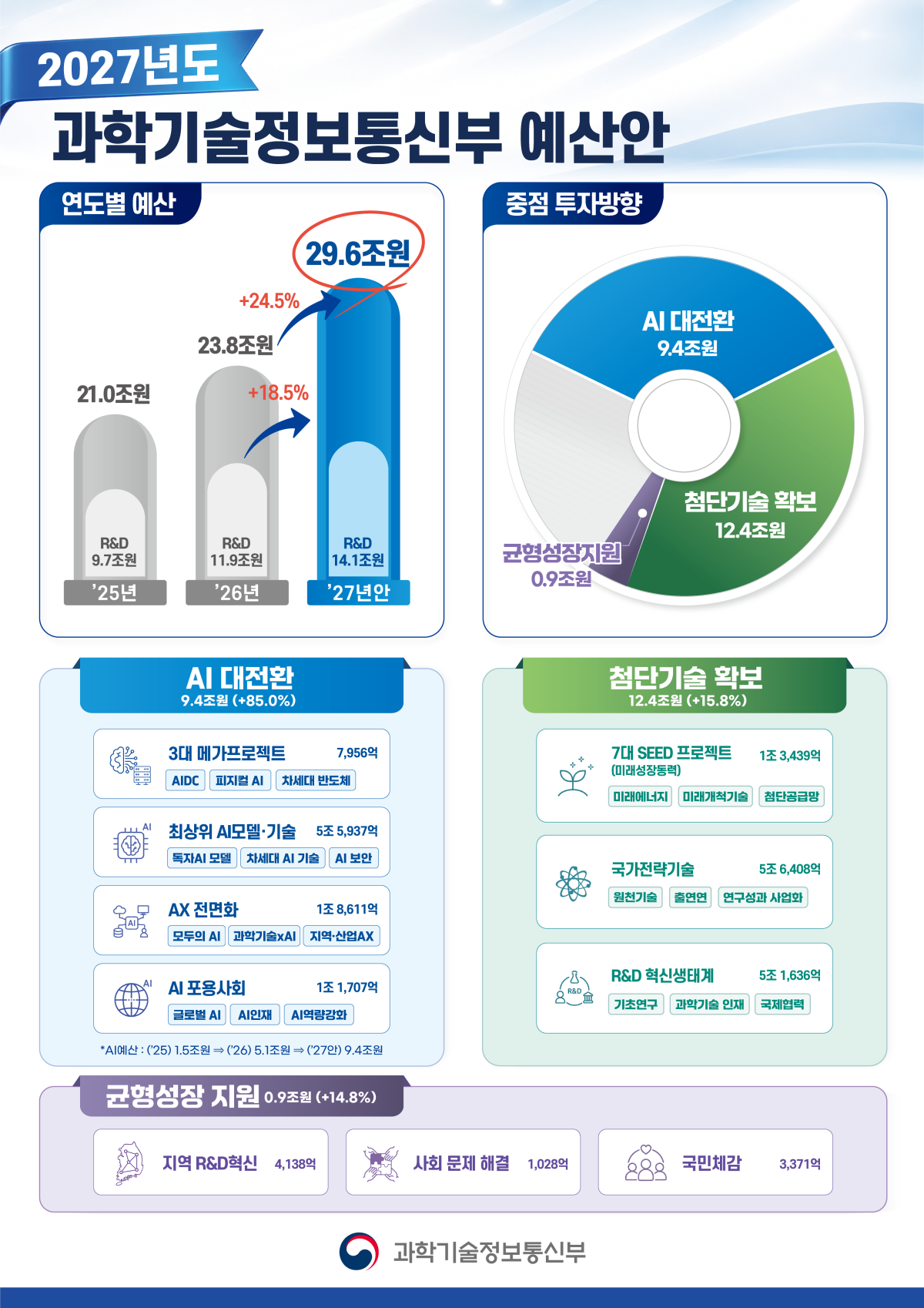
The South Korean government has proposed a massive increase in its AI budget for the next fiscal year, totaling KRW 9.4 trillion (approx. $6.7 billion). This represents an 84% increase over the current year’s allocation. The MSIT plans to direct approximately KRW 4.65 trillion specifically toward securing high-performance GPUs and building AI learning datasets. This aggressive spending aims to support the "National AI Computing Center" initiative and the development of sovereign foundation models. The budget also includes KRW 5.6 trillion for "top-tier" AI model development and KRW 3.85 trillion for GPU expansion, reflecting a strategic pivot to secure compute sovereignty amidst global supply chain constraints.
Domestic NPUs Deployed for Government Services
In a significant step toward hardware sovereignty, Korea’s NIPA signed a KRW 10 billion deal with local chipmakers FuriosaAI and Rebellions. The contract covers the procurement of 25 NPU (Neural Processing Unit) servers dedicated to running government-wide AI services. This move reduces dependence on Nvidia GPUs for public sector workloads and validates the performance of Korean-designed silicon in real-world administrative applications. The deployment is expected to serve as a benchmark for broader adoption of domestic accelerators in the public sector.

Japan’s GENIAC Project Expands into Physical AI
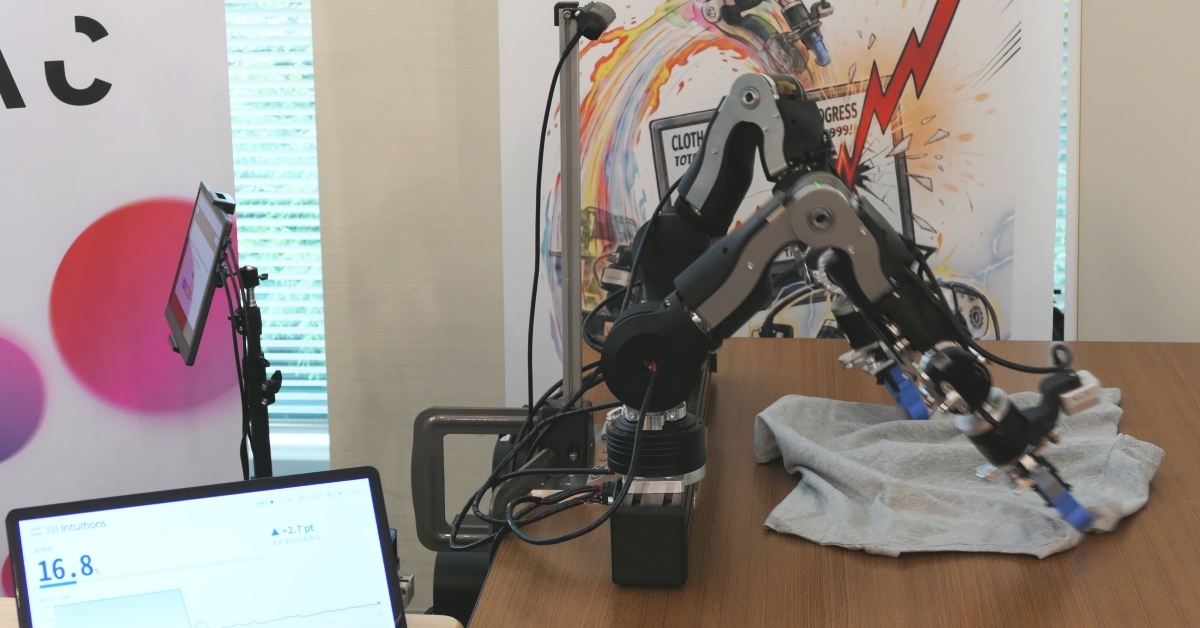
Japan’s Ministry of Economy, Trade and Industry (METI) and NEDO announced the adoption of new projects under the GENIAC (Generative AI Accelerator Challenge) framework on September 9, 2026. The focus has shifted toward "Physical AI" and robotics foundation models, with major corporations like KDDI and Mercari selected to lead research. KDDI’s project will develop foundation models for retail and logistics automation, while Mercari is involved in similar embodied AI initiatives. This marks a strategic evolution from Japan’s earlier focus on language models to leveraging its strong robotics manufacturing base.
"AI for All" Rollout Enters Beta Phase
South Korea’s ambitious "AI for All" program, which promises free unlimited generative AI access to 51 million citizens, has entered its beta testing phase. The service is operated by three consortia led by SK Telecom, Kakao, and KT. Recent reports confirm that regulations require at least 80% of the computational load to run on domestic models and infrastructure. The government has allocated KRW 170 billion in GPU support funds to these three consortia, with future funding tied to performance metrics. Full rollout is targeted before the end of 2026.

Local view
- Chosun Ilbo & TokenPost: Local tech media are highlighting upcoming parliamentary audits (Gukgam) scheduled for October, where opposition lawmakers plan to scrutinize the "market impact" of the sovereign foundation model ("Dokpamo") and the actual utilization rate of the 260,000 GPU procurement plan. Critics argue that while the budget has expanded, tangible commercial success remains elusive.
- Nikkei Asia: An opinion piece by Schoni Song of Macoll Consulting Group argues that South Korea’s AI diplomacy is incomplete without Japan. The article suggests that joint regulatory frameworks and shared compute resources between Seoul and Tokyo could strengthen both nations' positions against US and Chinese tech dominance.
- Impress Watch: Japanese tech outlet Impress Watch highlights the competitive pressure on domestic Japanese firms, noting that GENIAC’s pivot to physical AI is a direct response to the rapid advancement of humanoid robots by global competitors like Tesla and Chinese startups.
Context & numbers
- Korea 2027 AI Budget: KRW 9.4 trillion total; KRW 4.65 trillion for GPU/Data; KRW 5.6 trillion for Frontier Model R&D.
- Domestic Hardware Deal: KRW 10 billion for 25 NPU servers from FuriosaAI and Rebellions.
- Citizen Access Target: 51 million citizens; 80% domestic model usage requirement.
- Japan GENIAC: New cohort adopted on Sept 9, 2026, focusing on robotics/logistics automation.
On the radar
- October Parliamentary Audits (Korea): Lawmakers will question the effectiveness of the "Dokpamo" sovereign model and GPU distribution strategies. Expect heated debate on whether the massive subsidies have yielded competitive commercial products.
- "All of Us AI" Performance Reviews: The government will begin evaluating the three consortia (SKT, Kakao, KT) based on user engagement and domestic model performance metrics in Q4 2026, which will determine continued funding allocations.
- NPU Benchmarking Results: Independent benchmarks for the newly deployed FuriosaAI and Rebellions servers in government services are expected later this month, providing critical data on the viability of Korean silicon for large-scale inference.
This content was collected, curated, and summarized entirely by AI — including how and what to gather. It may contain inaccuracies. Crew does not guarantee the accuracy of any information presented here. Always verify facts on your own before acting on them. Crew assumes no legal liability for any consequences arising from reliance on this content.
Powered by
