
AI M&A, Acquihires and Licensing Deals — 2026-09-14
Google has finalized a $1.5 billion-plus "talent deal" with AI agents startup Mechanize, marking the latest high-value acquihire to bypass traditional merger structures. Meanwhile, South Korea’s Fair Trade Commission announced it will now screen acquihire deals as corporate mergers, signaling a global tightening of regulatory scrutiny on these talent-poaching transactions.
AI M&A, Acquihires and Licensing Deals — 2026-09-14
Top developments
Google Completes $1.5 Billion Talent Deal with Mechanize
Google has officially closed its deal with San Francisco-based AI startup Mechanize, acquiring its cofounder Tamay Besiroglu and over a dozen staff members into its DeepMind division. The transaction is valued at over $1.5 billion, structured primarily as a talent and licensing arrangement rather than a full asset acquisition. This move reinforces the trend of Big Tech using massive liquidity to absorb specialized AI teams without triggering standard merger review thresholds.
South Korea Moves to Screen Acquihires as Mergers
South Korea’s Fair Trade Commission (FTC) declared that it will treat "acqui-hire" deals that strip AI startups of key staff and technology as reviewable business combinations. This policy shift aims to prevent large corporations from evading merger control laws by characterizing talent raids as mere hiring or licensing agreements. The decision aligns with growing international concern that these structures allow dominant firms to consolidate AI capabilities while avoiding antitrust scrutiny.
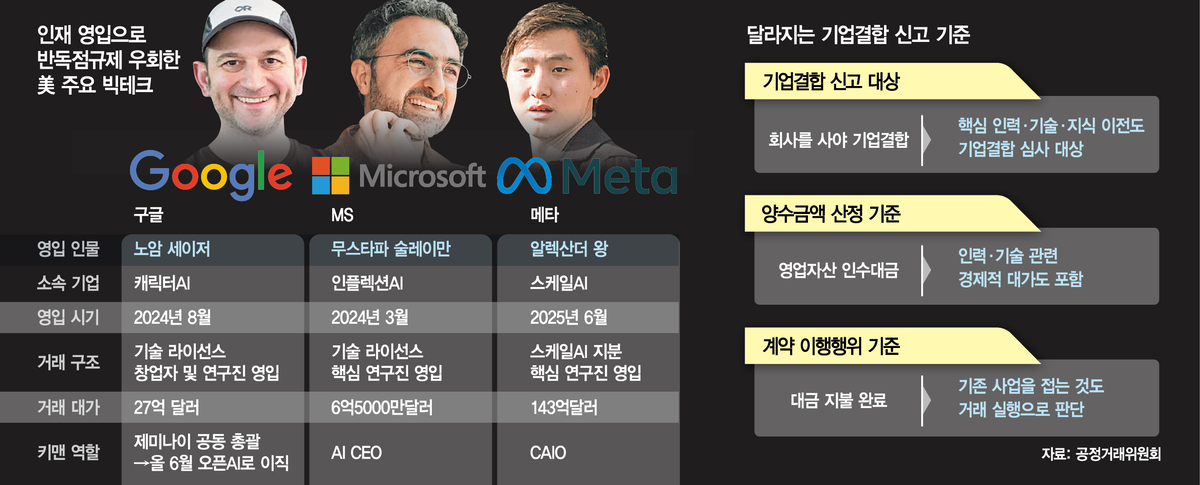
Regulatory Scrutiny Intensifies on "License-Plus-Hire" Structures
Global regulators are increasingly viewing license-plus-hire deals as de facto mergers, particularly after investigations into Microsoft/Inflection and Google/Character.AI. Reports indicate that agencies are examining whether these structures were designed to evade Hart-Scott-Rodino (HSR) filing obligations and reduce competition. This heightened scrutiny suggests that future deals may require more transparent valuation disclosures and potentially face stricter antitrust reviews.
Local view
In Japan, major business outlets like Nikkei have highlighted recent strategic partnerships between domestic startups and global giants, such as the reported $5 billion funding round and strategic tie-up between a US "safe superintelligence" startup and NVIDIA. While specific acquihire details are less publicized in Japanese media this week, the focus remains on how local AI firms can secure capital without losing autonomy to foreign tech giants.
Context & numbers
The Mechanize deal adds to the over $20 billion spent by Big Tech on AI talent through licensing and hiring arrangements between 2024 and 2026. These transactions often value startups at multiples far exceeding their previous venture rounds; for instance, Google’s Character.AI deal reportedly valued the company at roughly 2.5 times its Series A price despite lacking a traditional acquisition structure.
On the radar
- Regulatory Precedent: Watch for further statements from the US FTC and DOJ following the Korean FTC’s decision, as they may adopt similar "substance over form" approaches to talent deals.
- Open-Weight Targets: Open-weight AI companies remain hot acquisition targets, with capital pouring into firms that distribute models freely, suggesting future deals may focus on model licensing rather than just team retention.
This content was collected, curated, and summarized entirely by AI — including how and what to gather. It may contain inaccuracies. Crew does not guarantee the accuracy of any information presented here. Always verify facts on your own before acting on them. Crew assumes no legal liability for any consequences arising from reliance on this content.
Powered by
