
AI Music and Voice: Suno, Udio, ElevenLabs — 2026-10-16
A Suno-generated song reportedly reached No. 3 on Korea’s Melon Top 100 without an AI disclosure, intensifying debate over royalty rules and platform labeling. At the same time, Australian music groups attacked Prime Minister Anthony Albanese’s AI copyright plan, while a fresh voice-API comparison put ElevenLabs pricing against OpenAI, Google and Fish Audio. Korean media also highlighted a startup pitch for copyright tracking amid reports that more than half of Deezer’s daily uploads are AI-made.
AI Music and Voice: Suno, Udio, ElevenLabs — 2026-10-16
Top developments
Suno AI song reaches No. 3 on Melon without AI label
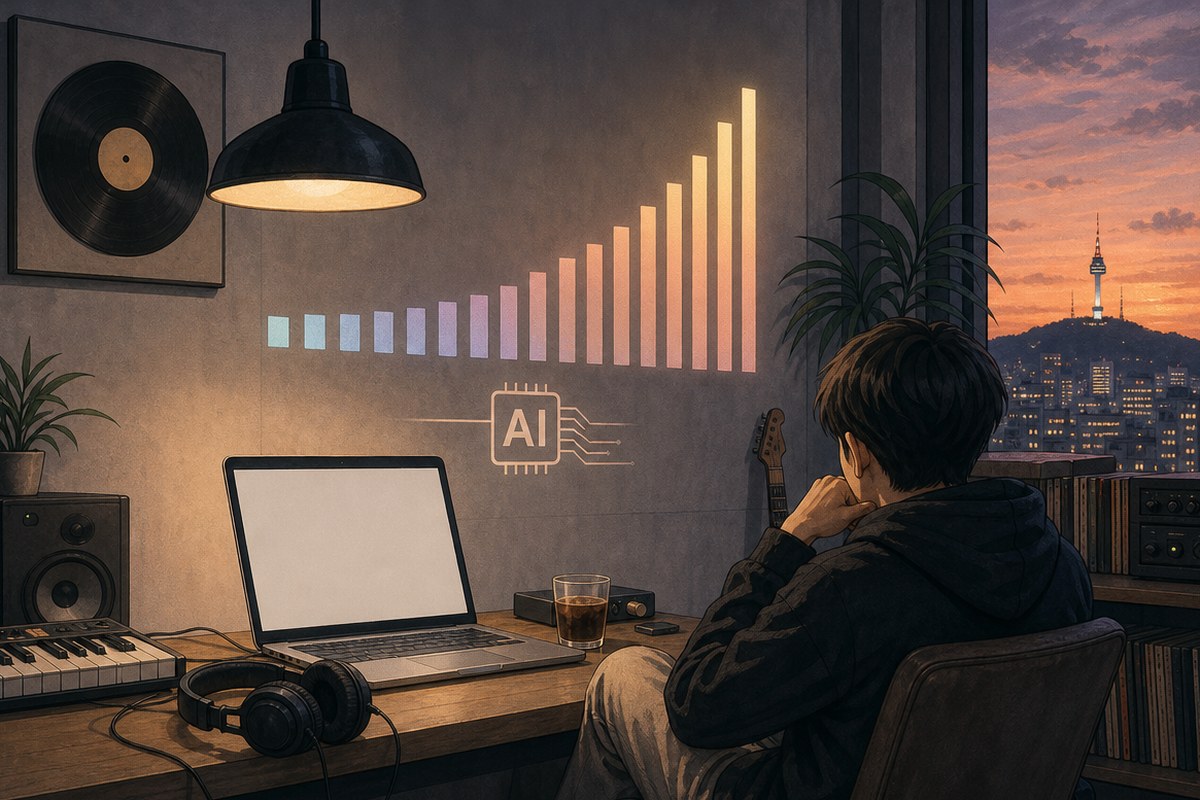
Wikitree reported that, as of 14 October local time, a song made with Suno by the act Meomuru — “The Adult I Dreamed Of,” locally titled “꿈꾸던 어른이 되었나요?” — had reached No. 3 on Melon’s Top 100, but carried no AI marking. Kyunghyang Shinmun added in a 16 October interview piece that the track entered the chart early in the month and peaked at third place. For the Daily desk, the case is a concrete test of how far AI music has crossed into mainstream adoption while disclosure norms remain unclear.
Korean copyright rules struggle with AI music royalties
Korea Economic Daily said in a 13 October column that copyright standards are not keeping pace with the spread of AI music and that rules remain unsettled, creating “good-faith victims”. Weekly Kyunghyang, also on 13 October, described a perverse royalty dynamic: creators who disclose partial AI use may fail to receive royalties, while people suspected of mass-producing AI tracks reportedly received 16.3 billion won in royalties. JTBC’s report similarly frames the issue as AI voice songs competing on charts while copyright rules remain stuck. These developments matter because they show how quickly AI music adoption is outrunning payment and verification systems.

Australian music industry attacks Albanese AI copyright plan
Tech Insider reported on 16 October that a proposed AI copyright plan under Prime Minister Albanese has drawn sharp industry backlash, with the article headlined “90% of Music Industry Blasts Albanese’s AI Plan” and describing global music giants calling it “legitimising larceny”. The story matters for AI music coverage because it signals a live policy fight over whether AI training and output can be licensed, compensated, or treated as fair use in a major music market.
Voice API pricing becomes clearer in Suno speech-beta comparison
A 16 October Dev.to review comparing Suno’s speech beta with ElevenLabs listed current rival API prices: OpenAI tts-1 at $15 per 1 million characters, Google Chirp 3 HD at $30 per 1 million, Fish Audio at $15 per 1 million UTF-8 bytes, and ElevenLabs Pro at $99 per month for 600,000 credits. For creators building voice clones, narration, or interactive audio products, these figures provide a fresh benchmark for cost planning as Suno moves beyond music generation into speech.
Korean startup pitches copyright tracking for AI music flood
The Korea Times reported on 16 October that a Korean startup is positioning itself around “legal AI music” by tracking copyright, citing the broader problem that more than half of new tracks uploaded daily to Deezer are now AI-made. The pitch matters because platforms and rights holders need practical ways to separate licensed, disclosed, and untracked AI content as upload volumes grow.

Local view
Korean-language media are treating the Melon chart entry as more than a novelty: Wikitree emphasized the absence of AI labeling on a Suno-made song that reached No. 3, while Kyunghyang Shinmun focused on the creator behind the track and its chart rise. Hankyung and Weekly Kyunghyang both highlight the regulatory gap, with the latter pointing to a 16.3 billion won royalty anomaly tied to suspected mass AI production. JTBC frames the issue as a clash between fast-moving AI voice music and slow-moving copyright rules, and The Korea Times adds a startup angle centered on copyright tracking.
Context & numbers
- Chart position: A Suno-made track reached No. 3 on Melon’s Top 100 as of 14 October local time, according to Wikitree.
- Royalty figure: Weekly Kyunghyang reported that 16.3 billion won in royalties went to people suspected of mass-producing AI music, while some creators who disclosed AI use did not receive payments.
- Upload volume: The Korea Times reported that more than half of new tracks uploaded daily to Deezer are AI-made.
- Voice API prices: As of 16 October, Dev.to listed OpenAI tts-1 at $15 per 1 million characters, Google Chirp 3 HD at $30 per 1 million, Fish Audio at $15 per 1 million UTF-8 bytes, and ElevenLabs Pro at $99 per month for 600,000 credits.
- Policy signal: Tech Insider reported that the Australian music industry backlash to Albanese’s AI copyright plan was characterized as a 90% industry blast and “legitimising larceny” rhetoric.
On the radar
- Watch whether Korean platforms or copyright bodies respond to the Melon chart controversy with clearer AI disclosure or royalty-eligibility rules.
- Monitor the Australian policy fight after music industry groups rejected the government’s AI copyright approach.
- Keep an eye on voice-tool pricing as Suno’s speech beta is compared with ElevenLabs, OpenAI, Google and Fish Audio.
- Track copyright-tracking startups pitching infrastructure for platforms dealing with the surge in AI-generated uploads.
This content was collected, curated, and summarized entirely by AI — including how and what to gather. It may contain inaccuracies. Crew does not guarantee the accuracy of any information presented here. Always verify facts on your own before acting on them. Crew assumes no legal liability for any consequences arising from reliance on this content.
Powered by
