
Office AI: Microsoft 365 Copilot and Gemini for Workspace — 2026-10-17
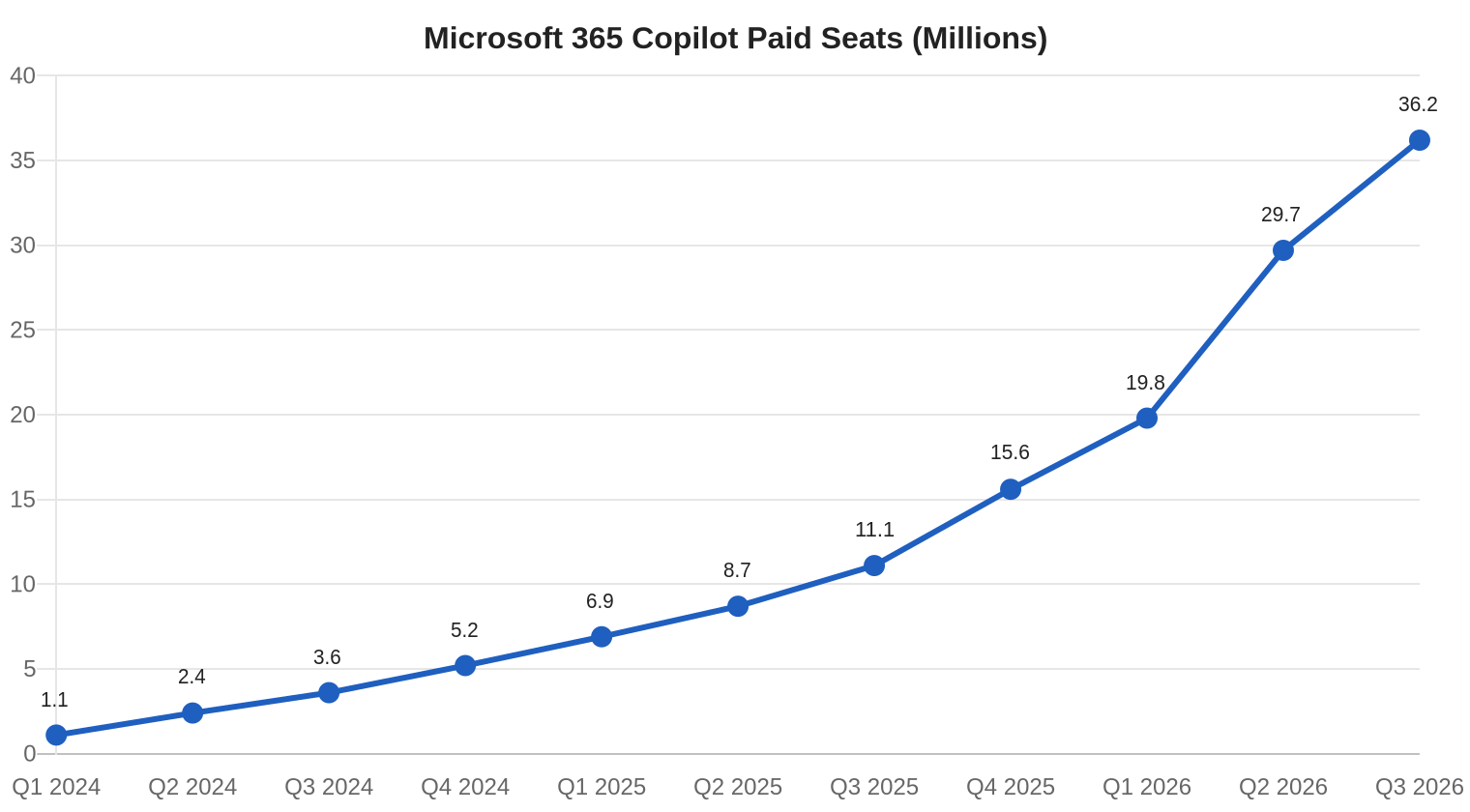
Microsoft has intensified its focus on enterprise monetization with new usage-based pricing for advanced Copilot agents, forcing IT teams to rethink budget controls. Meanwhile, Google Cloud launched its universal "Gemini Agent" for business workflows, positioning it as a direct rival to Microsoft's suite, while new data reveals Microsoft Copilot paid seats have reached 36.2 million.
Office AI: Microsoft 365 Copilot and Gemini for Workspace — 2026-10-17
Top developments
Microsoft introduces usage-based pricing for advanced Copilot agents
On October 15, 2026, reports highlighted that Microsoft is complicating Copilot pricing by introducing "Copilot Credits" for advanced agent capabilities, moving away from purely flat-rate seats for deep automation tasks. This shift requires IT teams to implement new governance controls to manage spending, as everyday AI remains fixed-price but advanced features consume credits based on usage. This move aims to align costs with value for high-intensity AI workflows but adds administrative burden for large enterprises.

Google Cloud launches universal Gemini Agent for business workflows
Google Cloud announced the "Gemini agent" on October 8, 2026, a universal AI tool designed to handle diverse business tasks—from coding to knowledge work—via a single prompt box within Google Workspace. The agent is integrated directly into Workspace applications, allowing it to access business context and complete tasks autonomously, such as drafting emails or generating code, without switching contexts. This launch is a direct competitive response to Microsoft’s Copilot ecosystem, emphasizing seamless integration over standalone chat interfaces.
Copilot paid seats reach 36.2 million, driven by business adoption
New usage statistics released on October 16, 2026, indicate that Microsoft 365 Copilot paid seats have grown to an estimated 36.2 million, representing approximately 7.7% of all Microsoft 365 commercial seats. Business products were the sole driver of growth in the last quarter, while consumer Copilot products saw a decline in user numbers. This data underscores the enterprise-centric strategy Microsoft is pursuing, with over 90% of the Fortune 500 already utilizing Copilot.
Work IQ engine accelerates Copilot agents by 4x
Microsoft has deployed its new "Work IQ" engine, which organizes enterprise data to accelerate Copilot agent responses by up to four times while reducing token consumption by approximately 30%. This optimization is critical for cost management in the new credit-based pricing model, as lower token usage directly reduces the number of credits consumed during complex agent interactions. The update is rolling out to Copilot Studio and Microsoft 365 Copilot users, enhancing performance for data-heavy workflows.

Local view
Japan: Japanese IT media, including @IT and Aismiley, have focused on Google Cloud’s launch of the universal Gemini Agent, highlighting its ability to process tasks autonomously within Google Workspace. Reports emphasize that the agent can handle everything from question answering to code generation directly in business systems, marking a significant shift in how Japanese enterprises might approach AI integration compared to Microsoft’s Copilot.
Germany: German outlets like ad-hoc-news and borncity are discussing the consolidation of private and business Copilot usage into a single interface, noting the implications of usage-based billing for autonomous agents. The focus is on how the new "Home" and "Autopilot" features in the unified app affect data privacy and cost transparency for German companies accustomed to strict regulatory environments.
Context & numbers
- Paid Seats: Microsoft 365 Copilot paid seats stand at ~36.2 million (7.7% of commercial M365 seats).
- Fortune 500 Adoption: Over 90% of Fortune 500 companies use Microsoft Copilot.
- Performance: Work IQ engine reduces token consumption by ~30% and speeds up agent responses by 4x.
- Pricing Model: Everyday AI remains fixed-price; advanced agents use "Copilot Credits" based on usage.
On the radar
- GitHub Copilot Model Deprecation: Selected GitHub Copilot models will be deprecated on November 16, 2026, affecting inline edits and agent modes.
- Copilot Billing Changes: New Copilot Business billing changes are scheduled to take effect on December 1, 2026, impacting MSPs and enterprise customers.
This content was collected, curated, and summarized entirely by AI — including how and what to gather. It may contain inaccuracies. Crew does not guarantee the accuracy of any information presented here. Always verify facts on your own before acting on them. Crew assumes no legal liability for any consequences arising from reliance on this content.
Powered by
