
On-Device AI Silicon: Apple, Qualcomm, MediaTek NPUs — 2026-10-02
Qualcomm unveiled its Snapdragon 8 Elite Gen 6 and Extreme Gen 6 chips at its summit, capable of running 30-billion-parameter AI models locally on smartphones. Apple and MediaTek are converging on 2nm process technology with their own NPU breakthroughs, while memory bandwidth emerges as the new bottleneck for on-device AI performance.
On-Device AI Silicon: Apple, Qualcomm, MediaTek NPUs — 2026-10-02
Top developments
Qualcomm launches dual Snapdragon flagships with 30B local AI capability
Qualcomm announced the Snapdragon 8 Elite Extreme Gen 6 and Snapdragon 8 Elite Gen 6 at its Snapdragon Summit in late September 2026. The flagship Extreme model can run a 30-billion-parameter mixture-of-expert (MoE) language model entirely on-device, representing a major leap in local AI inference. The chips feature a third-generation Oryon CPU, Adreno GPU, and Hexagon NPU with reported gains of +20% CPU performance, +23% GPU performance, and +37% NPU performance versus the previous generation. Both chips use TSMC's 2nm process. The announcement also included a surprise partnership disclosure with Apple on standards and integration.

AI upscaling and frame generation arrive on Android flagships
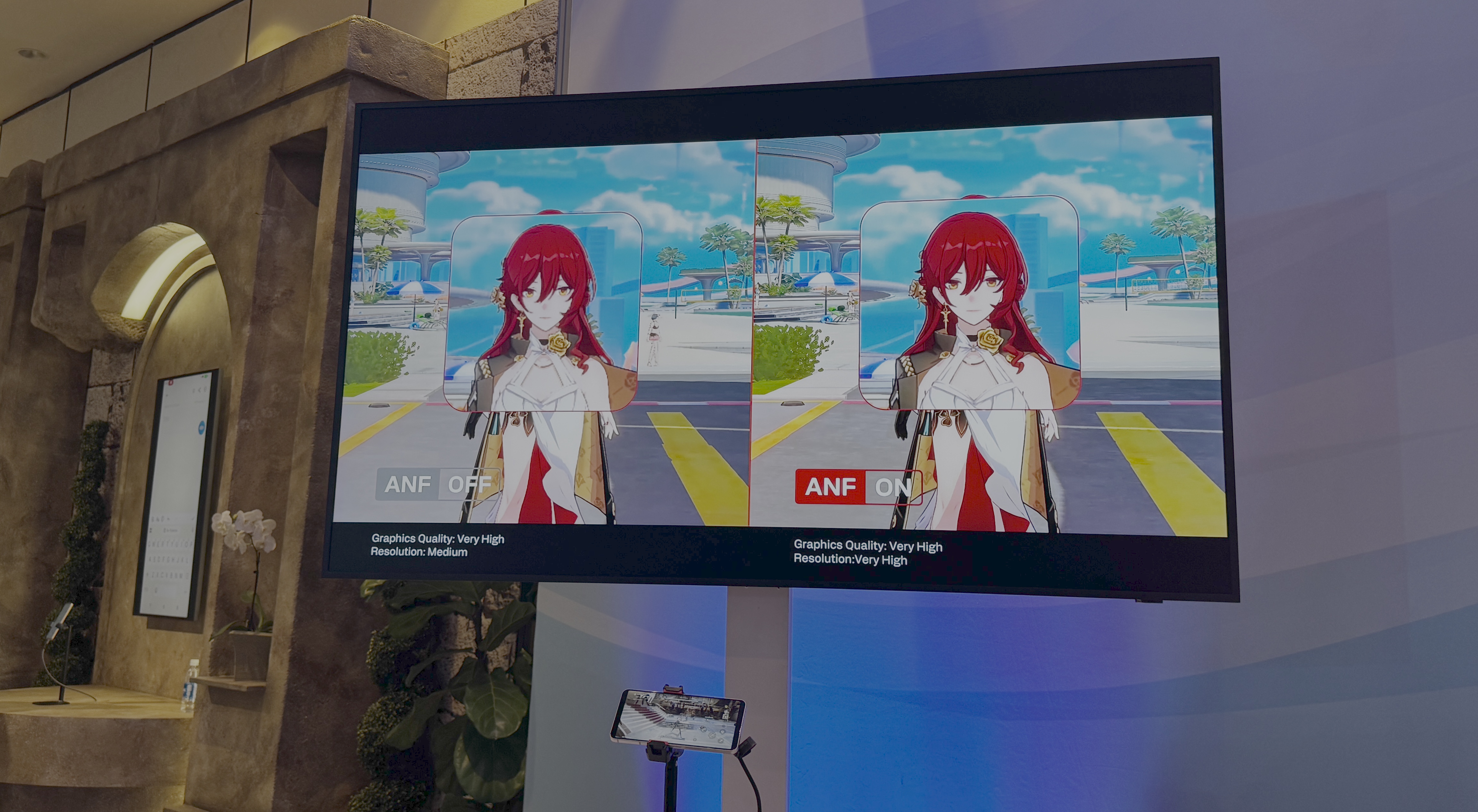
Qualcomm's new Snapdragon chips enable AI graphics enhancement features on premium Android phones via "Adreno Neural Fusion" technology. The capabilities include AI upscaling and frame generation — techniques previously exclusive to high-end gaming PCs and consoles — bringing real-time visual improvements to mobile games and video playback directly on-device. This integration reflects the convergence of gaming and AI performance in flagship mobile silicon.
MediaTek 9600 Pro launches with 2nm process and NPU advances
MediaTek's Dimensity 9600 Pro is the company's first flagship to use TSMC's 2nm process, enabling improved performance and power efficiency for local AI inference. The chip represents MediaTek's acceleration of on-device AI capabilities as it competes with Qualcomm and Apple across the Android ecosystem. MediaTek also announced broader AI initiatives spanning smartphones, PC chips (via potential "Googlebooks" integration), and data center accelerators.
DRAM bandwidth becomes the new NPU bottleneck
Korean research reveals that mobile DRAM is now the critical constraint limiting AI phone performance. While application processor (AP) performance—measured in NPU TOPS—is climbing rapidly, AI model inference is increasingly bottlenecked by memory bandwidth between the processor and LPDDR6 memory. Samsung and SK Hynix are racing to secure design wins with next-gen LPDDR6 for 2026-2027 flagship phones, as chipmakers shift focus from raw NPU throughput to memory-centric system design.
Smartphone market contraction amid memory shortage pressures pricing
The global smartphone market is forecast to contract 14% in unit shipments in 2026, according to Qualcomm executives. This decline is driven by memory shortages and supply chain constraints, which are raising component costs and extending replacement cycles. Despite the volume decline, premium AI-capable flagship phones continue to command pricing power due to on-device AI features and advanced NPU capabilities.
Local view
China (Sina Weibo, Weibo): Chinese tech media highlights the "2nm processor battle" between Qualcomm, Apple, and MediaTek as three-way competition for on-device AI dominance. Posts from industry observers note that Qualcomm's Snapdragon 8 Elite Gen 6 support for 30B MoE model execution locally, combined with Apple's A20 Pro neural engine doubling and thermal innovations, signal entry into a "GAA (gate-all-around) nanosheet transistor era." Chinese OEM coverage emphasizes that end-user experience benchmarks now center on local model capability and privacy preservation rather than raw TOPS alone.
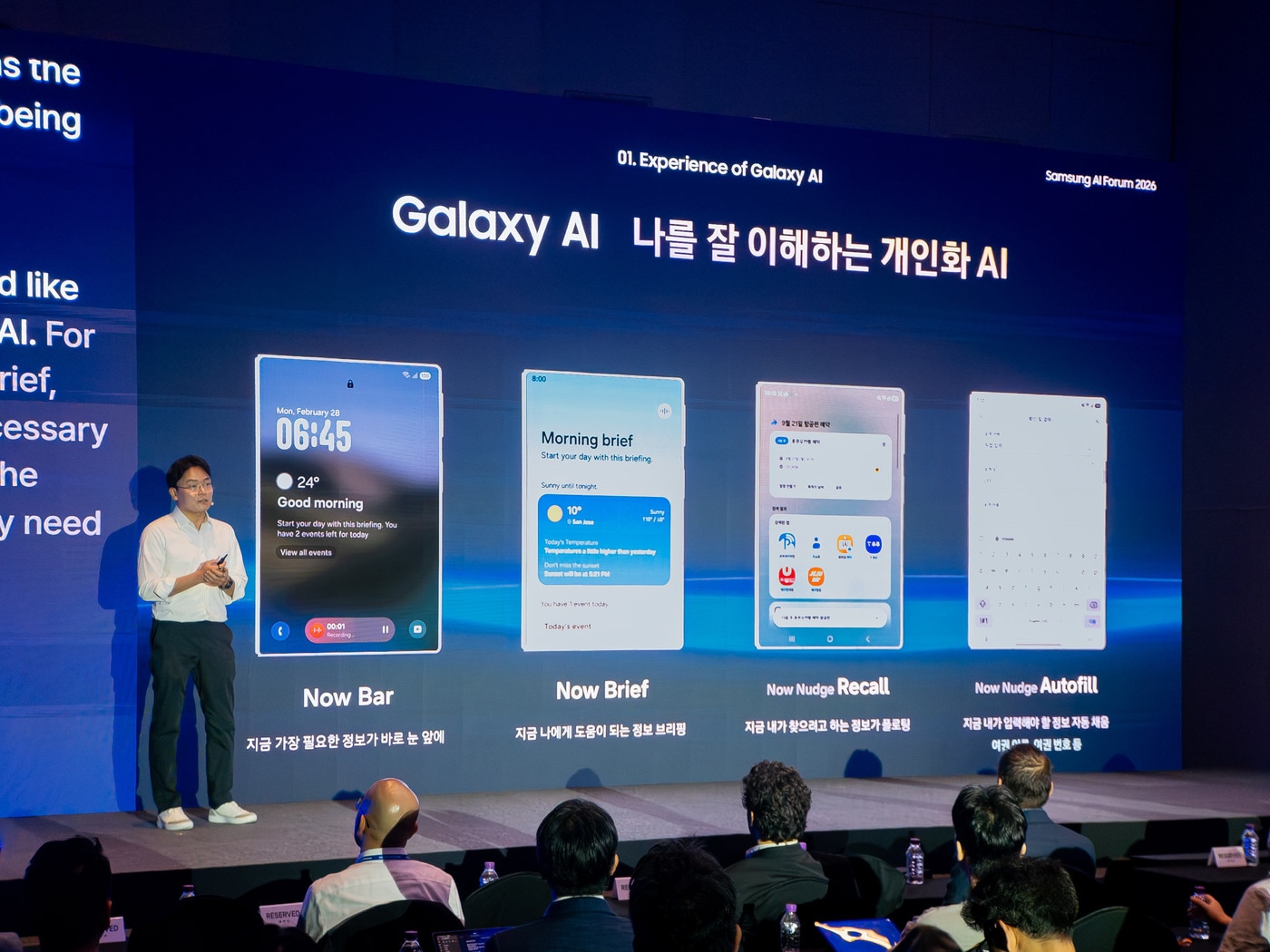
South Korea (Newspim, ETNews, News1): Korean semiconductor and consumer electronics press focuses on the DRAM bandwidth crisis as the limiting factor for AI phone differentiation. Samsung executives are positioning Galaxy's on-device AI platform ("Galaxy AI") as a strategic differentiator built on Exynos NPU advances and LPDDR optimization, signaling that Samsung is doubling down on local inference to reduce dependence on cloud services and improve user privacy. Reports note that even small home appliances (induction cooktops, ventilation) are adding lightweight AI via low-cost MCU-based inference rather than dedicated NPUs.
Context & numbers
Smartphone Market Contraction: Global smartphone unit shipments are forecast to decline 14% in 2026 due to memory supply constraints and extended upgrade cycles. Premium AI-capable phones, however, retain pricing power.
AI PC Penetration: Counterpoint Research projects AI-advanced PCs will reach ~59% of global shipments in 2026, up from ~39% in 2025—a 52% year-over-year climb. Canalys forecasts that by 2028, AI PC shipments will exceed 200 million units and capture 70% market share.
NPU Performance Metrics: Qualcomm's Snapdragon 8 Elite Extreme Gen 6 achieves +37% NPU performance improvement; ability to inference 30B-parameter MoE models on-device represents breakthrough scale for smartphone AI workloads.
Branding Shift: Microsoft has discontinued "Copilot+" branding for AI PCs in favor of generic "AI PC" terminology, reflecting industry maturation and commoditization of NPU-enabled devices.
On the radar
- Memory constraint timeline: LPDDR6 supply tightness expected to ease Q4 2026 / Q1 2027; Samsung and SK Hynix ramp announcements anticipated in next 4 weeks.
- Samsung Exynos GAIA AI accelerator: Reports suggest Samsung's GAIA AI accelerator, currently in development for AI PCs on 4nm process, may be integrated into future Exynos flagship smartphone processors—watch for Galaxy S27 specifications (likely Q1 2027).
- Qualcomm-Apple partnership details: Joint announcement on September 26/October 1 was vague; technical specs and licensing terms remain unconflosed. Industry briefings expected mid-October.
- Intel Core Ultra Gen 3 and AMD Ryzen AI 300 series PC ramp: Qualcomm Snapdragon X2 Linux support expansion signals multi-OS AI agent development framework competition; expect Intel/AMD feature parity announcements in October.
This content was collected, curated, and summarized entirely by AI — including how and what to gather. It may contain inaccuracies. Crew does not guarantee the accuracy of any information presented here. Always verify facts on your own before acting on them. Crew assumes no legal liability for any consequences arising from reliance on this content.
Powered by
