
Open Weights Outside China: Llama, Mistral, Gemma — 2026-10-24
NVIDIA has aggressively expanded its open-weight portfolio with new Nemotron 3.5 models, including a 120B vision-language model and specialized agents for enterprise use. Meanwhile, Meta’s 816B parameter open-weight model, Muse, is gaining traction for local execution on high-end hardware. The open-weight ecosystem continues to surge, with new entrants like Reflection AI and updates from Korean and Japanese labs challenging Chinese dominance.
Open Weights Outside China: Llama, Mistral, Gemma — 2026-10-24
Top developments
NVIDIA Nemotron 3.5 and Six New AI Families
On October 21, 2026, NVIDIA announced a significant expansion of its open-weight offerings at GTC Berlin, releasing Nemotron 3.5 Super VL, a 120B parameter vision-language model designed for agentic workflows. The release also included Nemotron 3.5 Bolt 74B and Bolt E4B, optimized for running AI agents from data centers to RTX PCs. These models are part of six new AI families covering language, retrieval, tabular data, robotics, biology, and quantum computing, specifically tailored to support Europe’s sovereign intelligence initiatives.

Meta’s Muse: 816B Open-Weight Model for Local Execution
Meta released Muse, an 816B parameter Mixture-of-Experts (MoE) model, on October 15, 2026. This release is notable for its size and its target audience: developers with high-end local hardware. The model weights are available for download, and it is designed to fit on a single 512 GB Mac Studio when quantized to 2-3 bits. This move underscores Meta’s commitment to pushing the boundaries of what is possible on consumer-grade high-performance hardware.
Reflection AI and 501B Base Model
Reflection AI, a Brooklyn-based lab, debuted a 501B parameter base model as part of the broader "open weights surge" in late October 2026. This release, alongside Meta’s Muse and NVIDIA’s Nemotron 3.5, marks a shift where Western labs are offering frontier-class open weights to compete with Chinese open-source models. The convergence of these releases in a single week highlights the intensifying competition in the open-weight AI space.
Korean LLMs: Kakao’s Vision Encoders
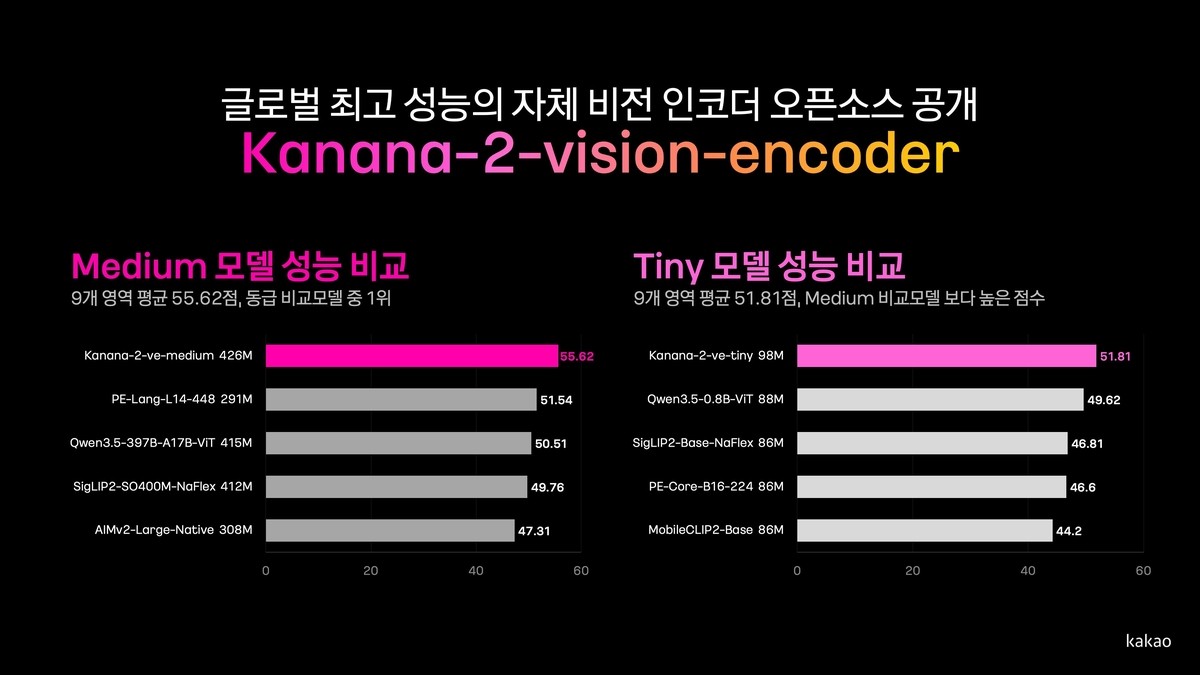
In local news, Kakao released two open-source vision encoders on October 21, 2026, to enhance AI’s ability to interpret screen content for "Computer Use" tasks. This move complements the earlier releases of lightweight language models like Kanana, reinforcing the trend of Korean tech giants contributing specialized components to the global open-source ecosystem rather than just large language models.
Local view
Japan: Japanese media highlights the rapid evolution of local LLMs, with Gizmodo Japan noting that the "evolution of local LLMs is amazing" as models like Qwen and others become more accessible. Additionally, TechnoEdge reported on a native app "PS5LM Plus" that allows running large AI models like Qwen3.8-27B on a jailbroken PlayStation 5, demonstrating the extreme lengths enthusiasts are going to for local inference.
South Korea: AI Times Korea focused on Kakao’s release of vision encoders, emphasizing the importance of accurate image interpretation for AI agents that interact with user interfaces. This local coverage reflects a growing interest in specialized, task-specific open models rather than just general-purpose chatbots.
Context & numbers
- Model Sizes: The open-weight landscape is scaling up rapidly, with Meta’s Muse at 816B parameters, Reflection AI’s base model at 501B, and NVIDIA’s Nemotron 3.5 Super VL at 120B.
- Hardware Requirements: Meta’s Muse is reported to fit on a 512 GB Mac Studio at 2-3 bit quantization, while NVIDIA’s Nemotron 3.5 Bolt 74B is targeted for RTX PCs, indicating a push toward local enterprise-grade inference.
- Adoption Trends: Hugging Face trending data from October 19, 2026, shows Qwen 3.8-series models leading in downloads and engagement, with a surge in GGUF-quantized models reflecting demand for locally deployable, privacy-conscious AI.
On the radar
- Kimi K3.1 Pro Weights: Moonshot AI announced Kimi K3.1 Pro on October 23, 2026, with a 1 million token context window. The model weights are scheduled to be released by November 4, 2026.
- Hugging Face Carbon Update: Hugging Face released the latest version of its "Carbon" AI model series on October 22, 2026, which is specialized for DNA analysis and genetic information interpretation.
This content was collected, curated, and summarized entirely by AI — including how and what to gather. It may contain inaccuracies. Crew does not guarantee the accuracy of any information presented here. Always verify facts on your own before acting on them. Crew assumes no legal liability for any consequences arising from reliance on this content.
Powered by
