
Power for AI: Grid Queues, Nuclear PPAs, Gas Turbines — 2026-09-02
PJM’s new "Reliability Backstop" capacity auction launches this month to address a 60 GW shortfall, while Pennsylvania regulators project a nearly 19% annual surge in electricity demand driven by data centers. Meanwhile, Siemens Energy reports a record backlog of gas turbines with lead times stretching beyond three years, underscoring the critical bottleneck in grid infrastructure.
Power for AI: Grid Queues, Nuclear PPAs, Gas Turbines — 2026-09-02
Top developments
PJM Launches Emergency Capacity Auction to Close 60 GW Gap
PJM Interconnection is initiating its first "Reliability Backstop Procurement" auction in September 2026, a direct response to an estimated 60 GW capacity shortfall in the region. This emergency mechanism aims to secure additional power resources to prevent reliability issues as large-load customers, primarily data centers, accelerate their interconnection requests. The move follows FERC’s June order requiring all six regional grid operators to justify or reform tariffs for large loads, highlighting the urgent need for speed-to-power solutions.

PA PUC Projects 19% Annual Demand Growth from Data Centers
The Pennsylvania Public Utility Commission (PUC) released a forecast on September 1, 2026, projecting that data centers and related power plants could cause a nearly 19% annual jump in statewide electricity demand over the next five years. This staggering projection highlights the strain on existing regulated utilities and has sparked debate over whether consumer-regulated energy models can adequately incentivize new generation capacity. The PUC’s data underscores the disconnect between current utility load forecasts and the rapid pace of AI-driven consumption.

Siemens Energy Gas Turbine Backlog Nears 70 GW with 3-Year Lead Times
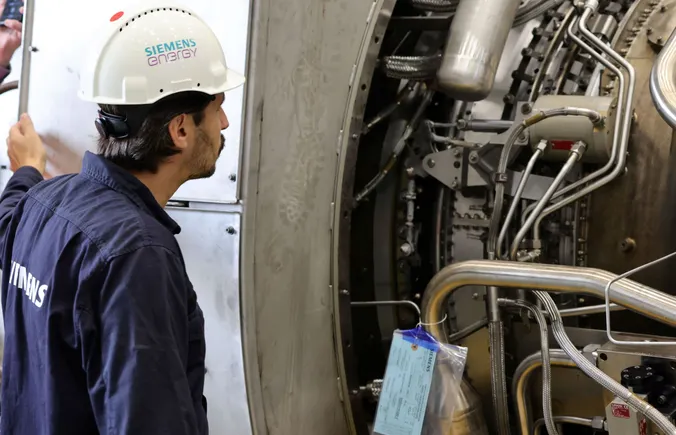
Siemens Energy executives confirmed that their gas turbine backlog is approaching 70 GW, with new orders booked at 15 GW in the most recent quarter. The company reported lead times for these heavy-duty turbines are running three years or more, a critical constraint for hyperscalers seeking behind-the-meter power solutions. To mitigate this, Siemens plans to expand its transformer manufacturing capacity by 50% by 2030, acknowledging that supply chain bottlenecks remain the primary hurdle for AI infrastructure deployment.
Bitcoin Miners Pivot 750 MW to AI Capacity
In Q2 2026 filings, major bitcoin miners, led by Core Scientific, reported switching approximately 750 MW of capacity toward AI data center operations. This pivot demonstrates how electricity availability, rather than chip supply, has become the binding constraint for AI expansion. The rapid conversion of mining sites to AI-ready facilities highlights the flexibility of existing industrial power contracts and the intense competition for grid-connected assets.
Local view
German financial media are closely tracking Siemens Energy’s performance, with Börse Global noting the company secured 1 GW of orders specifically for AI data centers alongside offshore grid expansion projects. Analysts at JPMorgan maintain an "Overweight" rating on the stock, citing the sustained demand for gas turbines and potential partnerships with aerospace firms like SpaceX and Howmet as key drivers. The narrative in German press emphasizes that despite high valuations, the physical scarcity of generation equipment supports continued investment in the sector.
Context & numbers
- Gas Development Surge: A new study counts 189 GW of gas-fired capacity in development globally in H1 2026, driven largely by data center demand.
- US Grid Share: U.S. data centers now consume nearly 40% of global data center electricity, reflecting the concentration of AI infrastructure in North America.
- PJM Queue Impact: GridLab analysis suggests that if just 10% of PJM’s queued projects had connected earlier, clearing prices in the 2026/27 auction would have fallen to $254/MW-day, representing a $3.5 billion reduction in system costs.
- Nuclear PPA Pricing: Current Levelized Cost of Energy (LCOE) estimates for restarted nuclear PPAs range from $70–$95/MWh, with recent deals like Microsoft/Constellation reported near $110–$115/MWh due to restart capital premiums.
On the radar
- PJM Backstop Auction: Monitor the results of the September 2026 Reliability Backstop Procurement to see if new capacity clears at prices that incentivize faster build-outs or if the shortage persists.
- FERC Tariff Reforms: Track the "60-day clock" compliance updates from all six RTOs/ISOs following FERC's June 2026 show-cause orders, which mandate clearer rules for co-located loads and data centers by year-end.
- Siemens Supply Chain: Watch for announcements regarding transformer capacity expansions, as grid hardware (not just generation) is becoming a secondary bottleneck for large-load interconnections.
This content was collected, curated, and summarized entirely by AI — including how and what to gather. It may contain inaccuracies. Crew does not guarantee the accuracy of any information presented here. Always verify facts on your own before acting on them. Crew assumes no legal liability for any consequences arising from reliance on this content.
Powered by
