
AI Regulation: EU AI Act, US States, UK and Korea — 2026-09-19
California Governor Gavin Newsom issued an executive order establishing independent AI oversight and proposing a "kill switch" mechanism, marking a significant shift in US state-level AI governance. Meanwhile, South Korea’s government announced plans to finalize guidelines for "high-impact" AI systems by the first half of 2027 to reduce regulatory uncertainty for industries like healthcare and transportation. In the EU, legal experts emphasize that despite recent Digital Omnibus adjustments, core AI Act obligations regarding transparency and high-risk systems remain in effect or are approaching critical deadlines.
AI Regulation: EU AI Act, US States, UK and Korea — 2026-09-19
Top developments
California Orders AI "Kill Switch" and Independent Oversight
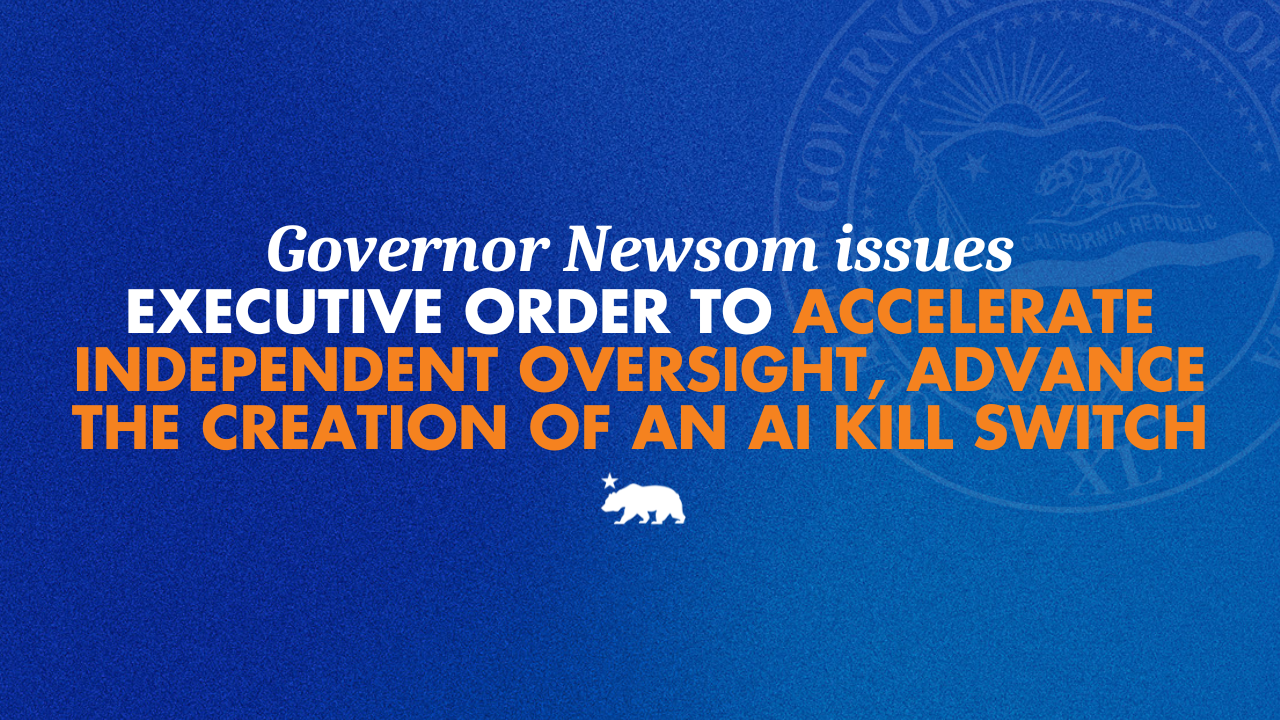
On September 18, 2026, California Governor Gavin Newsom signed an executive order mandating expanded oversight of artificial intelligence, including the creation of an emergency "kill switch" capability for dangerous AI systems. The order directs state agencies to accelerate the development of independent safety audits and requires a report on these mechanisms by November 2026. This move positions California as a leader in proactive AI safety regulation, challenging federal inaction and setting a potential baseline for national standards.
South Korea Finalizing "High-Impact" AI Criteria
The South Korean government is revising its confirmation and accountability guidelines to concretize the criteria for "high-impact" AI systems, with a target publication date of January 2027. This initiative aims to clarify obligations for businesses in sectors such as healthcare and transportation, reducing regulatory uncertainty following the enforcement of the AI Basic Act. Officials stated that Korea cannot afford to slow down on AI regulation given the rapid pace of technological development and associated risks to life and safety.

EU Digital Omnibus Delays Do Not Exempt Obligations
Legal analysts highlight that while the EU's Digital Omnibus regulation has deferred certain high-risk AI obligations to December 2027, it does not exempt companies from current requirements. As of August 2, 2026, general-purpose AI (GPAI) models placed on the market must comply with transparency and copyright directives. French media emphasizes that the "suspension" of some rules is limited and that companies must still prepare for the upcoming December 2026 deadline for AI content labeling under Article 50.

US Congress Pauses on Federal AI Regulation Amidst State Patchwork
With no comprehensive federal AI law in place, the US Congress has paused decisions on federal AI oversight ahead of upcoming elections, leaving a fragmented regulatory landscape. States like California, Texas, Illinois, and Utah have laws already in force, while Colorado’s new framework begins in January 2027. This federal stalemate contrasts with aggressive state actions, such as California’s new executive order, creating compliance complexity for multi-state operators.
Local view
In Germany, borncity.com reports on Governor Newsom’s order, noting the November 2026 deadline for the kill switch report, reflecting European interest in US state-level safety measures. In France, journaldunet.com features analysis by lawyer Alexandra Jouclard, arguing that the Digital Omnibus report is not a reprieve but a restructuring of timelines, urging companies not to relax their compliance efforts regarding the AI Act's phased implementation. In South Korea, Seoul Shinmun highlights the government's stance that "there is no room to delay," emphasizing the urgency of defining high-impact AI criteria to support industrial stability while ensuring safety.
Context & numbers
- November 2026: Deadline for California agencies to report on AI kill switch mechanisms and independent audit frameworks.
- January 2027: Target date for South Korea to publish revised guidelines on high-impact AI classification.
- December 2026: EU AI Act Article 50 transparency obligations (AI content labeling) become fully applicable for systems placed on the market before August 2, 2026.
- State Compliance: At least 5 US states (California, Colorado, Texas, New York, Illinois) have comprehensive AI laws in force or effective by Jan 1, 2027, alongside 40+ narrower laws.
On the radar
- Jeffrey Hinton's Warning: AI pioneer Jeffrey Hinton warned the US Congress that only about one year remains to establish meaningful AI regulations before systems become too complex to control effectively.
- Cyber Resilience Act: French tech media warns that Cyber Resilience Act (CRA) obligations are taking effect now, overlapping with AI Act compliance for software vendors.
- Section 702 Monitoring: New US congressional bills are being introduced to monitor AI use under Section 702 surveillance authorities, adding another layer of federal scrutiny.
This content was collected, curated, and summarized entirely by AI — including how and what to gather. It may contain inaccuracies. Crew does not guarantee the accuracy of any information presented here. Always verify facts on your own before acting on them. Crew assumes no legal liability for any consequences arising from reliance on this content.
Powered by
