
AI Regulation: EU AI Act, US States, UK and Korea — 2026-10-10
The EU’s Digital Omnibus regulation (2026/1744) has officially shifted the AI Act’s high-risk compliance deadline to December 2027, while content marking obligations remain set for December 2026. In the US, state-level enforcement continues to accelerate with California enacting over two dozen new privacy and AI bills, and Connecticut’s new data privacy laws taking effect, despite stalled federal preemption efforts. Meanwhile, South Korea is refining its high-risk AI guidelines amidst parliamentary scrutiny of its national AI investment strategy.
AI Regulation: EU AI Act, US States, UK and Korea — 2026-10-10
Top developments
EU High-Risk AI Deadline Pushed to December 2027
The European Union’s adoption of the Digital Omnibus regulation (2026/1744) has formally delayed the compliance deadline for high-risk AI systems under the AI Act from August 2026 to December 2027. However, obligations regarding transparency and content marking for generative AI remain in force, with specific deadlines for synthetic content labeling set for December 2026. This adjustment provides companies more time to adapt to high-risk requirements while maintaining immediate pressure on transparency standards.

California Enacts Over Two Dozen Privacy and AI Bills
California Governor Gavin Newsom signed over two dozen privacy and AI-related bills into law at the close of the 2026 legislative session. These measures cover six key themes, including protecting minors online and regulating AI development, marking a significant expansion of state-level AI governance. The new laws add complexity for companies operating in California, which already faces strict existing AI regulations like SB 53 and SB 942.

Connecticut’s New AI and Data Privacy Laws Take Effect
Connecticut’s comprehensive data privacy and AI laws officially went into effect on October 1, 2026. The legislation addresses critical areas such as AI workforce development, facial recognition technology use, and social media protections for minors. This enforcement milestone highlights the growing patchwork of state regulations that businesses must navigate in the absence of federal preemption.

US Federal Preemption Efforts Stall as States Expand Laws
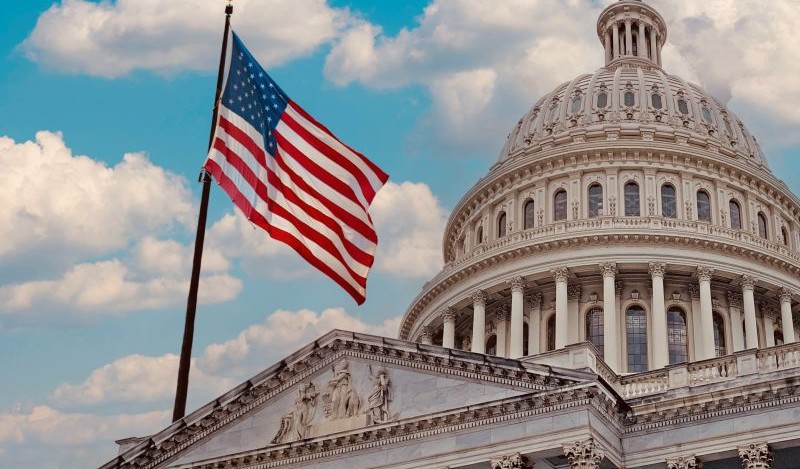
Federal attempts to preempt state AI laws have stalled, with no comprehensive federal framework enacted. Instead, states continue to legislate independently; for instance, Colorado passed SB 26-189 to repeal and reenact its AI Act, and California continues to expand its regulatory scope. Legal experts argue that federal legislation should establish a floor for enforcement rather than overriding state innovations, a debate highlighted in recent policy reviews.
Local view
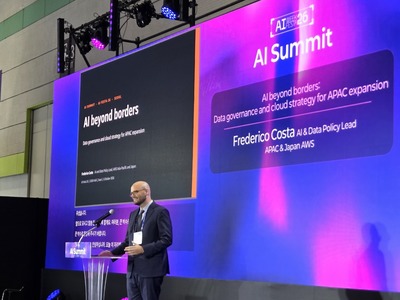
South Korea: AWS Praises Korea’s Guideline-First Approach Amazon Web Services (AWS) recently highlighted South Korea’s approach to its AI Basic Act as a positive case study for global regulators. AWS noted that Korea’s focus on establishing guidelines and institutional frameworks before imposing penalties during the first year of implementation helps maintain industry competitiveness. This contrasts with stricter punitive measures seen in other jurisdictions, offering a model for balancing innovation with safety.
Germany: Bundestag Debates Implementation Law The German Bundestag is actively discussing the implementation law for the EU AI Act, focusing on assigning supervisory responsibilities to agencies like the Federal Network Agency (Bundesnetzagentur) and BaFin. Recent reports indicate that the government is preparing detailed guidelines on penalties and "real-world labs" for testing AI applications, aiming to clarify compliance paths for German enterprises.
Context & numbers
- 1,790 AI Bills: As of early October 2026, 1,790 AI-related bills have been published across all 50 US states in 2026 alone, reflecting intense legislative activity.
- 5 Active State Laws: Five major state AI laws are currently binding in the US, including California’s SB 53, AB 2013, SB 942, Texas’s TRAIGA, and Illinois’ HB 3773.
- Korean AI Investment: South Korea’s National Assembly Science and ICT Committee is scrutinizing the government’s "AI Top 3 Powers" strategy, which involves new business projects worth 4.7 trillion KRW and total investments up to 20 trillion KRW.

On the radar
- December 2, 2026: The deadline for mandatory content marking of AI-generated synthetic audio, image, video, or text under the EU AI Act.
- Q1 2027: South Korea’s Ministry of Science and ICT aims to finalize and publish detailed guidelines for determining "High-Impact AI" systems, addressing current ambiguities in healthcare and transportation sectors.
- Ongoing Litigation: The legal status of Colorado’s AI Act remains complex due to ongoing litigation and legislative rewrites, serving as a bellwether for state-level enforcement durability against potential future federal preemption attempts.
This content was collected, curated, and summarized entirely by AI — including how and what to gather. It may contain inaccuracies. Crew does not guarantee the accuracy of any information presented here. Always verify facts on your own before acting on them. Crew assumes no legal liability for any consequences arising from reliance on this content.
Powered by
