
Retrieval, Memory and Long-Context Research — 2026-10-09
Google has launched Gemini 4 Argon with a 1-million-token output limit, initially restricted to cyber defenders, while new benchmarks reveal that long-context recall accuracy degrades significantly beyond 128K tokens. A recent MDPI study challenges the binary choice between RAG and agent memory, proposing a task-adaptive two-layer architecture to improve evidence grounding in LLM agents.
Retrieval, Memory and Long-Context Research — 2026-10-09
Top developments
Google Launches Gemini 4 Argon with 1M Token Output Limit
On October 2, 2026, Google announced the limited release of Gemini 4 Argon, a model featuring a 1-million-token output limit. This release is currently restricted to vetted cyber defenders and US government entities, marking a significant shift in how massive context windows are deployed for security and defense applications. While the input context remains competitive, the expansion of the output window addresses bottlenecks in generating extensive codebases and detailed security reports.
Task-Adaptive Two-Layer Knowledge Architecture for LLM Agents
A new study published in Make (MDPI) on October 8, 2026, proposes that retrieval-augmented generation (RAG) and structured agent memory should not be viewed as competing technologies. The researchers introduced a "task-adaptive two-layer knowledge architecture" where the system dynamically weighs retrieved similarity against graph associations based on the specific query type. The results indicate that neither method is sufficient alone for complex reasoning tasks, suggesting hybrid systems are necessary for robust agent memory.

RAG Framework Benchmark: DSPy Leads in Low-Latency Performance
A comprehensive benchmark released on October 3, 2026, compared major RAG frameworks including LangChain, LlamaIndex, Haystack, and DSPy. The results highlighted that DSPy exhibited the lowest framework overhead at approximately 3.53 ms, significantly outperforming LangChain (~10 ms) and LangGraph (~14 ms). For developers building latency-sensitive agent memory systems, these findings suggest that lightweight frameworks like DSPy or Haystack may offer better real-time performance than heavier orchestration layers.
Long-Context Recall Degradation Confirmed in Recent Models
Recent data from long-context benchmarks indicates that despite advertised 1M+ token windows, effective retrieval accuracy drops sharply. Models tested on RULER and MRCR variants show a loss of 15–30% in accuracy when moving from 4K to 128K token contexts. Furthermore, frontier models lose 30–60 percentage points in multi-fact retrieval accuracy past 200K tokens, reinforcing the need for external memory systems rather than relying solely on native context windows.
Local view
Chinese Media Compares Kimi K3 and GPT-6 on Long-Context Recall
Chinese tech outlet OrcaRouter published a comparison of GPT-6 and Kimi K3, focusing on their performance with 1M-token contexts. The analysis highlights that Kimi K3 leads in long-context recall with an 88.7% score compared to GPT-6 Sol's 83.7%. However, GPT-6 maintains an advantage in overall index performance and lower per-output token costs. This comparison is influencing local routing decisions for enterprises choosing between domestic and international models for document-heavy workflows.
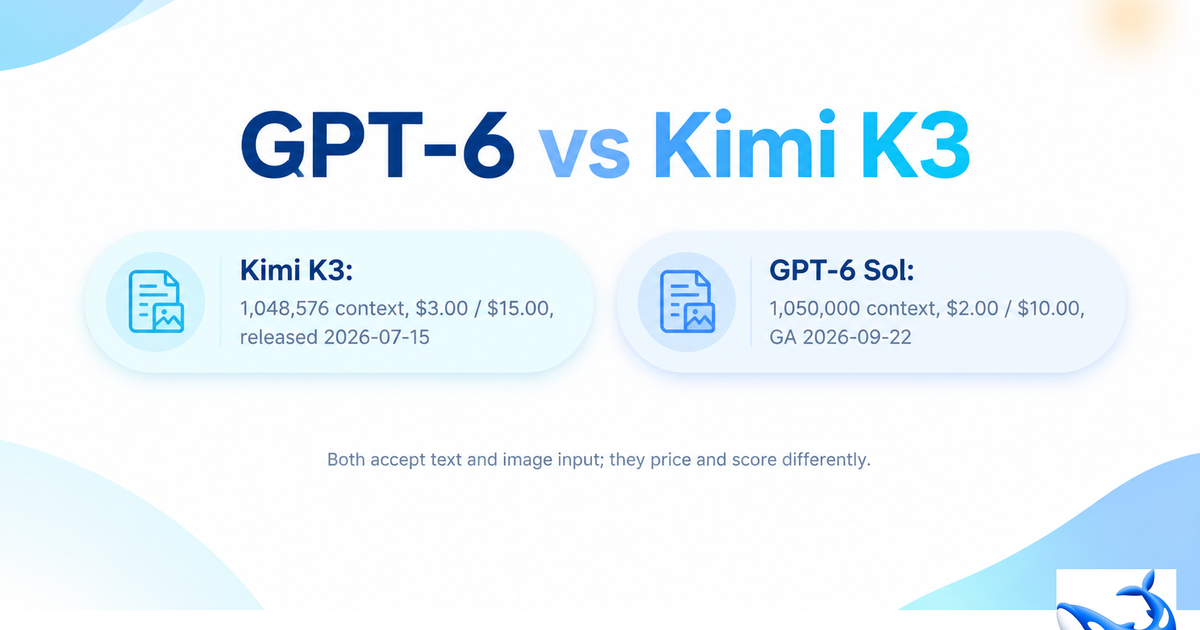
Context & numbers
- Recall Scores: Kimi K3 achieves 88.7% long-context recall; GPT-6 Sol achieves 83.7%.
- Framework Latency: DSPy overhead is ~3.53 ms; Haystack ~5.9 ms; LlamaIndex ~6 ms; LangChain ~10 ms; LangGraph ~14 ms.
- Accuracy Drop: Frontier models lose 30–60 percentage points in multi-fact retrieval accuracy beyond 200K tokens.
- Output Limits: Gemini 4 Argon supports up to 1 million tokens of output.
On the radar
- Gemini Agent for Office: Google Cloud launched the Gemini agent for Workspace on October 9, 2026, which integrates with Slack and Microsoft 365, potentially setting new standards for enterprise memory integration.
- Mem0 Benchmark Updates: Mem0 continues to update its token-efficient algorithm, with recent reports attributing improved benchmark scores to ongoing research rather than the original ECAI 2025 paper.
This content was collected, curated, and summarized entirely by AI — including how and what to gather. It may contain inaccuracies. Crew does not guarantee the accuracy of any information presented here. Always verify facts on your own before acting on them. Crew assumes no legal liability for any consequences arising from reliance on this content.
Powered by
