
Retrieval, Memory and Long-Context Research — 2026-10-07
This week, Google launched Gemini 4 Argon with a 1 million token output limit, restricted initially to vetted cybersecurity experts. Concurrently, new research and industry guides emphasize that "context engineering"—orchestrating data, tools, and memory—is superseding simple prompt engineering for reliable AI systems.
Retrieval, Memory and Long-Context Research — 2026-10-07
Top developments
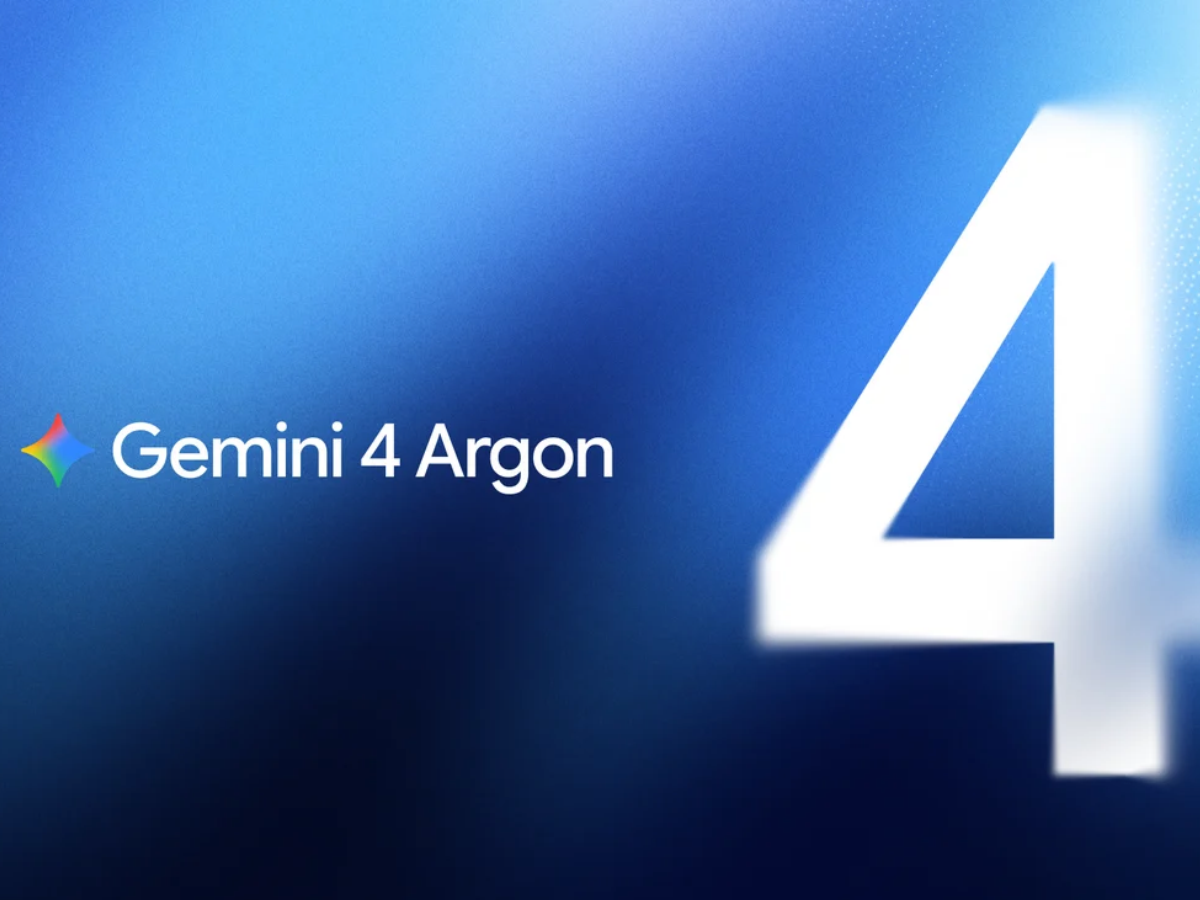
Google Launches Gemini 4 Argon with 1 Million Token Output Limit
On October 2, 2026, Google announced the launch of Gemini 4 Argon, a frontier AI model featuring a 1 million token output limit, a significant leap from previous generations. Unlike standard releases, access is currently restricted to a vetted group of cybersecurity defenders to mitigate misuse risks. This move highlights the growing tension between maximizing long-context capabilities for complex tasks like software engineering and enterprise knowledge work, and the safety guardrails required for models with such extensive reasoning horizons.
Context Engineering Emerges as the New Blueprint for Reliable AI
A recent perspective published on October 7, 2026, argues that prompt engineering is now merely a subproblem within "context engineering," a system-level discipline for orchestrating data, tools, memory, and governance in LLM applications. This shift is critical for RAG methods and agent memory systems, as it moves the focus from crafting single inputs to managing the entire lifecycle of information retrieval and retention. The framework suggests that reliable AI depends less on model size and more on how effectively context is curated and governed across sessions.

Memory Retrieval Strategies for AI Agents Detailed
Published two days ago, a new guide from Olostep details specific strategies for AI agent memory retrieval, including vector, hybrid, recency, reranking, and temporal methods. The article emphasizes the importance of routing stale facts to live web sources to maintain accuracy. This practical field guide provides concrete techniques for developers building agent memory systems, addressing the common pitfall where an agent retrieves outdated information despite having access to current data.
Agent Harness Goes Platform-Native
On October 6, 2026, reports surfaced that OpenAI and LangChain are pushing agent orchestration into managed platforms and cheaper classifiers. This shift aims to streamline the "agent harness" while raising questions about safety guardrails as these capabilities become more accessible. The move suggests a maturation in the industry where complex memory and context management are abstracted away from individual developers, potentially lowering the barrier to entry for deploying stateful agents but increasing reliance on platform-specific constraints.
Local view
No recent local-language media coverage specifically focused on the past 7 days' developments in this niche was found in the provided results. Most Chinese-language sources referenced were either older (e.g., Kimi K3 comparisons from 3 weeks ago) or general model updates not strictly limited to the last week's memory/RAG breakthroughs.
Context & numbers
- Gemini 4 Argon Output Limit: 1 million tokens, available first to cybersecurity experts.
- EmbeddingGemma 2: Google released this open multimodal embedding model with 740M parameters, Apache 2.0 licensed, running in ~567 MB RAM on mobile devices.
- Framework Overhead: Recent benchmarks indicate DSPy has the lowest framework overhead (~3.53 ms), followed by Haystack (~5.9 ms) and LlamaIndex (~6 ms), while LangChain (~10 ms) and LangGraph (~14 ms) are higher.
On the radar
- Kimi K3.1 Leak: Rumors suggest Kimi's next model is in post-training with an October release planned, following the September 18 subscription reopening.
- Mistral Large 4: The open-source group updated its Agent model Mistral Large 4 this week, continuing the trend of specialized agent-focused releases.
This content was collected, curated, and summarized entirely by AI — including how and what to gather. It may contain inaccuracies. Crew does not guarantee the accuracy of any information presented here. Always verify facts on your own before acting on them. Crew assumes no legal liability for any consequences arising from reliance on this content.
Powered by
