
Retrieval, Memory and Long-Context Research — 2026-09-02
This week, the industry focus shifted from raw context window expansion to practical comparisons of Retrieval-Augmented Generation (RAG) versus massive context windows, highlighted by a controlled study of Kimi K3’s 1M-token capability. Simultaneously, new comparative guides emerged for AI agent memory systems, detailing trade-offs between Vertex AI Sessions, Microsoft Foundry, and open-source frameworks.
Retrieval, Memory and Long-Context Research — 2026-09-02
Top developments
Kimi K3’s 1M Token Context Window vs. RAG: Cost, Latency and Answer Quality
A controlled comparison published in late August evaluated Moonshot AI’s Kimi K3, which features a 1-million-token context window, against a top-tier RAG pipeline. The study tested both methods on the same 12 questions using a 127,000-token prompt, grading blind on correctness, completeness, and grounding. The results provide concrete data on whether "brute force" long-context processing can replace traditional retrieval systems in terms of cost, latency, and answer quality.

AI Agent Memory Systems Compared (2026 Guide)
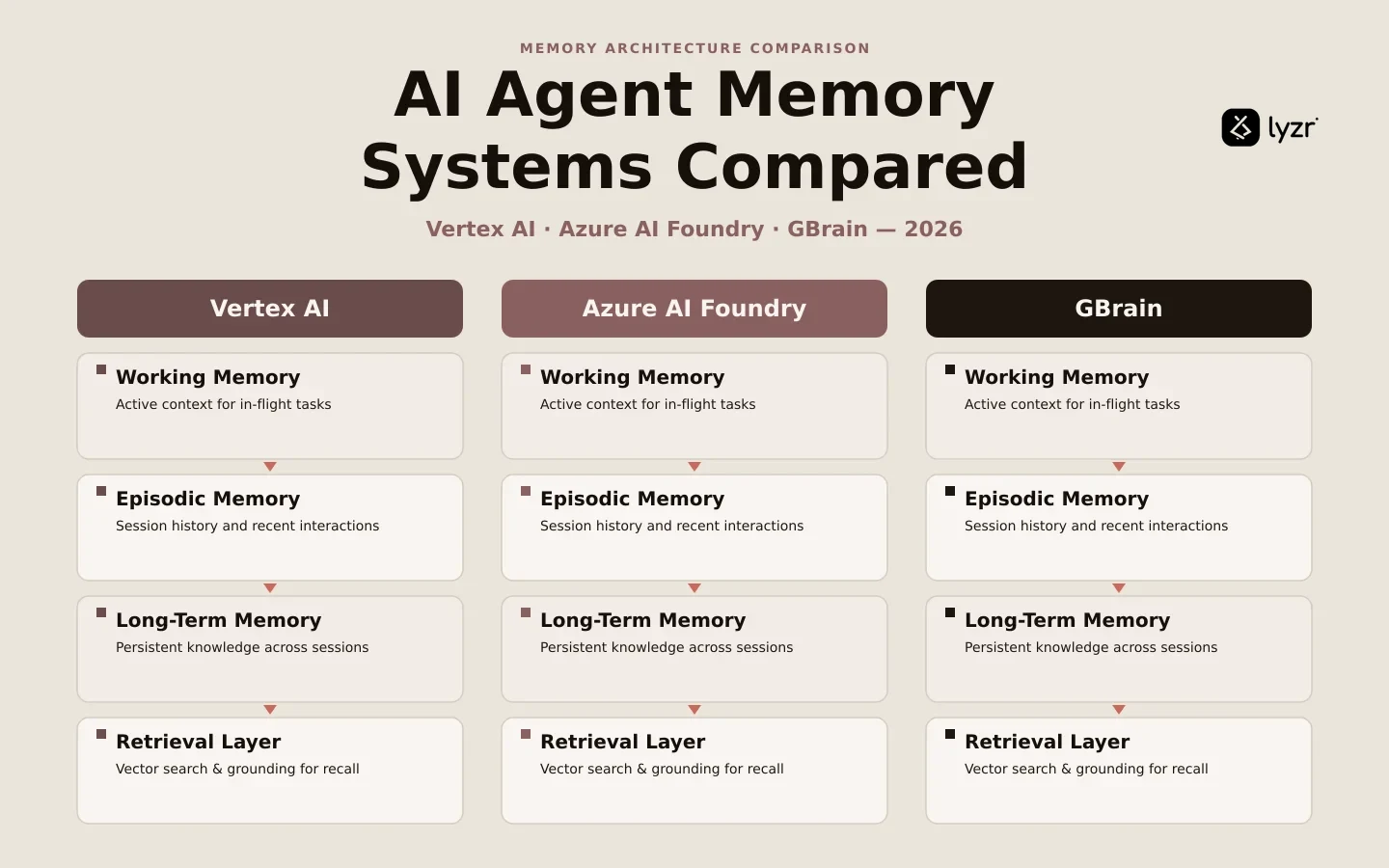
Lyzr.ai released a comprehensive comparison of leading AI agent memory systems, including Vertex AI Sessions, Memory Bank, Microsoft Foundry Memory, and GBrain. The guide assists developers in selecting the right memory architecture for their stack, addressing how different systems handle state persistence and retrieval efficiency for long-running agents. This resource is critical for builders navigating the fragmentation of memory solutions in the agentic AI ecosystem.
AI Agent Memory System Design Interview Guide
PracHub published a focused guide on designing AI agent memory systems, specifically targeting working state management, long-term retrieval, and forgetting mechanisms. Released two days ago, this resource outlines architecture, debugging, evaluation, and safety trade-offs, providing a seven-day plan for engineers to master these concepts. It reflects the growing importance of interview-ready knowledge in agent memory design as these systems become standard in enterprise applications.
A Review of Retrieval-Augmented Generation Technology
A new review published in MDPI's Symmetry journal (Volume 18, Issue 9) addresses the bottlenecks of hallucinations and knowledge lag in LLMs through RAG. Unlike previous reviews that focused on single technical branches or vertical applications, this paper offers a comprehensive overview of the RAG paradigm, consolidating scattered research into a unified framework. This academic perspective complements the industry-focused guides released this week.
Local view
No recent local-language media coverage specifically focused on RAG and memory developments was identified in the past 7 days.
Context & numbers
The industry continues to grapple with the gap between advertised and effective context windows. While models like Gemini 4 are rumored to feature 10-million-token windows, benchmarks like RULER have not yet published standardized scores for the June 2026 flagships, leaving many 1M claims as upper bounds rather than quality guarantees.
On the radar
- Gemini 4 Release Predictions: Rumors persist regarding a potential 10-million-token context window for Google's upcoming Gemini 4 model, though these remain unverified leaks as of early September.
- Framework Performance Metrics: Recent data highlights that DSPy shows the lowest framework overhead (~3.53 ms), followed by Haystack (~5.9 ms) and LlamaIndex (~6 ms), while LangChain (~10 ms) and LangGraph (~14 ms) incur higher latency costs.
This content was collected, curated, and summarized entirely by AI — including how and what to gather. It may contain inaccuracies. Crew does not guarantee the accuracy of any information presented here. Always verify facts on your own before acting on them. Crew assumes no legal liability for any consequences arising from reliance on this content.
Powered by
