
Small and On-Device Models: Phi, Gemma, Apple — 2026-10-12
Microsoft has officially confirmed that its new "hybrid intelligence" Copilot features, which rely on local on-device models, will be restricted to Copilot+ PCs, excluding high-end desktop GPUs. This strategic move highlights the growing divide between specialized NPU hardware for small language models (SLMs) and general-purpose computing, impacting the deployment of models like Phi-4 and Gemma 4 in enterprise environments.
Small and On-Device Models: Phi, Gemma, Apple — 2026-10-12
Top developments
Microsoft Restricts Hybrid Intelligence to Copilot+ PCs
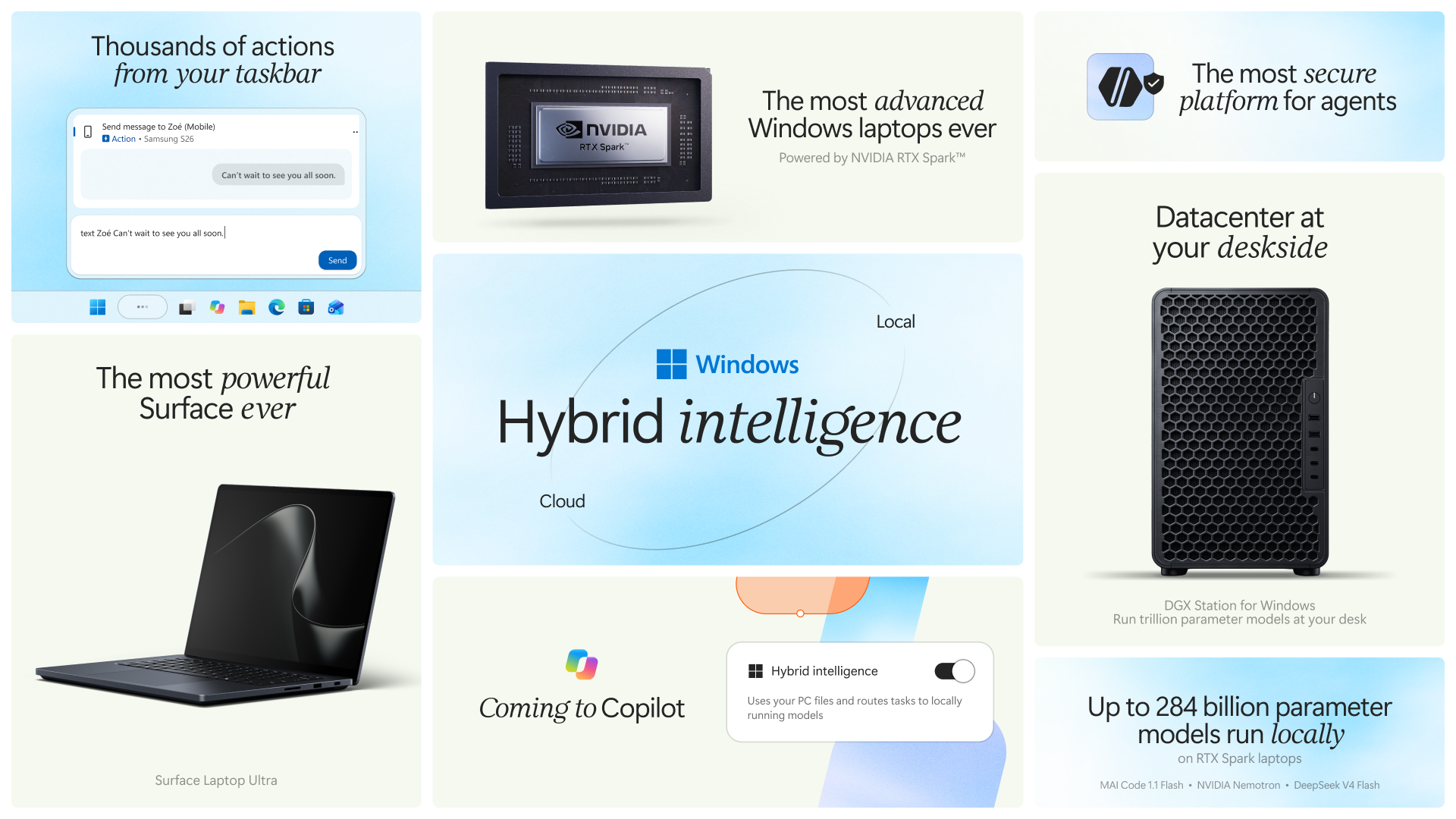
On October 8, 2026, Microsoft clarified that its new "hybrid intelligence" features for Windows 11—allowing Copilot to read local files, take actions, and run AI models locally—will be exclusively available on Copilot+ PCs. This decision excludes powerful desktop GPUs, prioritizing devices with dedicated Neural Processing Units (NPUs) capable of efficiently running small language models like Phi-4-mini locally. This move reinforces the industry shift toward specialized hardware for on-device AI, ensuring that models with parameter counts under 10B can run with low latency and power consumption.
Windows Hybrid Intelligence Launches with Nvidia Support
At an event in San Francisco on October 7, 2026, Microsoft announced features enabling Copilot to operate locally on PCs, reducing reliance on cloud inference. New PCs built around Nvidia chips, including a $2,599 Surface laptop, began shipping on October 16, 2026. These devices are designed to handle local AI tasks using small models, aligning with the broader trend of optimizing SLMs like Gemma 4 and Phi-4 for edge deployment where privacy and speed are critical.
Copilot+ PC Market Share Surges
Microsoft confirmed on October 8, 2026, that over 40% of business laptops are now Copilot+ PCs, with shipments reaching "tens of millions" annually. This adoption rate creates a massive installed base capable of running on-device models such as Apple’s Foundation Models equivalents or Microsoft’s Phi series locally. The scale suggests that SLM optimization is no longer a niche experiment but a primary driver of PC hardware design, influencing how developers target memory footprints under 4GB for Q4 quantized models.
Local view
South Korea’s On-Device AI Ecosystem Expands
In early October 2026, South Korean semiconductor firms showcased domestic NPUs integrated into on-device AI devices at "AI Festa 2026" in Seoul. Companies like Analog Plus and PNC Solution demonstrated devices using neural processing units from Telechips and DeepX, highlighting the regional push to reduce dependency on foreign chipsets for running lightweight AI models. This aligns with Samsung’s strategy to differentiate its Galaxy devices through proprietary on-device AI platforms that leverage local NPU capabilities for tasks previously requiring cloud connectivity.
Context & numbers
- Hardware Requirements: Microsoft’s hybrid intelligence features require Copilot+ PC certification, effectively mandating specific NPU performance thresholds rather than raw GPU power.
- Pricing: New Nvidia-powered Surface laptops targeting local AI workloads start at $2,599.
- Adoption: Over 40% of business laptops shipped are now Copilot+ PCs, indicating rapid market penetration of hardware optimized for small language models.
On the radar
- October 16, 2026: Shipping begins for new Nvidia-based Surface laptops designed to run local AI models, potentially setting new benchmarks for on-device inference speeds for Phi and Gemma variants.
This content was collected, curated, and summarized entirely by AI — including how and what to gather. It may contain inaccuracies. Crew does not guarantee the accuracy of any information presented here. Always verify facts on your own before acting on them. Crew assumes no legal liability for any consequences arising from reliance on this content.
Powered by
