
Speech, Voice and Realtime Audio Models — 2026-10-10
The voice AI landscape saw significant activity this week, driven by Microsoft’s expansion into real-time transcription and synthesis for contact centers, and the launch of South Korea’s government-backed "Modu AI" beta. Regulatory pressures are mounting in the US as the FCC considers rules for AI-generated political calls, while open-source benchmarks like the new Hugging Face Open TTS Leaderboard aim to standardize quality metrics.
Speech, Voice and Realtime Audio Models — 2026-10-10
Top developments
Microsoft Expands Voice Stack with Streaming Transcription and New TTS
On October 1, 2026, Microsoft AI (MAI) released three new models: MAI-Transcribe-2-Streaming, its first streaming transcription model, along with MAI-Voice-2.1 and the faster MAI-Voice-2.1-Flash for text-to-speech. This move completes a full voice-agent pipeline within Azure Foundry, targeting the contact center market with ultra-low latency capabilities. The release positions Microsoft to compete directly with specialized vendors by offering integrated, enterprise-grade speech-to-text and text-to-speech services optimized for real-time agents.

South Korea Launches "Modu AI" Beta with Major Telcos
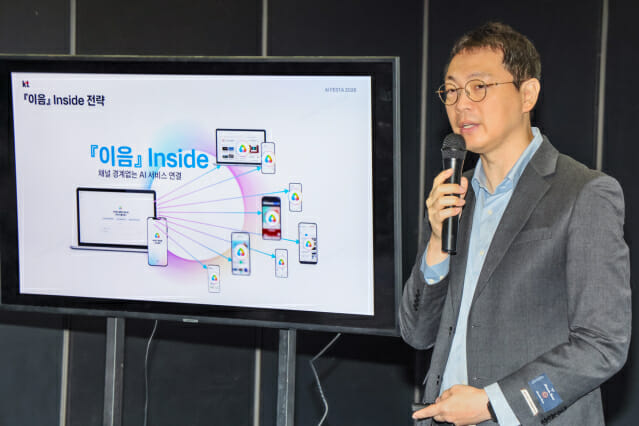
SK Telecom, KT, and Kakao have initiated the closed beta of "Modu AI" (All People's AI), a government-backed national AI service, starting in October 2026. KT announced that the service will launch fully to all citizens in December 2026, offering free access to agentic AI features that go beyond search to include reservations and applications. The initiative leverages domestic LLMs and semiconductors, aiming to create a unified voice and text interface for public services.
FCC Considers Rules for AI-Generated Political Calls
A petition before the FCC is raising concerns about whether political groups will be allowed to call voters' cellphones with AI-generated voices without prior consent. Newsweek reports that this could bypass current TCPA (Telephone Consumer Protection Act) restrictions if the rules are loosened, sparking debate over voter protection and deepfake misuse in elections. This regulatory shift could significantly impact how voice agents are deployed in high-volume outbound calling campaigns.

Hugging Face Launches Open TTS Leaderboard
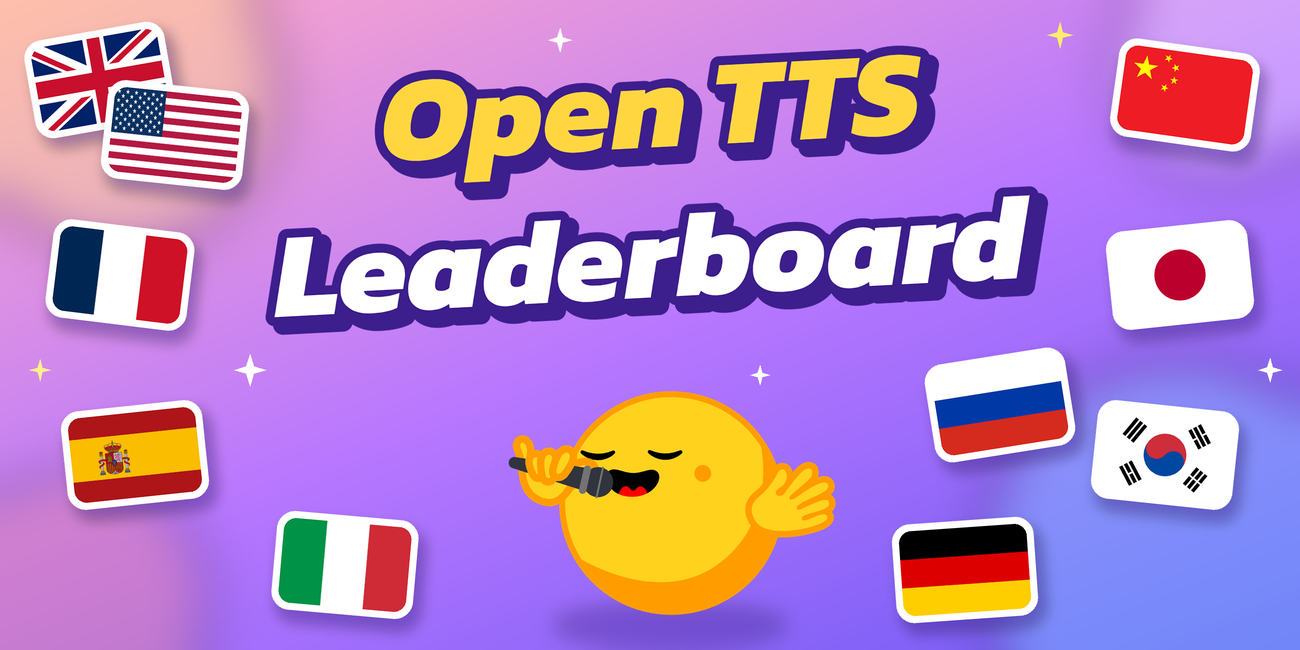
Hugging Face has introduced the Open TTS Leaderboard, which ranks text-to-speech models based on word error rate (WER/CER), H200 GPU speed, and voice-cloning speaker similarity. This tool aims to cut evaluation time from weeks to hours, providing developers with a standardized, community-run benchmark for comparing open-weight and commercial TTS models. The leaderboard addresses the difficulty of measuring naturalness and inflection in synthetic voice, complementing existing ELO-based arenas.
Local view
In Japan, ITmedia NEWS highlighted Microsoft's new streaming transcription model as a key step in completing the voice agent pipeline, noting the competitive pressure it puts on local ASR providers. Meanwhile, GIGAZINE reported on NVIDIA's open-source Nemotron 3 Diarization model, which can identify up to eight speakers in real-time, offering a robust alternative to proprietary diarization solutions for Japanese meeting transcription tools.
In South Korea, SBS Biz and ZDNet Korea focused on the "Modu AI" beta launch at AI Festa 2026, emphasizing the integration of agentic capabilities that allow users to complete tasks like reservations via voice commands. The local media narrative frames this as a national digital infrastructure project rather than just a commercial product launch.
Context & numbers
- Latency Benchmarks: Cartesia Sonic 4 continues to lead pure latency metrics with a ~40ms Time-To-First-Audio (TTFA) claim, while ElevenLabs v3 maintains dominance in voice expressiveness with support for 70+ languages and 5,000+ voices.
- Word Error Rate (WER): Top STT providers including Deepgram Nova-3, AssemblyAI Universal-3 Pro, and OpenAI gpt-4o-transcribe have plateaued in clean English audio accuracy, sitting within 1-2 percentage points of each other. Competition is now shifting toward multilingual accuracy and noise robustness.
- Deepfake Market Growth: Voice detection checks are forecast to approach 5.5 billion annually by 2028, driving investment in defense startups like Modulate, which recently raised $25M.
On the radar
- December 2026: Full public launch of KT's "Modu AI" service in South Korea.
- FCC Rulemaking: Watch for final decisions on the petition regarding AI-generated political robocalls, which could set global precedents for consent requirements in voice AI.
- Open-Weight Updates: Increased activity in the local-ai-zone community tracking open-weight voice stacks, with new Elo rankings emerging for models like Voxtral TTS and Breeze.
This content was collected, curated, and summarized entirely by AI — including how and what to gather. It may contain inaccuracies. Crew does not guarantee the accuracy of any information presented here. Always verify facts on your own before acting on them. Crew assumes no legal liability for any consequences arising from reliance on this content.
Powered by
