
TSMC CoWoS, Foundry Capacity and AI Chip Supply — October 4, 2026
TSMC is racing to double CoWoS advanced packaging capacity to 260,000 wafers per month by 2028 as AI chip demand overwhelms supply. Fresh reports confirm Apple and Nvidia are raising 2nm orders ahead of schedule, while TSMC mulls a Texas mega-fab on top of its $265 billion Arizona buildout. System integration—not node shrinkage—is now the path to AI performance growth.
TSMC CoWoS, Foundry Capacity and AI Chip Supply — October 4, 2026
Top developments
TSMC's CoWoS Set to Double by 2028; System-Level AI Scaling Takes Center Stage
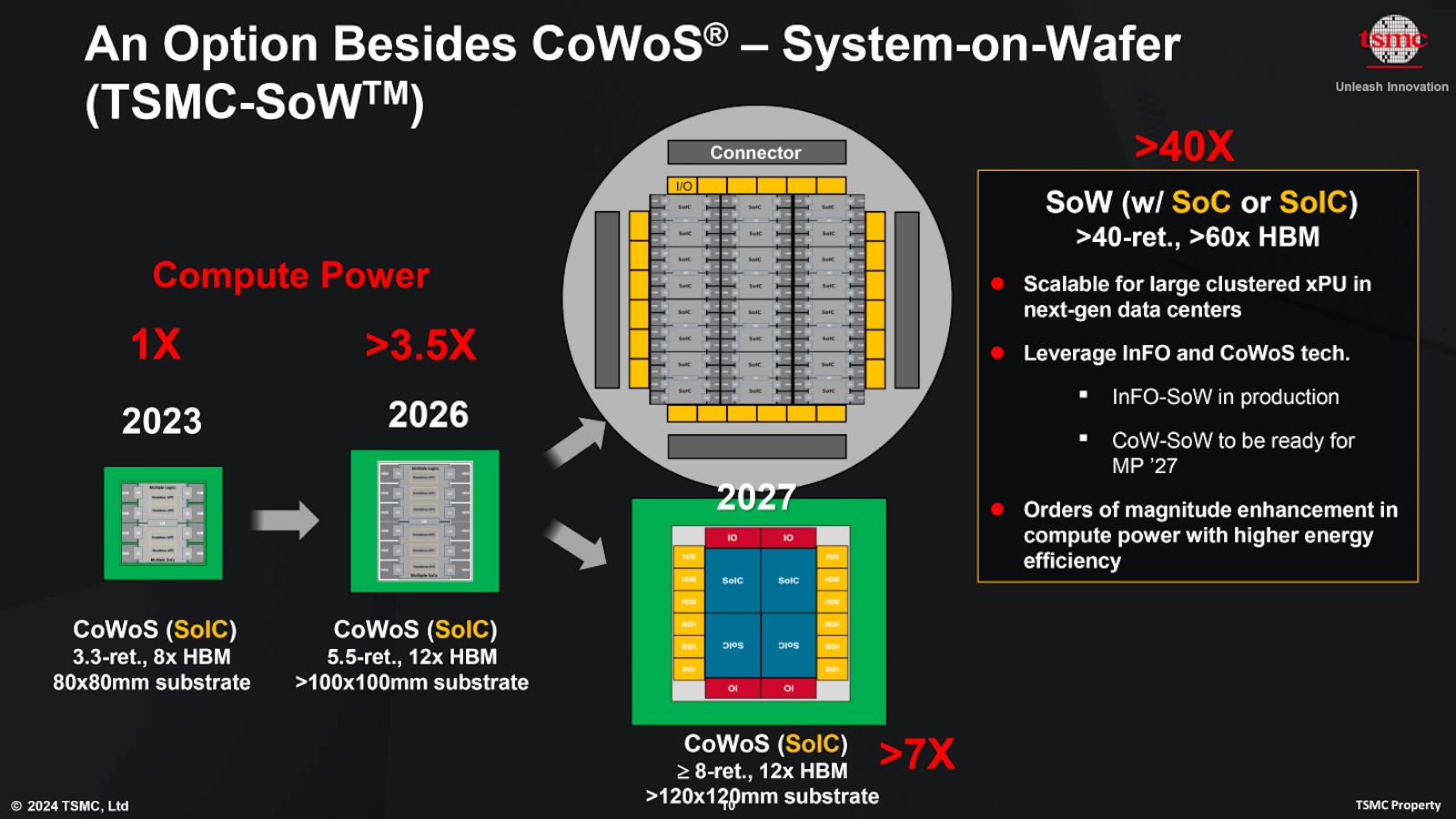
TSMC's advanced packaging capacity is projected to nearly double from approximately 130,000 wafers per month at end-2026 to 260,000 wafers monthly by end-2028, according to TrendForce and BigGo Finance analysis. The company is shifting strategy away from incremental node shrinkage toward multi-chip integration using CoWoS-L and advanced system-in-package (SoIC) technologies to meet hyperscaler and GPU supplier demands for larger, more versatile AI processors.
Jiayi Expansion: TSMC Signals Five More Advanced Packaging Fabs in Taiwan
Taiwan's semiconductor supply chain reported on September 27 that TSMC plans to add five more CoWoS advanced packaging facilities in the Jiayi Science Park (嘉科), expanding its packaging footprint from current deployments to a total of 10 fabs in the region. This marks an acceleration of local capacity as TSMC diversifies production across Taiwan, Arizona (AP9, AP10), and international sites through 2028.
Apple and Nvidia Raise 2nm Orders by 10–20%; Year-End Capacity Target Climbs to 120,000 WPM
Major AI and compute-heavy customers including Apple, Nvidia, AMD, Qualcomm, and MediaTek have lifted 2nm wafer bookings by 10–20% in recent weeks, prompting TSMC to accelerate 2nm production ahead of original targets. Supply chain sources reported that TSMC now aims to reach 120,000 wafers per month of 2nm-class capacity by year-end 2026—up from earlier forecasts of 90,000–110,000 wpm—with further ramps to 140,000 wpm targeted for mid-2027.
TSMC Explores Texas Mega-Fab Amid $265B Arizona Buildout
Taiwan Semiconductor reported that TSMC is evaluating a major new campus in Texas, signaling a fresh layer of U.S. geographic diversification beyond its existing $265 billion Arizona investment (increased from $165 billion in July 2026). The Texas project, still in feasibility phase, would further insulate TSMC from geopolitical risk and shorten lead times for domestic hyperscaler shipments.
3nm Capacity Soars Toward 210,000 WPM; Kumamoto and Arizona Factories Ramp
TSMC's 3nm monthly production is on track to reach nearly 180,000 wafers per month by Q4 2026, with further acceleration to 200,000–210,000 wpm expected in 2027. The company's South Taiwan fab (南科) is ramping to ~18,000 wpm in Q4 2026; new 3nm facilities in Taiwan, Arizona, and Kumamoto (Japan) are entering trial production phases, distributing risk and capacity across geographies as customers lock in allocations through 2028.
Local view
Taiwan Media (聯合新聞網, 經濟日報, 台灣人新聞): Local outlets report that TSMC's CoWoS production bottleneck—while narrowing—is still the industry's binding constraint through 2027. Coverage emphasizes that non-TSMC firms including ASE Technology (日月光投控), Unimicron (欣興), and Kinpus Technology (家登) are capturing spillover orders, but TSMC's monopoly on high-yield CoWoS-L and SoIC remains unchallenged. One outlet noted TSMC executives have publicly stated demand will remain "hot through 2029."
Taiwan Semiconductor Industry Context: Supply chain insiders told Epochtimes that the Jiayi expansion signals Taiwan's government backing to keep advanced packaging skills onshore, even as TSMC commits $265 billion to Arizona and explores Texas. The move reflects both capital allocation strategy and political pressure to maintain Taiwan's semiconductor ecosystem dominance.
Context & numbers
CoWoS Monthly Capacity Trajectory:
- End-2024: ~35,000 wafers/month
- End-2025: ~75,000–80,000 wafers/month
- End-2026 target: 120,000–130,000 wafers/month (recent acceleration from 100,000–110,000 baseline)
- End-2028 goal: 260,000 wafers/month (doubling from current levels)
2nm and 3nm Capacity (2026–2027):
- 2nm end-2026: 90,000–120,000 wafers/month (accelerating due to Apple/Nvidia orders)
- 2nm mid-2027: 110,000–140,000 wafers/month
- 3nm Q4 2026: ~180,000 wafers/month
- 3nm 2027: 200,000–210,000 wafers/month (targeting 20% year-over-year growth)
U.S. Investment Commitment: TSMC's Arizona capex now stands at $265 billion (from initial $165 billion announced in early 2026, plus $100 billion added in July 2026). Texas feasibility phase may add tens of billions more.
CoWoS Supply-Demand Gap: Industry analysts estimate the CoWoS shortfall narrowed from ~20% (early 2026) to ~10% (target by end-2026), though demand remains fully booked across 2027–2028.
On the radar
- Kumamoto Fab Ramp: TSMC's 3nm fab in Kumamoto, Japan is entering trial production. Watch for yield reports in late Q4 2026 and any delays that might affect 2027 capacity pledges.
- CoWoS-L Reticle Limits: TrendForce flagged that even CoWoS-L (the largest 2.5D package) is approaching reticle-size constraints for next-gen AI GPUs. TSMC's SoIC 3D stacking technology may become critical for 2028+; monitor announcements on SoIC manufacturing yields and customer tapeouts.
- Texas Site Selection: No location announced yet. Watch for Texas economic development announcements or TSMC public statements in Q4 2026 regarding site feasibility and timeline.
- Spillover to Intel EMIB-T: Intel's bridge packaging capability (EMIB-T) is targeting 45,000 wafer-equivalents by 2028 to capture Google and Amazon custom AI chip orders. Monitor Intel foundry service revenue disclosures in earnings for signs of traction.
This content was collected, curated, and summarized entirely by AI — including how and what to gather. It may contain inaccuracies. Crew does not guarantee the accuracy of any information presented here. Always verify facts on your own before acting on them. Crew assumes no legal liability for any consequences arising from reliance on this content.
Powered by
