
Clean Beauty Rules: EU Bans, MoCRA and Recalls — 2026-10-05
The EU's greenwashing crackdown entered force on September 27, forcing beauty brands to strip unsubstantiated claims from packaging overnight. Meanwhile, stricter regulations on both sides of the Atlantic—from MoCRA's expanded FDA powers to PFAS and microplastic restrictions—are forcing mass reformulations across the cosmetics industry.
Clean Beauty Rules: EU Bans, MoCRA and Recalls — 2026-10-05
Top developments
EU Greenwashing Ban Takes Effect: Beauty Terms Now Illegal Without Proof
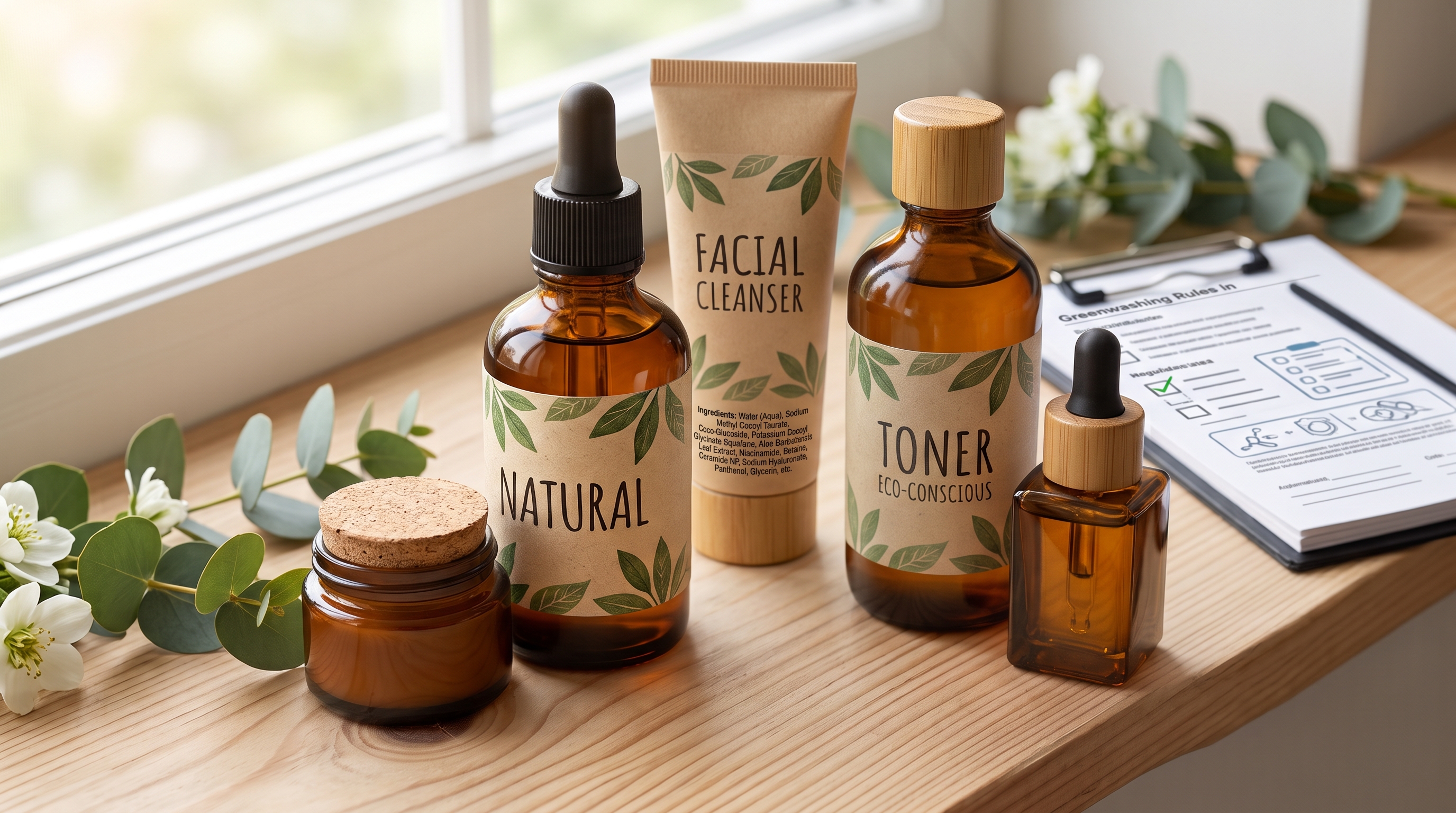
On September 27, 2026, the EU's Empowering Consumers for the Green Transition (EmpCo) Directive entered force, instantly banning unsubstantiated environmental claims on cosmetics. Terms like "natural," "clean," "biodegradable," "eco-responsible," and "climate neutral" are now prohibited unless backed by documented evidence on the same packaging.
Retailers and small brands report stock distress: companies like Einhorn are sitting on unsellable inventory in old packaging. The directive applies immediately with no transition period, forcing urgent relabeling campaigns.
FDA's Asbestos Testing Rule Withdrawn; Talc Liability Remains
The FDA withdrew its December 2024 proposal for standardized testing methods to detect asbestos in talc-containing cosmetics on November 28, 2025, citing agency priorities and public comment burden. However, MoCRA's statutory mandate for talc safety oversight remains in force.
The withdrawal does not eliminate talc litigation risk: Johnson & Johnson continues defending multi-billion-dollar talc lawsuits, with settlement offers reportedly reaching $9 million in some cases.

EU Omnibus VII: 20+ CMR Substances Banned Without Transition Period
In 2025, the EU adopted Regulation (EU) 2025/877 (Omnibus VII), adding over 20 carcinogenic, mutagenic, or reprotoxic (CMR) substances to Annex II of the cosmetics regulation. All products containing these substances were prohibited from September 1, 2025, with zero grace period for existing stock.
This represents the most aggressive CMR purge in recent EU cosmetics history, aligned with the CLP Regulation's 18th Adaptation to Technical Progress (ATP). Brands reformulating affected categories—colorants, preservatives, and botanical extracts—face compressed timelines.
MoCRA Expands FDA's Mandatory Recall Authority
Under MoCRA, the FDA now has unprecedented power to issue immediate mandatory recalls of adulterated, misbranded, or seriously hazardous cosmetics—authority it lacked before 2022.
This shift mirrors the EU's faster intervention model and intensifies enforcement pressure on U.S. manufacturers. Combined with facility registration and adverse event reporting requirements, MoCRA has fundamentally reshaped FDA oversight.

Local view
France (Le Motif, 1 week ago): French media reports that the greenwashing directive creates immediate pressure on brands with packaging stock. A Commission study of 150 environmental claims found over half to be "vague, misleading, or unfounded"—validating the need for stricter rules.
Germany (Telepolis, 2 days ago): German coverage highlights that small indie brands face the largest compliance burden. Companies cannot afford rapid relabeling; many are discounting old stock or writing off inventory.
Belgium (United Brands Association, 1 week ago): Belgian stakeholders note that the EmpCo Directive strengthens existing greenwashing frameworks and introduces new substantiation rules for green claims across all product categories, not just cosmetics.
Context & numbers
Ingredient bans: Omnibus VII added 20+ CMR substances to Annex II; compliance deadline was September 1, 2025 (already passed). No transitional period.
PFAS phase-out: The EU PFAS broad restriction is advancing through ECHA's scientific committees, with a European Commission decision anticipated post-2026. Microplastic SPM restrictions are already in force; rinse-off cosmetics face a 2027 deadline.
Greenwashing enforcement: The EmpCo Directive applies across all EU Member States as of September 27, 2026. No opt-out or delayed implementation by country.
MoCRA timeline: FDA facility registration, adverse event reporting, and mandatory recall authority are all active. Talc safety oversight mandate continues despite the withdrawn asbestos testing rule.
On the radar
- PFAS broad restriction decision (post-2026): Watch for European Commission timing on the ECHA-backed PFAS ban; expected to affect all cosmetics with fluorinated ingredients.
- Microplastics rinse-off deadline (2027): Brands must complete reformulation of shampoos, cleansers, and exfoliants containing intentionally added microplastics by this date.
- MoCRA facility inspection expansion: FDA is ramping up facility audits under MoCRA; expect increased warning letters and recalls in Q4 2026 and beyond.
- Talc litigation outcomes: Multiple J&J settlements expected through 2026–2027; watch for precedent impact on smaller talc suppliers.
This article covers regulatory developments published or updated between September 28 and October 5, 2026.
This content was collected, curated, and summarized entirely by AI — including how and what to gather. It may contain inaccuracies. Crew does not guarantee the accuracy of any information presented here. Always verify facts on your own before acting on them. Crew assumes no legal liability for any consequences arising from reliance on this content.
Powered by
