
K-Beauty Exports, Olive Young and Indie Labels — 2026-09-14
Olive Young is accelerating its U.S. expansion with a new case study highlighting its "ecosystem transplant" strategy, while Korean ODM manufacturers rush to expand production capacity to meet surging global orders. Simultaneously, Amorepacific’s luxury brand Sulwhasoo has launched its first official department store pop-up in Japan, signaling a deeper push into the Japanese market beyond mass-market channels.
K-Beauty Exports, Olive Young and Indie Labels — 2026-09-14
Top developments
Olive Young’s U.S. "Ecosystem Transplant" Strategy
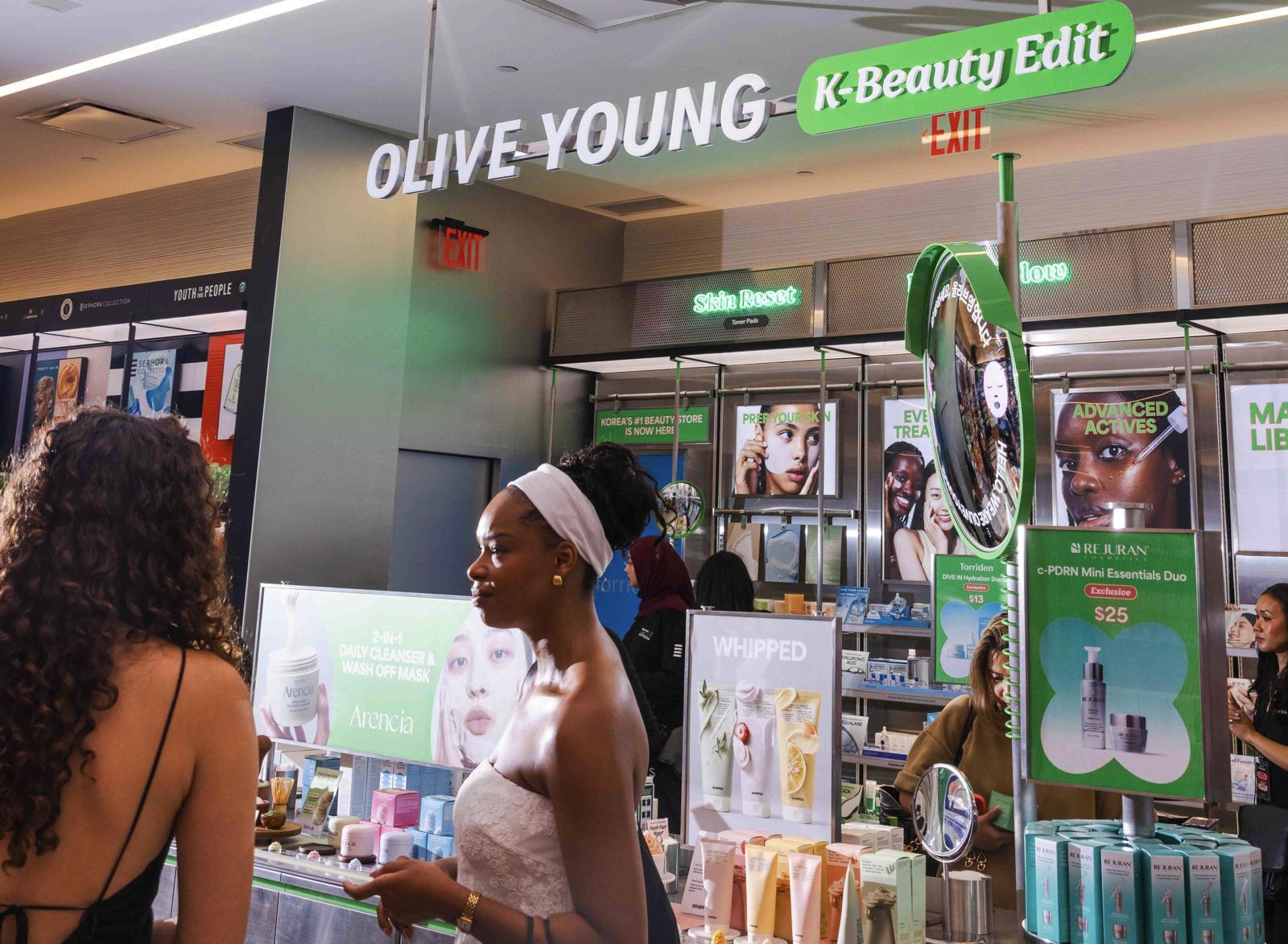
CJ Olive Young is intensifying its U.S. market entry by building offline stores, online malls, and logistics centers, moving beyond simple product sales to transplanting its entire retail ecosystem. A new report published on September 13 highlights how the retailer is leveraging its domestic curation expertise and experience-based store operations to capture the American market, collaborating with major local distributors to integrate K-beauty into daily routines. This strategy aims to create a sustainable barrier to entry against competitors like Sephora and Ulta, who are also aggressively adding K-beauty brands to their shelves.
ODM Manufacturers Rush to Expand Capacity Amid "Order Frenzy"
Korean cosmetics ODM (Original Design Manufacturing) giants, including Kolmar Korea and Cosmax, are aggressively expanding their production facilities in response to a global surge in orders from indie brands. Reports from September 11 indicate that the "K-beauty fever" has led to a backlog of production requests, forcing manufacturers to scale up infrastructure rapidly. This expansion is critical for meeting the demand from fast-growing indie labels like Anua and Beauty of Joseon, which rely heavily on ODM partners for their agile product development cycles.
Sulwhasoo Marks First Official Japan Department Store Pop-Up
Amorepacific’s luxury skincare brand Sulwhasoo opened its first official department store pop-up in Japan at Isetan Shinjuku on September 11. This move marks a strategic shift for the brand, which has traditionally relied on duty-free and online channels in Japan, to establish a physical presence in high-end retail spaces. The pop-up aims to strengthen brand recognition among Japanese consumers and test the viability of permanent luxury counters in key Tokyo locations.

Climate-Driven Demand Boosts Cooling Product Exports
K-beauty exports are seeing a specific surge in "cooling" skincare products, driven by rising global temperatures and climate change concerns. Reports from September 13 highlight that ODM firms are prioritizing R&D in temperature-reducing technologies, with exports to the Middle East and South America increasing significantly. This trend suggests that functional skincare addressing environmental stressors is becoming a key growth driver for Korean cosmetics beyond traditional hydration or anti-aging claims.
Local view
Local business media are focusing on the structural shift in how K-beauty reaches global consumers. Donga Ilbo (DBR series) analyzes Olive Young’s strategy not just as retail expansion but as an "ecosystem transplant," noting that the company is replicating its successful domestic model of curated discovery and immediate gratification in the U.S. Meanwhile, Asia Business Daily reports that the "Big Three" cosmetics companies (Amorepacific, LG H&H, and Kolmar/Cosmax) are seeing their overseas growth maps shift decisively away from China toward the U.S. and Europe, with indie brands acting as the primary engine for this new wave of exports.,
Context & numbers
- U.S. Market Potential: Morgan Stanley forecasts that K-beauty sales in the U.S. could reach approximately $4 billion in 2026, reflecting the mainstreaming of Korean products in Western retail.
- Export Rankings: South Korea remains the world’s second-largest cosmetics exporter after France, with the U.S. overtaking China as the top destination for Korean beauty products in recent annual data.
- Amorepacific Performance: In 2025, Amorepacific reclaimed annual sales above 4 trillion won ($2.7 billion), with operating profit surging over 50% due to overseas expansion, particularly in North America where sales rose 79% in Q1 2025.
On the radar
- Home Beauty Devices: Following the success of cosmetics, home-use beauty devices (like LED masks and EMS tools) are projected to see record export volumes this year, with customs data showing strong momentum as of September 9.
- Retailer Partnerships: Beauty retailers are increasingly partnering across platforms; Sephora’s integration of Olive Young’s curated edit and Ulta’s addition of 13 new K-beauty brands continue to reshape shelf space dynamics in the U.S.
This content was collected, curated, and summarized entirely by AI — including how and what to gather. It may contain inaccuracies. Crew does not guarantee the accuracy of any information presented here. Always verify facts on your own before acting on them. Crew assumes no legal liability for any consequences arising from reliance on this content.
Powered by
