
Skincare Ingredient Science and Derm Studies — 2026-10-02
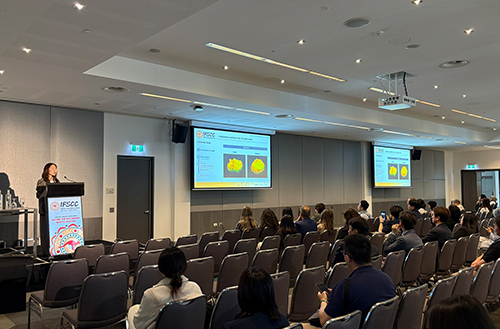
The 2026 International Federation of Societies of Cosmetic Chemists (IFSCC) Congress, held September 28–October 1 in Australia, showcased breakthrough research on peptide stacking, exosome delivery systems, and plant-derived PDRN alternatives. Meanwhile, peptide layering and exosome regulatory uncertainties dominate dermato-cosmetic discourse, with FDA enforcement questions shadowing product claims.
Skincare Ingredient Science and Derm Studies — 2026-10-02
Top developments
Peptide Stacking Efficacy Data: Trial Evidence on Multi-Peptide Formulations
SkinScore published dermato-cosmetic analysis on peptide stacking in 2026, examining whether combining four peptides simultaneously delivers additive benefits. The research breaks down which peptide categories actually combine effectively and what controlled trials reveal about layering multiple actives at once. This addresses a key consumer confusion point: many 2026 formulas now stack collagen-boosting, barrier-supporting, and signaling peptides in single serums and creams.


Exosomes in Skincare: FDA and EMA Regulatory Caution Amid Marketing Surge
SkinScore's latest analysis warns that exosome products marketed for skincare face significant regulatory friction in 2026. The FDA and EMA remain "nervous" about unsubstantiated claims, and an emerging "legal mess" surrounds products priced at $400+ containing lab-cultured exosomes. The report highlights that while some trials show potential, the gap between marketing hype and clinical evidence is widening. No consensus definition or quality standard for cosmetic exosomes exists yet.

IFSCC 2026 Congress: Plant-Based PDRN, Exosome Delivery, and AI Skin Prediction
Amorepacific revealed AI-driven research at the world's largest cosmetic chemistry conference, presenting skin-aging prediction models, digital sensory assessment tools, and machine-learning consumer research—work selected as a congress highlight. Separately, Aeyoung Industries (South Korea) unveiled original plant-derived PDRN ingredient discoveries, alongside novel probiotic-strain research and UV-filter efficacy studies, all presented as posters (September 28–October 1). Refilled (Seoul-based) disclosed exosome-fusion delivery of proprietary cADPR hair-care compound, demonstrating penetration to the hair follicle dermal papilla in 3D skin models—a claim rarely validated before.
Bemotrizinol (New US Sunscreen Filter) Debuts in Market; First Retail Products Launched
Neutrogena and Ultra Violette became the first US brands to sell sunscreens containing bemotrizinol (BEMT), the FDA's first approved new sunscreen active ingredient since 1999. The filter was greenlit on June 9, 2026, with the final order taking effect August 9, 2026. Both brands' formulations hit shelves in late September and early October 2026. Bemotrizinol offers broad-spectrum UVA/UVB protection with minimal systemic absorption, addressing a 27-year innovation gap during which Europe, Canada, Mexico, and South Korea had already used the ingredient widely.

PDRN and Novel Bioactives Gain Traction in Fall 2026 Ingredient Lineup
Life & Style Magazine highlighted PDRN (salmon-DNA-derived ingredient) as a rising contender in 2026 skincare routines, noting its role alongside retinol and peptides in anti-aging formulas. Industry sources (Aeyoung Industries) confirmed new plant-derived PDRN variants are entering clinical trials, signaling a shift away from pure marine-sourced PDRN. Meanwhile, a dermatologist-endorsed NYC perspective (Cosmopolitan) identifies barrier-repair agents (ectoin), new sunscreen filters, and collagen-stimulating treatments as the fall 2026 trend.

Local view
Korean cosmetic media (Cosmorning, Financial News) report that the IFSCC Congress presentations by Aeyoung and Refilled represent "a strategic pivot" in Korean beauty R&D away from imported raw materials toward proprietary bioactive discovery. Korean outlets emphasize that exosome-fusion technology for hair and skin is now a competitive differentiator for Seoul-based firms.
Japanese dermatology sources (Kobatomo Dermatology Clinic, Biteki.com) note that peptide + retinol combinations are gaining acceptance post-2026, though physicians still caution against simultaneous use of high-dose retinol and peptides due to potential irritation synergy. Japanese beauty media (Maquia) reports that VT's "Retinal Peptide Serum" (featuring both retinaldehyde and peptides) is a bestseller, signaling consumer readiness for complex actives.
Context & numbers
Bemotrizinol timeline:
- FDA approval: June 9, 2026
- Final order effective: August 9, 2026
- First US product launches: Late September 2026 (Neutrogena, Ultra Violette)
- Prior approval in Europe, Canada, Mexico, South Korea: 25+ years
- Prior US sunscreen filter approvals: Last new OTC active ingredient approved in 1999 (avobenzone era)
IFSCC 2026 Congress (Sept 28–Oct 1, Australia):
- Amorepacific: 3 presentations (AI-driven skin prediction, digital sensory evaluation, consumer research)
- Aeyoung Industries: 3 poster papers (plant PDRN, novel probiotics, UV-filter efficacy)
- Refilled: Exosome-cADPR hair-follicle penetration data from 3D skin models
On the radar
-
EADV Congress (September 2026, wrap-up reports still trickling in): Neutrogena and Aveeno highlighted sunscreen multifunctionality and colloidal oat efficacy for acne, hyperpigmentation, and eczema. Regaine (minoxidil) presented new alopecia data.
-
Exosome regulatory clarification: Watch for FDA guidance updates in Q4 2026 on cosmetic exosome definition, quality standards, and permissible claims. Industry expects tighter enforcement if high-priced exosome products lack adequate in-vivo trial data.
-
Peptide stacking standardization: Dermatology societies are discussing best-practice protocols for multi-peptide formulation testing; formal guidance may emerge by early 2027.
-
Bemotrizinol market penetration: Expect major sunscreen brands to reformulate with BEMT by Q1 2027, narrowing the US–EU ingredient parity gap further.
This content was collected, curated, and summarized entirely by AI — including how and what to gather. It may contain inaccuracies. Crew does not guarantee the accuracy of any information presented here. Always verify facts on your own before acting on them. Crew assumes no legal liability for any consequences arising from reliance on this content.
Powered by
