
EV Batteries and Charging: LFP, Solid-State, CATL, LG — 2026-09-10
CATL and EVE Energy have initiated price hikes for battery energy storage cells, signaling a shift in market dynamics despite falling EV pack prices. Meanwhile, LG Energy Solution reported a breakthrough in Lithium-Manganese-Rich (LMR) batteries that could accelerate the transition beyond traditional chemistries. In South Korea, the "Big Three" battery makers are locking horns in a fierce competition for the upcoming 3rd ESS Central Contract Market tender, with SK On securing a major US order.
EV Batteries and Charging: LFP, Solid-State, CATL, LG — 2026-09-10
Top developments
CATL and EVE Energy Lead Storage Cell Price Increases
Major Chinese manufacturers, led by CATL and EVE Energy, have initiated a new wave of price hikes for battery energy storage system (BESS) cells. This move contrasts with the continued decline in EV battery pack prices, suggesting a tightening supply-demand balance specifically in the stationary storage sector. The increase is driven by rising raw material costs and strong demand from grid-scale projects, potentially squeezing margins for integrators who locked in long-term fixed-price contracts.
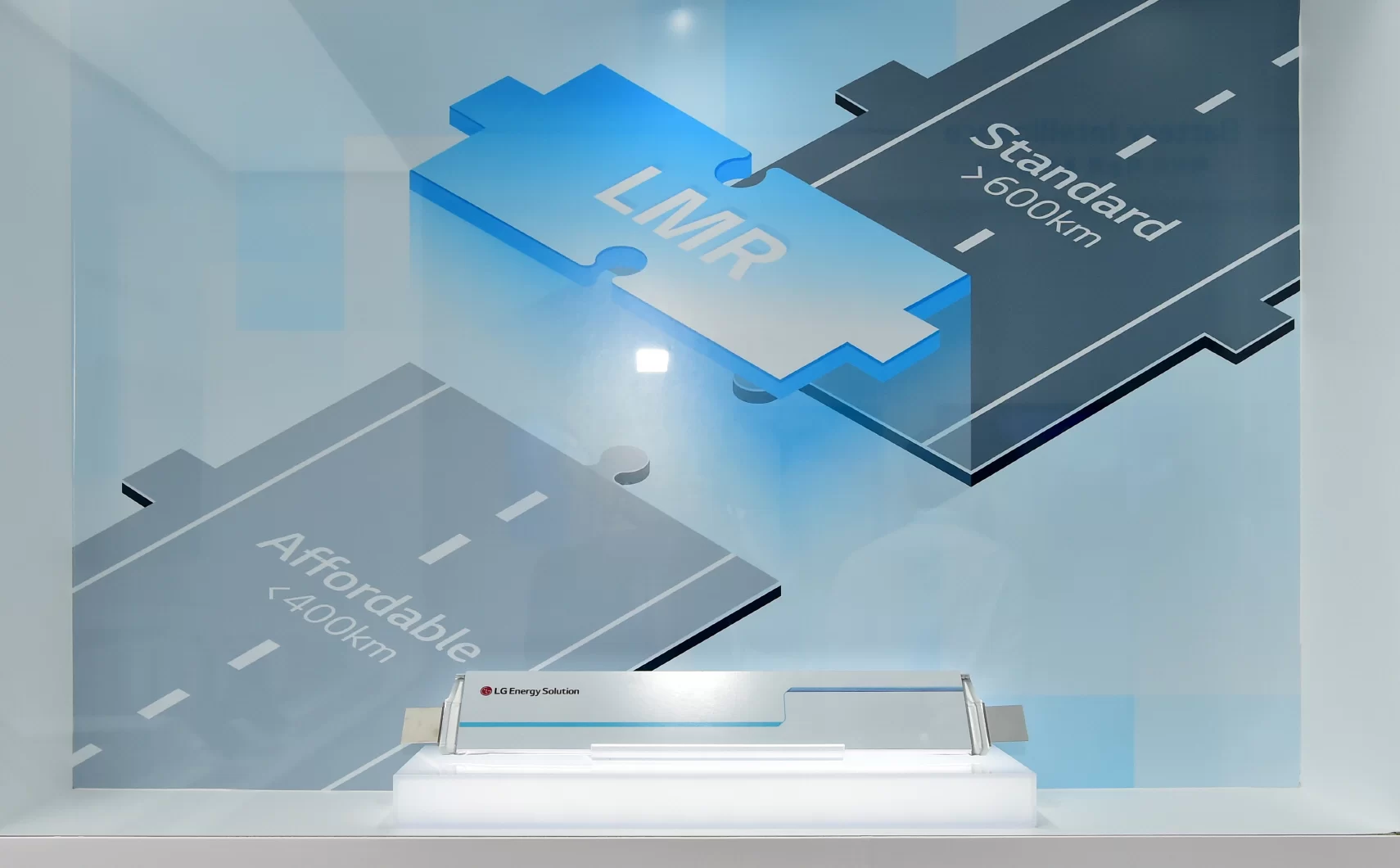
LG Energy Solution Reports LMR Battery Breakthrough
LG Energy Solution, in collaboration with Seoul National University, has achieved a significant milestone in Lithium-Manganese-Rich (LMR) battery development. The team solved a decades-old gas evolution problem using a novel voltage protocol, achieving 92.2% capacity retention after 883 cycles in commercial-scale 40 Ah cells. This advancement addresses key stability issues that have hindered LMR commercialization, offering a potential path to lower-cost, high-capacity alternatives to nickel-based cathodes.
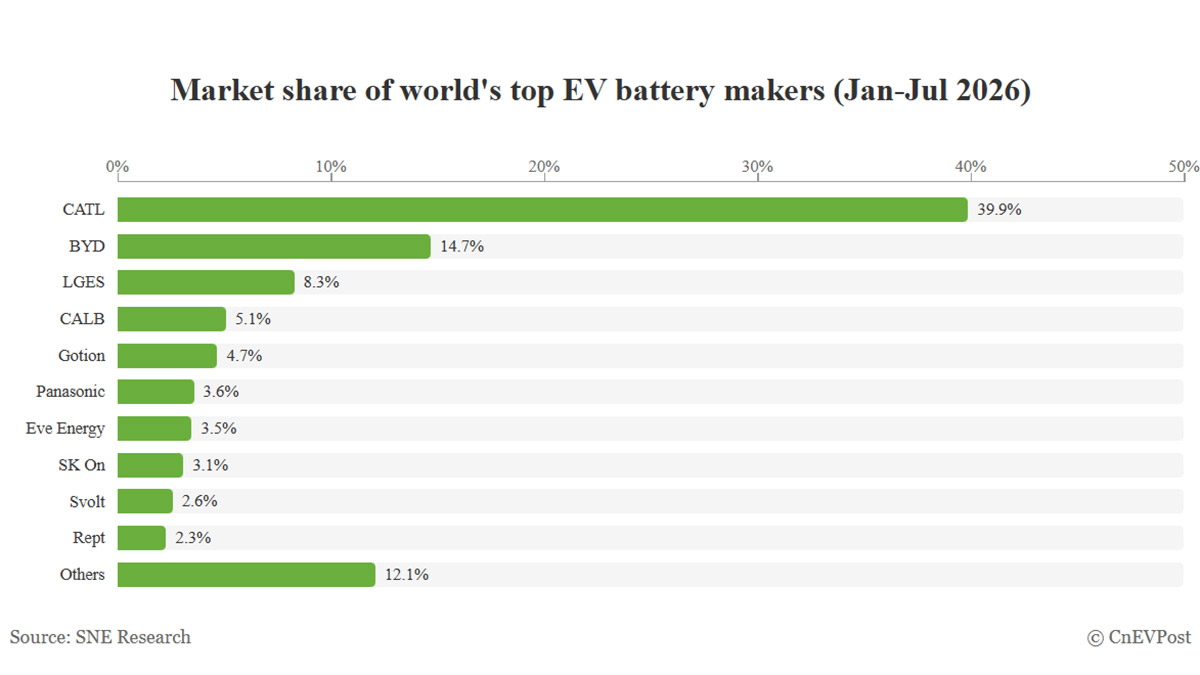
Global EV Battery Market Share: CATL Dominates with 39.9%
According to SNE Research data for January-July 2026, CATL maintained its global dominance with a 39.9% market share, followed by BYD at 14.7%. The combined share of the top seven Chinese companies reached 72.8%, underscoring the overwhelming competitive advantage of Chinese manufacturers in both LFP and NMC segments. This concentration highlights the challenges facing Western and Korean rivals in scaling production and reducing costs to match Chinese efficiency.
K-Battery Trio Competes for 1 Trillion Won ESS Tender
South Korea’s three leading battery makers—LG Energy Solution, Samsung SDI, and SK On—are engaged in intense competition for the third round of the national ESS Central Contract Market tender, valued at approximately 1 trillion won ($730 million). The tender is critical for these companies to offset slowing EV demand ("chasm") by securing long-term grid storage contracts. SK On recently secured a separate 1.5 trillion won ($1.1 billion) ESS order in the US, boosting its momentum ahead of the domestic bid.
Sungrow Switches to Samsung SDI Cells Amid Supply Chain Shifts
Chinese energy storage giant Sungrow has reportedly turned to Samsung SDI for battery cells to sustain its business, a significant shift given the usual preference for domestic Chinese suppliers like CATL and BYD. This move is likely driven by the need to diversify supply chains and mitigate risks associated with potential trade barriers or export restrictions on Chinese-made components. It signals a growing acceptance of non-Chinese cells even among major Chinese integrators for specific markets or applications.
Local view
Korea: Local media highlight the strategic pivot of Korean battery makers toward Energy Storage Systems (ESS) as a hedge against EV market saturation. Industry News reports that while K-battery firms face headwinds in the global EV sector due to Chinese dominance, their aggressive push into ESS and LFP technology for grid applications is showing early signs of success. Sedaily notes that SK On’s recent US ESS win is a crucial morale booster and validates its strategy of targeting non-EV revenue streams.
China: Chinese industry analysts are focusing on the divergence between EV battery prices and storage cell prices. Sina Finance reports that while EV battery prices continue to fall due to overcapacity in the automotive sector, the storage segment is seeing price resilience and even increases, driven by robust grid modernization projects. There is also growing discussion about quality control, with recent reports of battery failures in some newer EV models prompting stricter scrutiny of second-tier suppliers like CALB and Sunwoda.
Context & numbers
- Market Share: CATL holds 39.9% of the global EV battery market (Jan-Jul 2026), while BYD holds 14.7%.
- ESS Tender Value: The upcoming 3rd ESS Central Contract Market tender in Korea is valued at approximately 1 trillion won (~$730 million).
- SK On US Order: SK On secured a 9 GWh ESS order worth 1.5 trillion won (~$1.1 billion) in the United States.
- Price Trends: Chinese battery packs remain ~30% cheaper than global averages, but storage cell prices are rising due to increased demand and raw material costs.
On the radar
- Korean ESS Tender Results: The winners of the 3rd ESS Central Contract Market tender are expected to be announced soon, which will significantly impact the Q4 revenue outlook for LGES, Samsung SDI, and SK On.
- Sodium-Ion Cost Parity: CATL has reiterated expectations that sodium-ion batteries will reach cost parity with LFP by the end of 2026, which could disrupt the entry-level EV and stationary storage markets.
- US Regulatory Watch: Following reports of potential restrictions on Chinese-made ESS components in the US, watch for further policy clarifications that could benefit Korean suppliers like Samsung SDI and LG Energy Solution.
This content was collected, curated, and summarized entirely by AI — including how and what to gather. It may contain inaccuracies. Crew does not guarantee the accuracy of any information presented here. Always verify facts on your own before acting on them. Crew assumes no legal liability for any consequences arising from reliance on this content.
Powered by
