
EV Batteries and Charging: LFP, Solid-State, CATL, LG — 2026-09-20
CATL has aggressively entered the direct-to-consumer market with its 587 Ah LFP cells priced at $65/kWh, signaling a major shift in battery distribution. Meanwhile, South Korean manufacturers like LG Energy Solution and Samsung SDI are facing a "two-year backlog" in Energy Storage System (ESS) orders due to US grid security policies excluding Chinese suppliers. In China, domestic battery installation data for August 2026 shows CATL holding a 41.45% share, while consumer sentiment surveys indicate battery brand is now a top-tier purchase decision factor.
EV Batteries and Charging: LFP, Solid-State, CATL, LG — 2026-09-20
Top developments
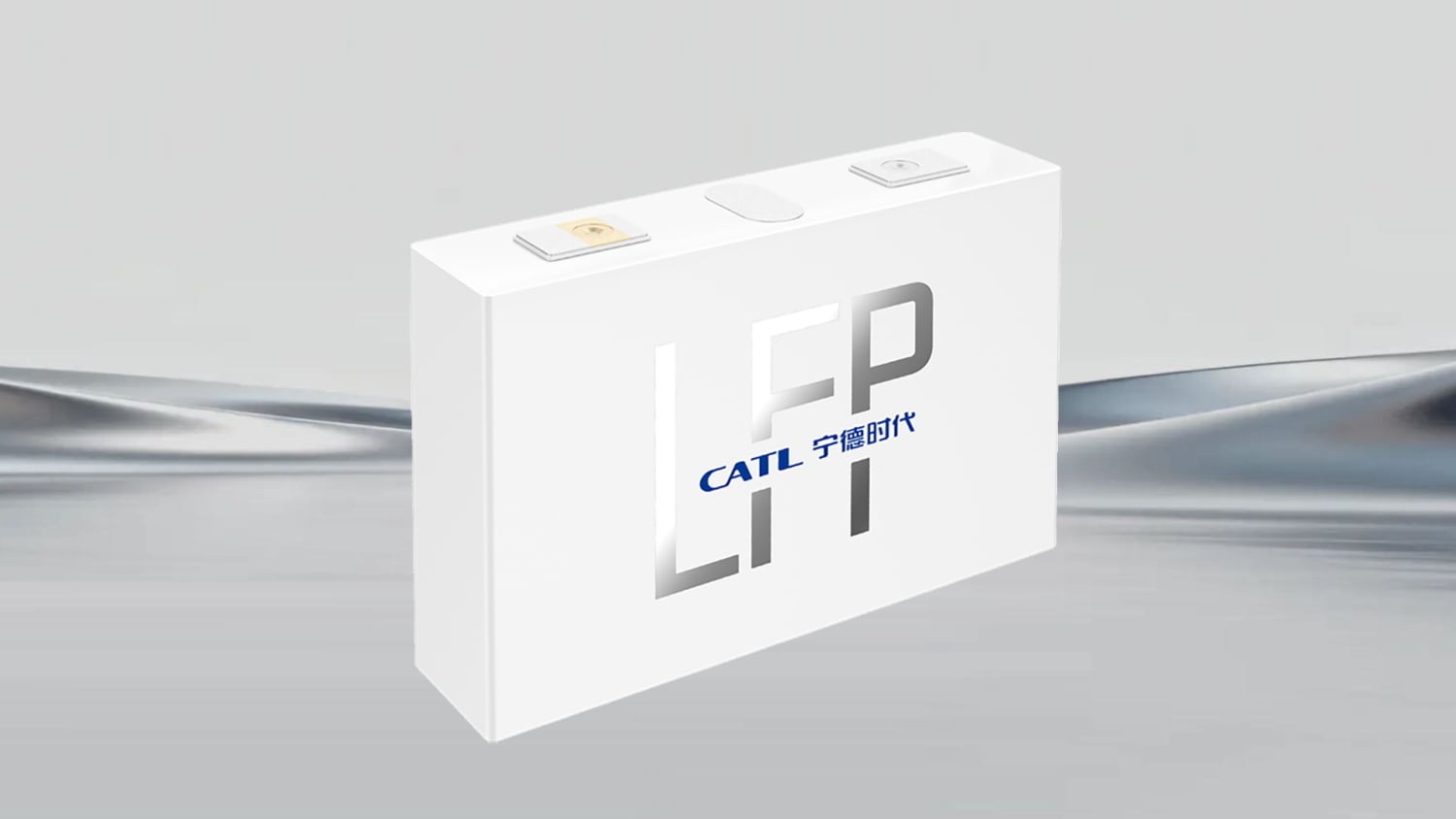
CATL Launches Direct Online Sales of 587 Ah LFP Cells at $65/kWh
On September 15, 2026, CATL began selling its giant 587 Ah Lithium Iron Phosphate (LFP) cells directly through its online mall at a price of $65 per kWh. This move bypasses traditional OEM intermediaries, allowing smaller integrators and potentially larger commercial fleets to source high-capacity cells directly. The 587 Ah cell, which began deliveries in late 2025, is now the third option available alongside 280 Ah and 314 Ah cells, highlighting CATL’s strategy to dominate the stationary storage and commercial EV market through aggressive pricing and accessibility.
Korean Battery Makers Report Two-Year ESS Backlog Amid US Policy Shifts
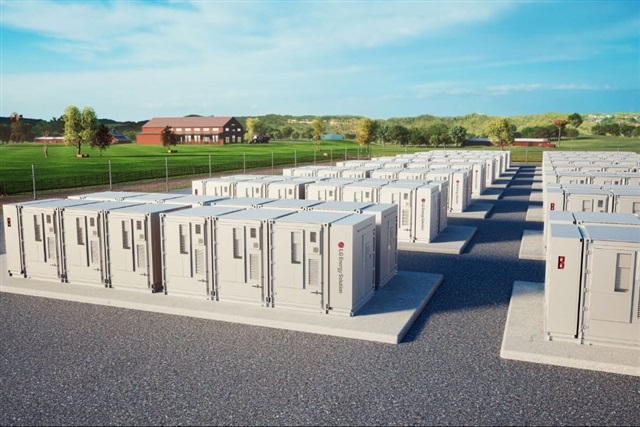
LG Energy Solution and Samsung SDI have reportedly booked out their Energy Storage System (ESS) capacity for the next two years, driven by the US government’s national emergency declaration over electric grid security and subsequent restrictions on Chinese-made equipment. The US policy shift is forcing utilities to seek non-Chinese suppliers, creating a surge in demand for Korean LFP and NMC cells. This backlog provides a buffer against slowing EV demand but raises concerns about supply chain bottlenecks for new US grid projects.
CATL Retains Dominance in China with 41.45% Share in August
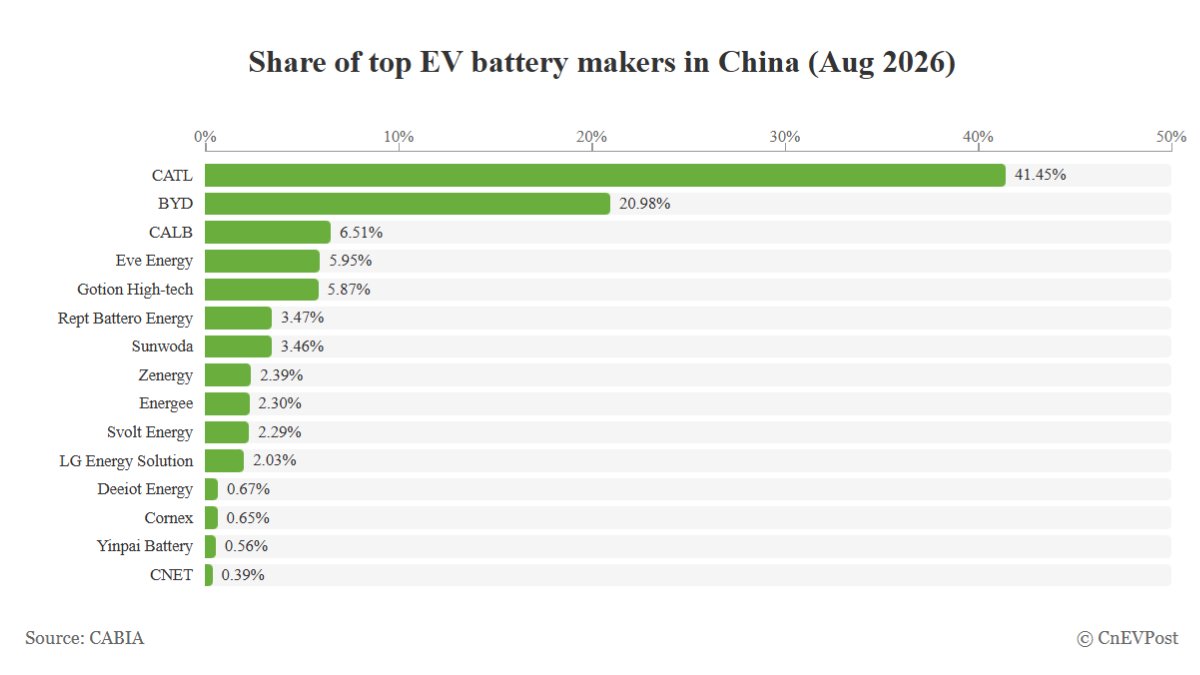
In August 2026, CATL maintained its lead in China’s power battery market with a 41.45% market share, while BYD followed with 20.98%. Despite CATL’s continued dominance, it lost some ground compared to previous months as BYD gained market share through vertical integration and cost efficiencies. The data reflects the intense competition in the world’s largest EV market, where price wars and technology upgrades are constant drivers of market share shifts.
Consumer Surveys Show Battery Brand Now Top Purchase Factor
A new NielsenIQ report released in mid-September 2026 reveals that battery brand has become a core decision point for global EV consumers, ranking second only to overall vehicle safety. In China, the weight of battery brand in purchase decisions rose to 13.8%, with 40% of respondents stating they would not buy an EV if it did not feature a preferred battery brand (primarily CATL). This shift indicates that battery chemistry and manufacturer reputation are no longer hidden specifications but central marketing assets.
Local view
China (Sina News): Local Chinese media is heavily discussing the "De-Ning" (de-CATL) trend, where automakers are diversifying suppliers to reduce dependency on CATL. However, recent data suggests that despite these efforts, CATL’s brand loyalty remains strong among consumers. Weibo discussions highlight that while OEMs push for multi-supplier strategies to gain negotiating power, consumers still prefer CATL batteries, creating a tension between corporate procurement strategies and consumer perception.
South Korea (Digitimes & Hankooki): Korean industry analysts are focusing on the "third wave" of ESS tenders in Korea and the US. Local reports indicate that Samsung SDI led the first two domestic tenders, but SK On and LG Energy Solution are aggressively competing for the upcoming third round. The narrative is that US restrictions on Chinese batteries are a "golden opportunity" for Korean firms to expand their North American footprint, although local media also warns of potential profitability issues if low-price bidding wars continue.
Context & numbers
- Market Share (China, Aug 2026): CATL 41.45%, BYD 20.98%.
- Cell Pricing: CATL’s 587 Ah LFP cell is listed at $65/kWh via direct sales.
- Consumer Sentiment: 76% of global respondents are willing to pay a premium for a trusted battery brand; battery weight in purchase decisions reached 13.8% in China.
- US Investment: Nearly $20 billion in US EV projects have been cancelled or delayed recently due to policy shifts, contrasting with the boom in ESS demand.
On the radar
- Korea’s 3rd ESS Tender: The announcement for the third round of South Korea’s central contract market for ESS is expected in late September 2026. Watch for LGES, Samsung SDI, and SK On bidding strategies, particularly regarding LFP supply chain localization.
- Solid-State Timelines: While LGES executives noted "uncomfortable truths" about solid-state challenges in recent interviews, rumors persist about BYD launching mass-production solid-state vehicles in 2027. Monitor official confirmations from Chinese OEMs regarding pilot lines.
- Sodium-Ion Parity: CATL continues to push sodium-ion technology, with industry reports suggesting cost parity with LFP could be reached by end-2026. This could disrupt the low-cost ESS market where Korean makers currently hold a backlog.
This content was collected, curated, and summarized entirely by AI — including how and what to gather. It may contain inaccuracies. Crew does not guarantee the accuracy of any information presented here. Always verify facts on your own before acting on them. Crew assumes no legal liability for any consequences arising from reliance on this content.
Powered by
