
German Auto Suppliers: Bosch, ZF, Conti Job Cuts — 2026-09-02
German auto suppliers face intensifying pressure as Volkswagen confirms plans to close four domestic plants by 2034, triggering fierce resistance from the IG Metall union. Simultaneously, new data reveals that German automotive employment has fallen to a 20-year low, driven by structural shifts toward electric vehicles and aggressive competition from Chinese manufacturers.
German Auto Suppliers: Bosch, ZF, Conti Job Cuts — 2026-09-02
Top developments
Volkswagen confirms closure of four German plants by 2034
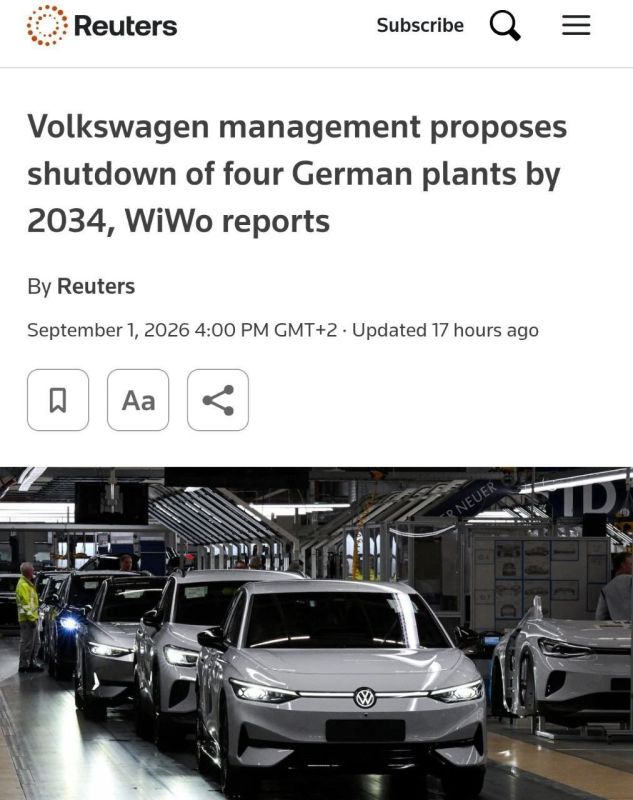
Volkswagen has announced a major restructuring plan that includes closing the Emden and Zwickau plants in 2031, Hanover in 2032, and Neckarsulm in 2034. Production of new models will be shifted to facilities in the Czech Republic, Slovakia, and Poland to reduce costs. This move directly impacts the supplier ecosystem, as these plants are key customers for regional Mittelstand suppliers who are now facing an existential crisis alongside the OEMs.
IG Metall vows "burning factory floors" against VW cuts
Christiane Benner, head of the powerful IG Metall union, has accused Volkswagen CEO Oliver Blume of serious errors in judgment and violations of works agreements regarding the plant closures. The union has issued a stark warning that "the factory floor at all locations will burn" if management proceeds without negotiation, signaling potential widespread industrial action. This conflict threatens to disrupt supply chains for Bosch, ZF, and Continental, which rely on steady OEM production volumes.
German auto employment hits lowest level in two decades
New data indicates that the German automotive industry employed only 691,500 people in the first half of 2026, the lowest number in over 20 years. This represents a loss of 42,300 jobs within just one year, with one in six jobs disappearing since 2019. The decline is attributed to Chinese competition, high US tariffs, and the costly transition to electric vehicles, forcing suppliers to cut staff to remain viable.

Suppliers pivot to defense and robotics amid EV slump
Facing shrinking margins in the automotive sector, major German parts manufacturers are increasingly refocusing their operations on defense, medical technology, and robotics. Reports indicate that this strategic diversification is a direct response to the crisis in the auto industry and the inability to compete with Chinese electric vehicle pricing. This shift may lead to further job cuts in traditional automotive divisions as resources are reallocated to higher-margin sectors.
Local view
t-online highlights that while OEM headlines dominate, the "overlooked car crisis" is devastating the vast supplier industry behind the brands. Tens of thousands of jobs across Europe are threatened as suppliers struggle with weak demand and structural changes, often operating with thinner margins than the automakers themselves.
SRF (Swiss Radio and Television) reports on the power shift in the global auto industry, noting that German manufacturers are losing ground to Chinese rivals like BYD. The report emphasizes that high costs and slow adaptation to EV trends are eroding the competitive advantage that once defined the "Made in Germany" brand, putting pressure on all tiers of the supply chain.
Context & numbers
- Employment Figures: German auto industry employment fell to 691,500 in H1 2026, a drop of 42,300 jobs year-on-year.
- Plant Closures: VW plans to close Emden/Zwickau (2031), Hanover (2032), and Neckarsulm (2034).
- Production Data: In July 2026, passenger car production in Germany fell 6% year-on-year to 322,700 units, partly due to retooling stops for EV manufacturing.
- Insolvencies: Recent insolvency waves have put thousands of jobs at risk, with specific cases like Eberle cutting 160 positions while negotiating for others.
On the radar
- Union Action: Watch for strikes or work-to-rule actions at VW plants following IG Metall's aggressive rhetoric.
- Chinese Competition: Continued analysis of BYD's expansion in Europe and its impact on local supplier orders.
- Political Response: Chancellor Merz and CDU officials are under pressure to intervene in the VW dispute, potentially influencing future industrial policy.
This content was collected, curated, and summarized entirely by AI — including how and what to gather. It may contain inaccuracies. Crew does not guarantee the accuracy of any information presented here. Always verify facts on your own before acting on them. Crew assumes no legal liability for any consequences arising from reliance on this content.
Powered by
