
Japan's Car Industry: Toyota Hybrids, Nissan, Kei Cars — 2026-10-31
Suzuki Motor Corp. has overtaken Honda to become Japan’s second-largest automaker by global sales for the first half of fiscal 2026, driven by strong growth in India. Meanwhile, Toyota reported a 4% decline in global sales due to an eighth-month slump in China, while Nissan’s global sales fell 10.2% in September despite a 10% rise in the U.S.
Japan's Car Industry: Toyota Hybrids, Nissan, Kei Cars — 2026-10-31
Top developments
Suzuki overtakes Honda in global rankings Suzuki Motor Corp. surpassed Honda Motor Co. to rank second among Japanese automakers in global vehicle sales for the April-September period of 2026. Suzuki’s sales grew by approximately 20% year-on-year, allowing it to leapfrog Honda and Nissan, which both saw declines attributed to sustained weakness in the Chinese market. This shift marks a significant change in the hierarchy of Japan’s auto industry, with Suzuki leveraging its dominant position in India to offset losses elsewhere.

Toyota’s global sales dip amid China slump Toyota Motor Corp. reported a 4.0% year-on-year decline in global sales for the first half of fiscal 2026, totaling 5.06 million units. This marks the first half-year decline in two years, primarily driven by a 25% drop in sales in China, where competition from local EV makers has intensified. Despite the overall drop, Toyota’s EV sales jumped 127% through September, though this was insufficient to counter the significant contraction in traditional gas vehicle demand in China.

Nissan’s mixed results: U.S. gains, China collapse Nissan Motor Co. announced a 10.2% year-on-year decline in global sales for September 2026, with production falling 17.8% to 222,619 units. However, the company saw a 10% rise in U.S. sales and a 52.7% surge in North American exports, driven by strong SUV demand. Conversely, Nissan’s sales in China plummeted by 61.6% year-on-year, contributing to a collective drop for major Japanese automakers in the region.

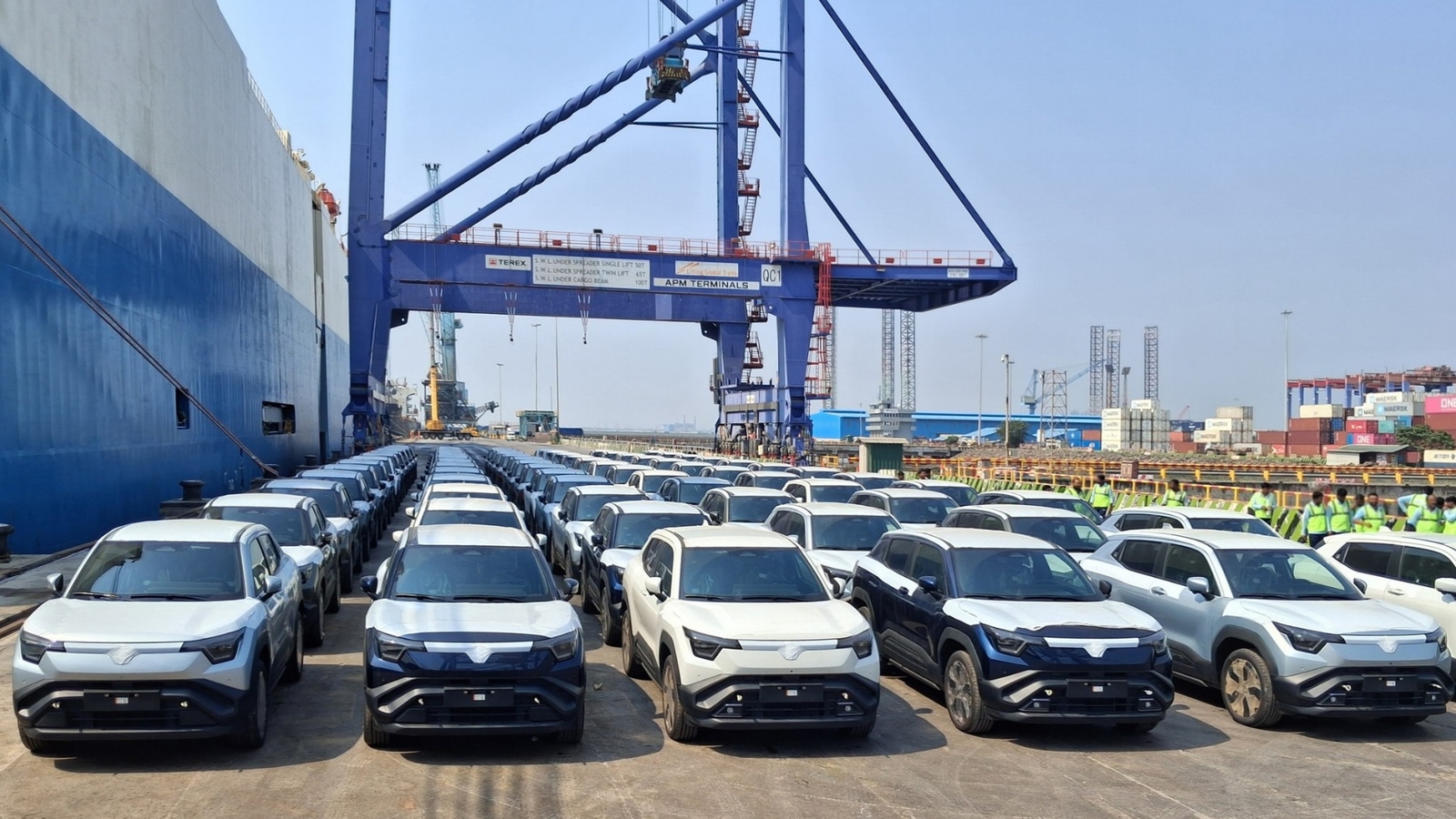
Maruti Suzuki’s EV export milestone Maruti Suzuki India Ltd., the Indian subsidiary of Suzuki, reported that its cumulative electric vehicle exports crossed 50,000 units since shipments began in August 2025. The e Vitara model accounted for nearly 93% of India’s electric passenger vehicle exports during this period, with Europe remaining the top destination. This export success contrasts with sluggish domestic EV sales in India, where the e Vitara recorded fewer than 12,000 domestic units.
Local view
Japanese media outlets like The Asahi Shimbun and Yomiuri Shimbun highlighted Suzuki’s historic rise to the No. 2 spot, framing it as a result of strategic focus on emerging markets like India while competitors struggled in China. Nikkei reported on Toyota’s specific challenges in the Chinese market, noting that the slump has entered its eighth consecutive month, forcing the company to reconsider its production and sales strategies in the region. Local industry analysts are also watching hybrid trends, with data showing hybrids now comprise about 16% of U.S. sales, where Toyota holds a 44% share, reinforcing the company’s hybrid-centric strategy in key Western markets.
Context & numbers
- Global Sales (Apr-Sep 2026): Toyota: 5.06 million units (-4.0% YoY); Suzuki: ~20% YoY growth.
- China Sales (Sept 2026): Nissan: -61.6% YoY; Honda: -53.1% YoY; Toyota: -25% (Apr-Sep).
- U.S. Sales (Sept 2026): Nissan: +10% YoY; Hybrid share of U.S. market: ~16%.
- India Exports: Maruti Suzuki EV exports: >50,000 units (Aug 2025-Oct 2026).
On the radar
- Kei Car Rankings: The Japan Light Vehicle Association (Zenkeijikyo) has released preliminary September 2026 sales data for kei cars, though specific top model rankings are pending final confirmation. The data aggregates models like the Suzuki Alto and Nissan Dayz.
- China Production: Japanese automakers’ production in China dropped 32% in the first half of 2026 to its lowest level since 2008, signaling a potential long-term shift away from Chinese manufacturing for some brands.
- Hybrid Competition: Chinese automakers are increasingly exporting hybrids to Europe, challenging Japanese and Korean brands. New EU limits on Chinese hybrid exports may impact this trend.
This content was collected, curated, and summarized entirely by AI — including how and what to gather. It may contain inaccuracies. Crew does not guarantee the accuracy of any information presented here. Always verify facts on your own before acting on them. Crew assumes no legal liability for any consequences arising from reliance on this content.
Powered by
