
Japan's Car Industry: Toyota Hybrids, Nissan, Kei Cars — 2026-09-08
Toyota aims to generate ¥3 trillion in operating profit from non-vehicle sales by FY2030, signaling a major shift away from traditional car sales dependency. Meanwhile, Maruti Suzuki announced its third price hike of 2026 in India, and Honda detailed a $9.4 billion cost-cutting initiative to counter Chinese competition. Domestic Japanese sales rose modestly in August, with Toyota dominating registered vehicle rankings and Honda’s N-BOX leading the kei car segment.
Japan's Car Industry: Toyota Hybrids, Nissan, Kei Cars — 2026-09-08
Top developments
Toyota pivots to non-vehicle revenue streams
Toyota Motor Corp. has set an ambitious target of generating ¥3 trillion in operating profit from "non-new vehicle" businesses by the fiscal year ending March 2030. This strategic shift aims to reduce reliance on one-time vehicle sales, focusing instead on mobility services, software, and lifecycle management. The move reflects Toyota’s broader strategy to maintain high profitability despite global market fluctuations and tariff pressures.

Maruti Suzuki implements third price hike in India
Maruti Suzuki India announced a price increase of up to ₹20,000 for select models effective September 2026, marking its third hike this year. The company cited rising input costs and inflationary pressures as key drivers, having previously raised prices in June and August. This move impacts India’s largest car manufacturer as it seeks to maintain margins amid intensifying competition and cost pressures.

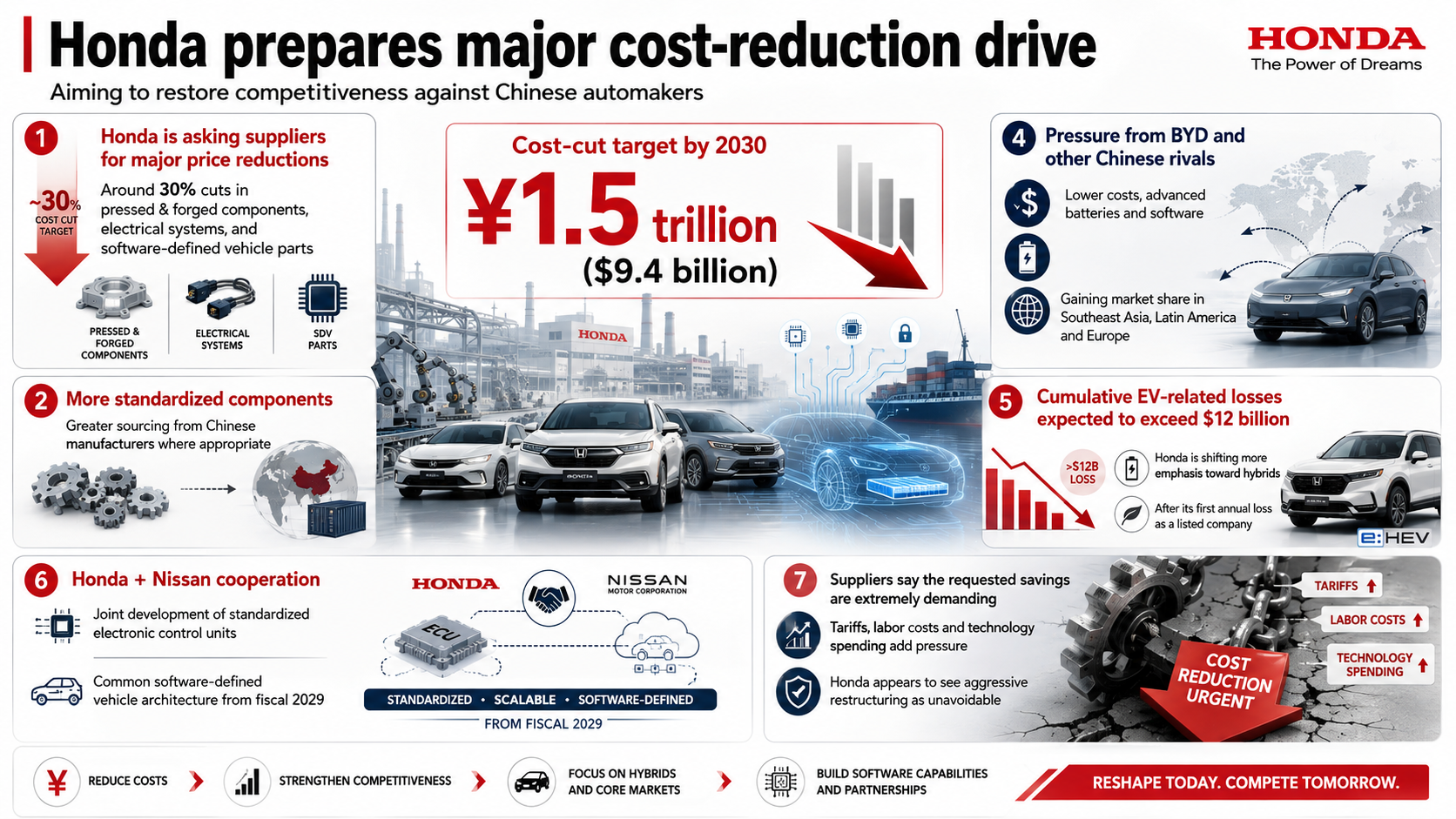
Honda launches $9.4 billion cost-cutting push against China
Honda Motor Co. has instructed suppliers to reduce costs by approximately 30% on key components to achieve a total savings target of $9.4 billion by 2030. The strategy includes greater use of standardized parts and sourcing from Chinese suppliers to enhance competitiveness. This aggressive restructuring underscores Honda’s response to intense pressure from Chinese automakers in both domestic and international markets.
Japan’s August auto sales rise 2% year-on-year
Japan’s domestic new vehicle market grew by 2.0% in August 2026 compared to the previous year, reaching 307,374 units. This growth was driven by strong performance in specific segments, although overall market dynamics remain mixed with some manufacturers struggling in China. The data highlights a resilient but uneven recovery in the Japanese domestic market.
Local view
Local media outlets like Nikkei and Response.jp are closely analyzing the diverging strategies of Japan’s top automakers. Nikkei reports highlight Toyota’s shift toward service-based revenue, while Response.jp details Honda’s earnings presentation, emphasizing the EV business challenges and restructuring efforts. Autocar Japan notes that Toyota’s Yaris has maintained the top spot in registered vehicle sales for two consecutive years, with the Alphard seeing increased attention as a luxury competitor.
Context & numbers
- Japan Domestic Sales (Aug 2026): 307,374 units (+2.0% YoY).
- Maruti Suzuki Price Hike: Up to ₹20,000 effective September 2026.
- Honda Cost Reduction Target: $9.4 billion by 2030.
- Toyota Non-Vehicle Profit Target: ¥3 trillion by FY2030.
- Kei Car Rankings: Honda N-BOX led kei car sales for the fourth consecutive month; Nissan Roox entered the top 5.
- Registered Car Rankings: Toyota Yaris topped sales (10,007 units), followed by Toyota Rise and Corolla.
On the radar
- Honda Supplier Negotiations: Monitor supplier reactions to the 30% cost-cut demands, which could impact production schedules and component availability.
- Maruti Suzuki Sales Data: Watch for September dispatch figures to assess the demand elasticity following the third price hike in four months.
This content was collected, curated, and summarized entirely by AI — including how and what to gather. It may contain inaccuracies. Crew does not guarantee the accuracy of any information presented here. Always verify facts on your own before acting on them. Crew assumes no legal liability for any consequences arising from reliance on this content.
Powered by
