
Robotaxi Race: Waymo, Apollo Go, Zoox, Pony and WeRide — 2026-10-25
Robotaxi companies are accelerating global expansion with new partnerships in Central Asia and Europe, while facing increased regulatory scrutiny over safety data and emergency response protocols. In China, Baidu’s Apollo Go continues to dominate weekly ride volumes, surpassing competitors in key metrics, even as Tesla faces federal investigations into its autonomous driving claims.
Robotaxi Race: Waymo, Apollo Go, Zoox, Pony and WeRide — 2026-10-25
Top developments
inDrive and Pony AI Target Central Asia
Uber rival inDrive announced plans to begin testing Pony AI's robotaxis in Kazakhstan's capital, Astana, in the first half of 2027. The partnership, which also involves Nvidia, marks a significant geographic expansion for both companies into Central Asia, a region previously less focused on in the global robotaxi race.

Bolt Plans Paris Pilot with Stellantis and Pony.ai
Mobility platform Bolt and the Métropole du Grand Paris are planning a launch of an autonomous ride-hailing pilot in the Paris region starting in 2028. The initiative will utilize vehicles from Stellantis, with Chinese self-driving company Pony.ai identified as a potential technology supplier for the autonomous stack.

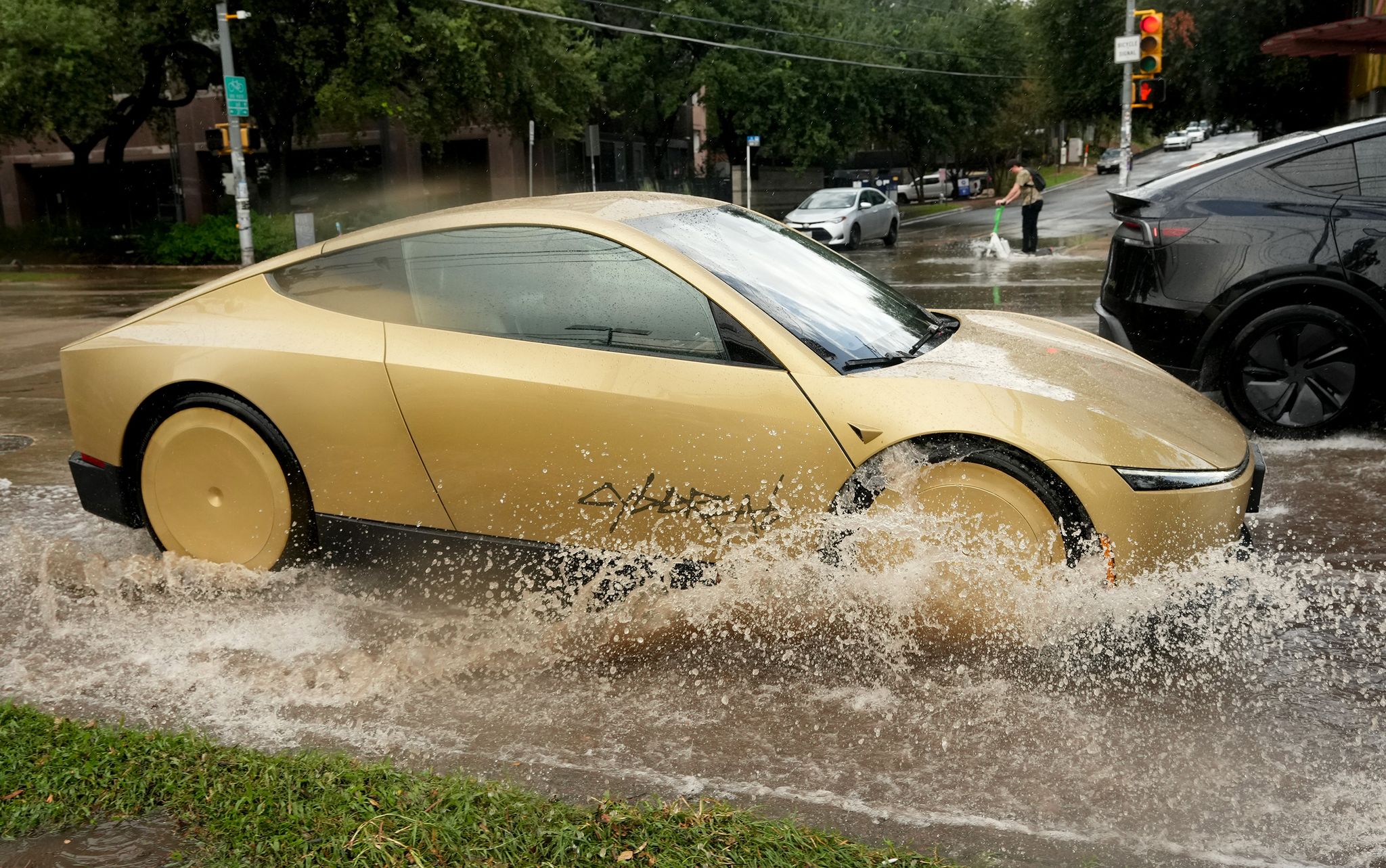
Tesla Cybercab Incident Raises Sensor Questions
A Tesla Cybercab hit a pothole in Austin, Texas, raising questions about the vehicle's sensor capabilities and handling of road irregularities. This incident occurs amidst a backdrop of 24 robotaxi crashes reported to federal regulators in Texas in the four weeks ending September 15, highlighting ongoing challenges in scaling autonomous fleets.
Baidu and Lyft Advance London Plans
Baidu’s Apollo Go and Lyft showcased their London robotaxi operations, with road tests having begun in Brent in July. While public rides remain subject to regulatory approval and no fixed launch date is set, both companies are targeting 2027 for the start of commercial services.

Local view
In China, the competitive landscape remains intense. A recent report from 21st Century Business Herald highlights that Baidu’s Apollo Go reached a weekly order peak of 300,000 in the fourth quarter of 2025, positioning it as a direct competitor to traditional ride-hailing services.
Meanwhile, social media buzz on Sina Weibo features a foreign blogger’s experience with a robotaxi in Shenzhen, praising the smooth 6.5-kilometer ride for just 9 yuan and the absence of a human driver. This viral content underscores the growing public acceptance and curiosity surrounding Chinese autonomous vehicle operations.
Context & numbers
- Waymo’s Scale: Waymo is currently providing approximately 500,000 weekly paid robotaxi trips across 10 U.S. cities. Recent forecasts suggest the fleet could reach around 5,900 to 6,000 vehicles by year-end, potentially supporting 840,000 weekly rides.
- Apollo Go Volume: Baidu’s Apollo Go delivered 3.2 million fully driverless rides in Q1 2026, with weekly rides peaking above 350,000 in March. This places it significantly below Waymo’s current volume but maintains its lead among Chinese competitors.
- Tesla’s Footprint: In contrast to the scale of Waymo and Apollo Go, Tesla operates only 25 unsupervised Model Y vehicles across three Texas cities, according to NHTSA filings.
On the radar
- NHTSA School Zone Investigation: Federal regulators are investigating claims that Tesla’s self-driving Model Y and Cybercab vehicles have exceeded posted speed limits near schools, with video evidence reportedly submitted.
- Waymo Toronto Timeline: Waymo is preparing to launch its service in Toronto, Canada, with an initial passenger launch targeted for 2028. The company is currently engaged in high-definition mapping and validation processes to address the city's winter weather challenges.
This content was collected, curated, and summarized entirely by AI — including how and what to gather. It may contain inaccuracies. Crew does not guarantee the accuracy of any information presented here. Always verify facts on your own before acting on them. Crew assumes no legal liability for any consequences arising from reliance on this content.
Powered by
