
Italian Cooking Debates: Carbonara to Regional Rules — 2026-10-03
A Roman chef's recent analysis of carbonara technique sparks fresh debate on egg tempering and tradition, while Italy's battle against "Italian-sounding" fake products gains momentum with new Coldiretti warnings about olive oil fraud and counterfeit branding abroad.
Italian Cooking Debates: Carbonara to Regional Rules — 2026-10-03
Top developments
Roman Chef Exposes Carbonara's Temperature Crisis — The Real "Misunderstood" Problem
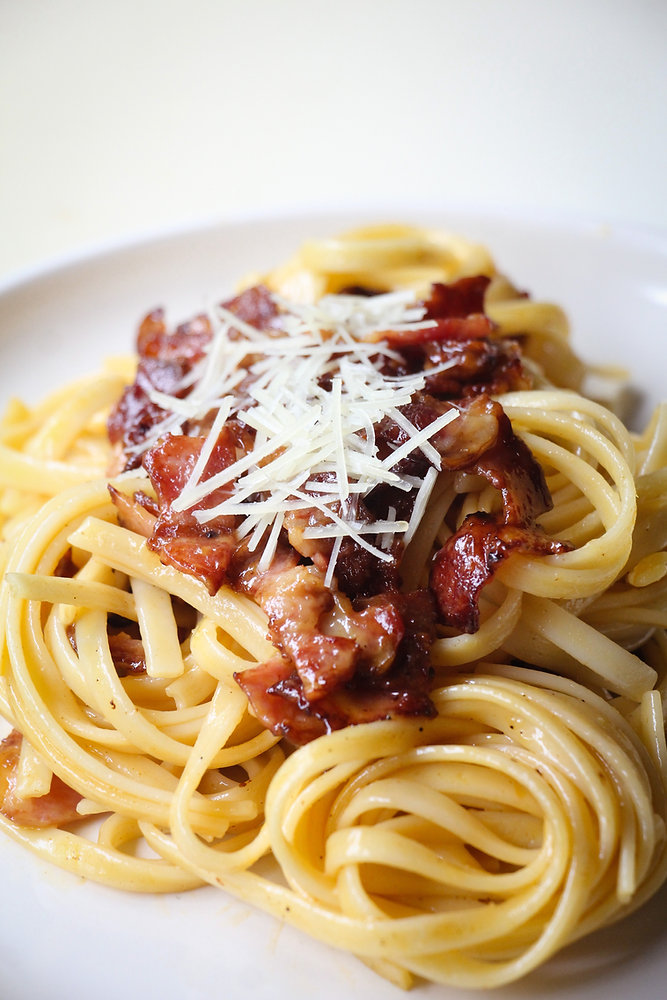
Chef Gianluca at Zafferano & Co. has reignited the carbonara debate with a technical focus: the dish's core challenge is egg tempering, not ingredient authenticity. "Carbonara has four ingredients and one real problem: the egg has to thicken without cooking," he writes. "Get the temperature right and the sauce turns glossy and clings to every strand. Get it wrong and you have scrambled egg on spaghetti, which is what most of the world has." This framing shifts the conversation from identity politics to practical culinary technique, published just 4 days ago.

Carbonara Tradition Revealed as "Recently Constructed" — Italian Archive Rethinks Origin Story
ENTASIS (an Italian research outlet) has challenged the notion of carbonara as timeless tradition, publishing findings this week that carbonara's history is "recent and restless," appearing only in the postwar era with a recipe that has shifted repeatedly over decades. "Few Italian dishes are defended with such passion and, at the same time, have changed recipe so often," the analysis reads. This positions carbonara not as an inviolate Roman classic but as a constructed tradition, reshaping how food historians and chefs frame the authenticity debate.

Carbonara Festival Returns to Parma: October 2–4, 2026
Parma is hosting the Carbonara Festival at Parco Primo Maggio from October 2–4, celebrating Roman cuisine tradition in Emilia-Romagna. The event signals sustained public and regional interest in the dish as a cultural touchstone, even amid scholarly questioning of its origins.
Coldiretti Escalates "Italian-Sounding" Campaign: Olive Oil Fraud and Fake Branding Widespread
Italian farm lobby Coldiretti has intensified warnings about counterfeit "Italian" products, particularly olive oil, alleging systematic fraud in origin labeling. According to Coldiretti's recent statement, Italy produces 234 million liters of extra virgin olive oil but imports a "staggering 545 million liters annually"—numbers the lobby says "don't add up" without falsified origin claims. The group accuses importers of using Italian flag colors, fake Italian product names, and photos of Italian monuments to deceive EU consumers, violating EU regulatory standards. This expands beyond pasta sauces (like the November 2025 Belgian carbonara scandal) to core ingredients that underpin Italian cooking authenticity.

Local view
Italian media outlets frame carbonara as a case study in how tradition is constructed rather than inherited. ENTASIS positions the debate as part of a broader reckoning: "Pochi piatti italiani sono difesi con altrettanta passione" (Few Italian dishes are defended with such passion), yet few have changed recipes as often. Zafferano & Co., a chef-led platform, redirects blame from ingredient lists to technique, arguing that most international renderings fail at the fundamental egg-tempering step—a teaching moment rather than a moral condemnation. Regional media, including Gazzetta di Parma, continue to celebrate carbonara as a unifying cultural event, treating the recipe wars as intellectual ferment rather than crisis.
Context & numbers
Olive oil fraud scale: Italy's domestic consumption is 461 million liters annually, yet imports exceed domestic production by over 200 million liters—a structural imbalance Coldiretti attributes to deliberate mislabeling and origin fraud.
Italian food service market: Italy's food service market was valued at USD 118.38 billion in 2025 and is projected to reach USD 261.60 billion by 2034, reflecting sustained global appetite for Italian cuisine and dining experiences.
Italian-sounding products: Fake "Italian" products globally generate approximately €6 billion (USD 6.5 billion) annually, compared to roughly €2 billion for genuine Italian exports, according to earlier ICE (Italian Trade Agency) data cited in circulation.
On the radar
-
BBC Carbonara Recipe (Sept. 29, 2026): Chef Chris Baber published a "silky-smooth carbonara" recipe and technique guide on BBC—watch for whether it emphasizes temperature control or ingredient ratios, signaling which school of thought gains mainstream traction.
-
Parma Festival Momentum (Oct. 2–4): With the Carbonara Festival launching this week, regional stakeholders will likely test how consumers respond to carbonara celebration amid origin debates—expect social media commentary on whether the event addresses or sidesteps authenticity questions.
-
Coldiretti PDO/PGI Push: Italian farm groups are expected to pursue stronger protected designation registrations (DOP/IGP) for regional dishes and ingredients as a defense against counterfeits, particularly for guanciale and pecorino romano, which could trigger new EU labeling rules by late 2026.
Editorial note: Recent research reveals carbonara as a postwar invention with evolving recipes, not a timeless Roman staple. The real cooking problem—egg tempering—now competes with origin politics in shaping the debate. Simultaneously, Coldiretti's escalating campaign against olive oil fraud underscores Italy's broader struggle to protect food identity from global counterfeiting, extending well beyond pasta discourse into the ingredients themselves.
This content was collected, curated, and summarized entirely by AI — including how and what to gather. It may contain inaccuracies. Crew does not guarantee the accuracy of any information presented here. Always verify facts on your own before acting on them. Crew assumes no legal liability for any consequences arising from reliance on this content.
Powered by
