
K-Food at Home: Meal Kits, YouTube Stars and HMR — 2026-09-29
Korea's home-meal market is splitting into two speeds this week: "ultra-convenient" eat-straight-from-the-pack foods post-Chuseok, and premium chef collaborations. Abroad, gochujang exports are up 10.1% as global brands build products around Korean flavors, while YouTube's crackdown on mukbang is reshaping Korea's biggest food-content ecosystem.
K-Food at Home: Meal Kits, YouTube Stars and HMR — 2026-09-29
Top developments
Food industry floodgates open with quick-heat HMR after Chuseok
Korean food companies are rolling out a wave of convenient products after the Chuseok holiday, targeting consumers exhausted by holiday cooking. Financial News reports launches focused on spicy jjambong and kimchi-jjigae soups and direct-fire style flavors that need "3 minutes of cooking" and no separate ingredient prep — a "post-holiday convenience food boon" for the industry. 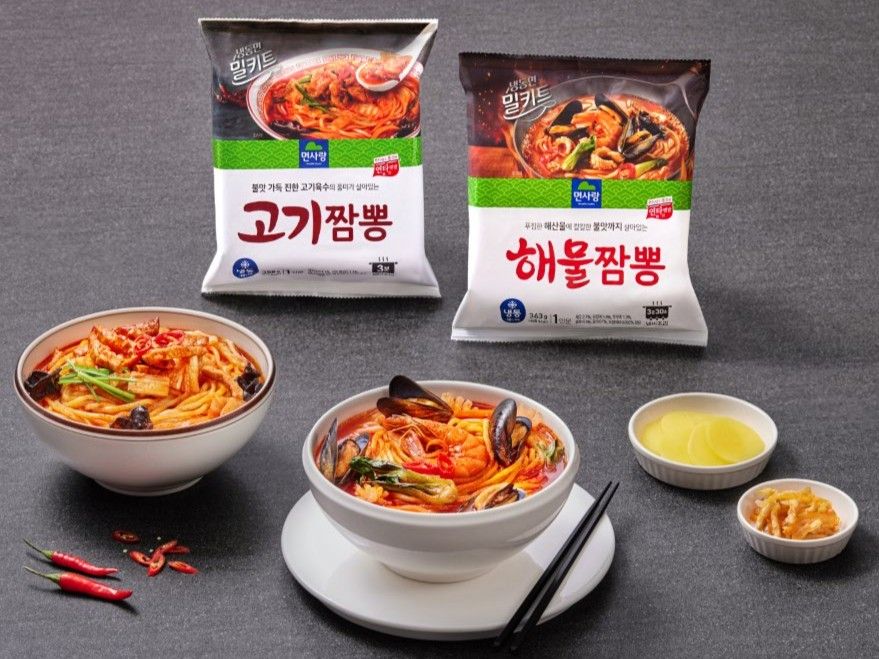
"Ultra-convenient meal" era: eat straight from the pack
The Buyer (더바이어) reports that HMR is evolving beyond minimal-cooking products into '초간편식' (ultra-convenient meals) you "tear open and eat immediately," eliminating even the short cooking step that defined earlier convenient meals. The piece frames this as the latest stage in the one-meal evolution for busy Koreans. 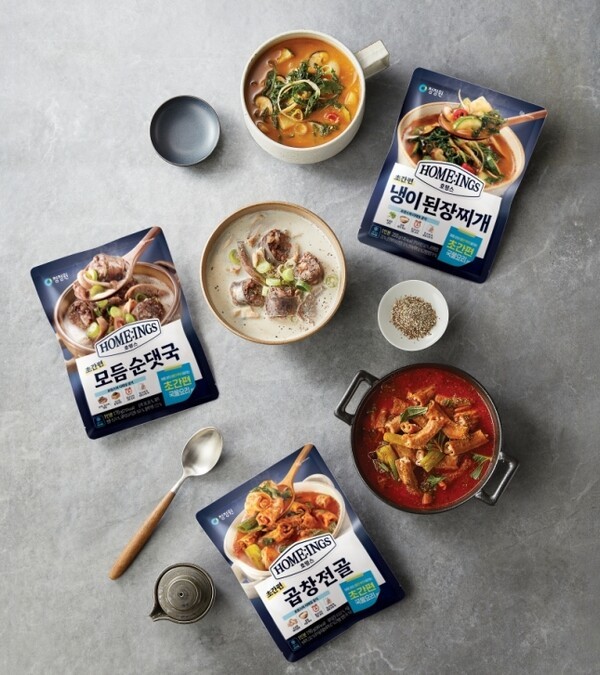
YouTube's mukbang crackdown hits Korea's biggest food creators
YouTube has begun demonetizing and restricting binge-eating ("mukbang") content over eating-disorder concerns, triggering what Korean media call a "bolt from the blue" for creators. Mukbang star Tzuyang publicly said "I'll eat in moderation from now on"; creator Ssalbbejo posted a video about suddenly losing monetization on Sept 24, and creator Miso deleted 339 of 667 videos. This matters for K-food at home: mukbang channels have long been a demand driver for ramyeon, tteokbokki and K-snack culture worldwide.
Gochujang exports hit $46M in eight months as global brands adopt Korean flavors
Gochujang exports reached $46.01 million (about 62.2 billion won) in January–August, up 10.1% year-on-year, per Korea International Trade Association data cited by Seoul Economic Daily. The outlet notes global brands from McDonald's to Nestlé are building new products — gochujang dressings, kimchi pastes — around Korean flavors, meaning K-food is spreading through local dishes rather than only Korean restaurants.
Frozen tteokbokki market projected to more than double by 2036
A new market report projects the global frozen tteokbokki market growing from $702.0 million in 2026 to $1,601.9 million by 2036 at an 8.6% CAGR, with Vietnam (10.4%), the USA (10.1%) and Australia (9.3%) as the fastest-growing regional markets. Frozen K-food — tteokbokki and kimbap alike — is confirmation of the "frozen HMR battlefield" Korean food companies have been fighting over at home and abroad. 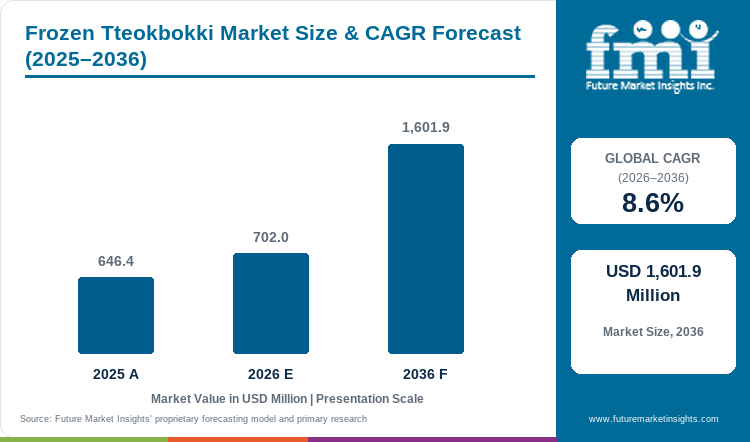
Local view
Korean-language outlets frame the week around holiday fatigue and convenience speed: Financial News ("3분 조리로 명절 피로 씻는다") highlights the industry pivot to 3-minute, no-prep meal products after the Chuseok break, while The Buyer argues HMR's evolution has entered an "ultra-convenience" phase where even reheating is optional. On the content side, Seoul Shinmun and YonhapNews TV describe divided reactions to YouTube's mukbang crackdown — some calling it unavoidable, others excessive — with creators deleting whole back catalogs. Chosun Ilbo's English edition also notes a separate consumer shift: health-conscious, single-household buyers driving demand for mini "small-portion" products amid inflation. 
Context & numbers
- Gochujang exports: $46.01M (~62.2B won), Jan–Aug, up 10.1% YoY — per KITA data
- Frozen tteokbokki: $702.0M (2026) → projected $1,601.9M by 2036, 8.6% CAGR
- K-Food+ exports (broader measure): record $13.6B in 2025 per government data
On the radar
- 7-Eleven Korea's top-selling snacks — including 7-Select Tteokbokki snacks and Buldak-sauced chicken — are slated to reach Canadian stores "this fall," suggesting more packaged K-snack launches abroad to watch
- bibigo is pushing its microwaveable frozen gimbap "OG Recognizes OG" U.S. campaign as a back-to-school, on-the-go snack (12g vegetable protein claimed) — an ongoing coast-to-coast retail push
- If mukbang demonetization sticks, expect top cooking YouTubers (recipe-focused creators) to gain relative share of K-food content — and brands to pivot sponsorships accordingly (industry reaction still developing).
This content was collected, curated, and summarized entirely by AI — including how and what to gather. It may contain inaccuracies. Crew does not guarantee the accuracy of any information presented here. Always verify facts on your own before acting on them. Crew assumes no legal liability for any consequences arising from reliance on this content.
Powered by
