
K-Food at Home: Meal Kits, YouTube Stars and HMR — 2026-09-02
The Korean home meal replacement (HMR) sector is seeing intense competition as convenience store giant CU expands its value-focused "jumbo" tteokbokki lineup and launches AI-curated mini-meal kits. Meanwhile, rising ingredient costs are forcing traditional gimbap shops to close or raise prices, driving consumers toward cheaper, frozen alternatives.
K-Food at Home: Meal Kits, YouTube Stars and HMR — 2026-09-02
Top developments
CU Expands Jumbo Tteokbokki and Launches AI-Curated Mini-Meals
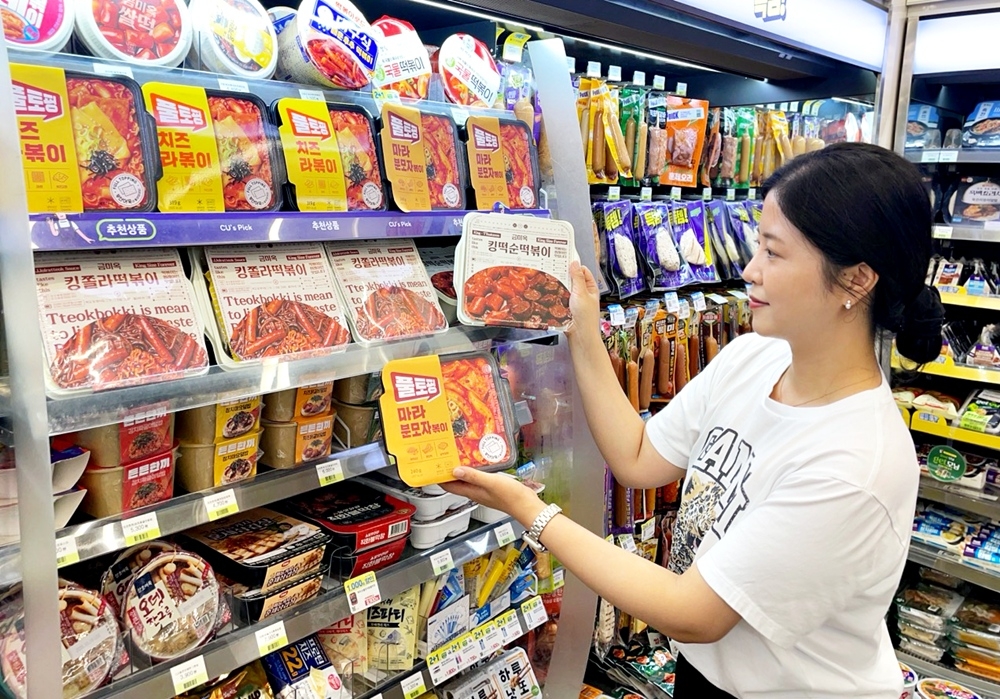
Convenience store chain CU is aggressively expanding its "value" HMR offerings to combat inflation-driven dining-out reductions. Following the success of its 4,900-won large-portion tteokbokki kits, which topped snack sales in August, CU is launching a new "PBICK The Kitchen" mini-meal series on September 18. These new mini-meals are designed for single-person households, utilizing AI analysis to identify trending flavors and portion sizes that minimize food waste while maintaining restaurant-quality taste. This move highlights a bifurcation in the market: consumers are seeking either high-value bulk items for sharing or ultra-small, precise portions for solo dining.
Rising Costs Force Traditional Gimbap Shops Out of Business
The traditional gimbap (seaweed rice roll) sector is facing a crisis as operating costs surge. The Korea JoongAng Daily reported on September 1 that thousands of gimbap shops are closing due to higher wages and skyrocketing prices for key ingredients like seaweed and vegetables. In Seoul, the average price of gimbap has risen 6.8% year-over-year, eroding the dish's appeal as a budget-friendly meal. This trend is accelerating the shift toward frozen kimbap products sold in supermarkets, which offer a more stable price point for cost-conscious consumers.

Korean Food Firms Adopt Shrinkflation to Maintain Price Points
To retain customers amid persistent inflation, major Korean food and restaurant companies are increasingly resorting to shrinkflation—reducing portion sizes or cutting menu items rather than raising prices. Seoul Economic Daily reported on August 31 that firms are shrinking portions and simplifying menus to keep prices attractive, drawing consumer concern over value. This strategy is particularly evident in the HMR sector, where brands are balancing raw material costs with the need to stay competitive against convenience store offerings.
Local view
Local media outlets are highlighting the strategic pivot of convenience stores to differentiate themselves through exclusive collaborations and hyper-localized products. Youth Daily (청년일보) noted that CU is not just selling standard items but is introducing region-specific festival-winning chicken dishes and reviving past popular snacks to drive foot traffic. This "differentiation competition" is seen as a direct response to the saturation of the domestic market, forcing retailers to innovate beyond basic staples.
Additionally, Herald Business (Herald Corp) reported a generational shift in the tteokbokki franchise market, with newer brands like Yeopgi gaining ground against first-generation chains like Jaws Tteokbokki. This suggests that the "K-Food at Home" trend is not just about convenience but also about aligning with new brand aesthetics and flavor profiles preferred by younger consumers.
Context & numbers
- Gimbap Price Increase: The average price of gimbap in Seoul rose by 6.8% year-over-year, contributing to the closure of numerous small businesses.
- Convenience Store Expansion: Korea’s four major convenience store chains added approximately 200 stores since late last year as sales rebounded, signaling renewed confidence in the retail HMR channel.
- Value Product Success: CU’s 4,900-won jumbo tteokbokki packs became top sellers in their category, prompting an immediate expansion of the product line.
On the radar
- September 18 Launch: CU’s new "PBICK The Kitchen" mini-meal series officially hits shelves, with initial offerings focused on single-serving side dishes and small mains.
- Chuseok Gift Sets: Generis BBQ Group has launched three HMR-focused Chuseok gift sets, aiming to capture the holiday market with practical, home-cookable items rather than traditional fresh produce.
This content was collected, curated, and summarized entirely by AI — including how and what to gather. It may contain inaccuracies. Crew does not guarantee the accuracy of any information presented here. Always verify facts on your own before acting on them. Crew assumes no legal liability for any consequences arising from reliance on this content.
Powered by
