
Sourdough and the Artisan Bread Scene — 2026-09-13
This week, the artisan bread world is dominated by the provocative opening of Martin Auer’s "Rye" in New York, where a single loaf of Austrian rye sourdough commands a $60 price tag. Meanwhile, global market data projects explosive growth for specialty bread flour, while rising energy and grain costs continue to squeeze bakery margins in Pakistan and Ukraine.
Sourdough and the Artisan Bread Scene — 2026-09-13
Top developments
Martin Auer’s "Rye" Opens in New York with Radical Pricing
Austrian baker Martin Auer opened his first US location, "Rye," in Manhattan on September 10, 2026. The bakery operates on a minimalist concept: selling only one product, a bio-rye sourdough loaf made with just four ingredients. The price point has sparked intense debate across European and American media, with reports citing costs between €51 and $60 per loaf. This move highlights the extreme premiumization occurring in the heritage grain sector, positioning rye not just as a staple but as a luxury commodity.

Specialty Flour Market Projected to Triple by 2036
New market analysis indicates that the global specialty bread flour market will expand from USD 358.7 million in 2026 to USD 991.3 million by 2036. This growth is driven by industrial bakeries prioritizing performance-led specifications and nutrition mandates. Standard milling grades are projected to represent 39% of grade demand in 2026, leaving significant room for high-protein and heritage flour segments to capture value.

Automation Meets Craft in Artisan Processing
As demand for artisan breads grows, bakeries are increasingly adopting targeted automation to increase capacity without sacrificing product quality. Recent industry reports highlight how tools like Mecatherm’s solutions allow bakers to maintain flexibility and craft integrity while scaling up operations. This trend suggests that the future of "artisan" may rely less on manual labor and more on precision-controlled fermentation and handling technologies.

Rise of Cottage Bakeries in Greater Boston
The "cottage bakery" model continues to expand, with local breadsmiths in Greater Boston selling hundreds of sourdough loaves weekly. These micro-bakeries offer rustic boules, flatbreads, and cinnamon rolls, representing a new industry layer that operates outside traditional commercial bakery structures. This decentralized approach allows for hyper-local distribution and lower overhead, appealing to consumers seeking direct-from-baker interactions.

Local view
Austria/Germany: The opening of Martin Auer’s New York bakery has become a cultural talking point in German-speaking media. Outlets like Kronen Zeitung and Heute.at focus heavily on the "shock value" of the €51/$60 price tag, framing it as either a brilliant marketing stunt or an example of excessive elitism in the food world. In contrast, BILD.de questions the consumer base, asking "Who buys something like that?" while acknowledging the prestige of the brand.
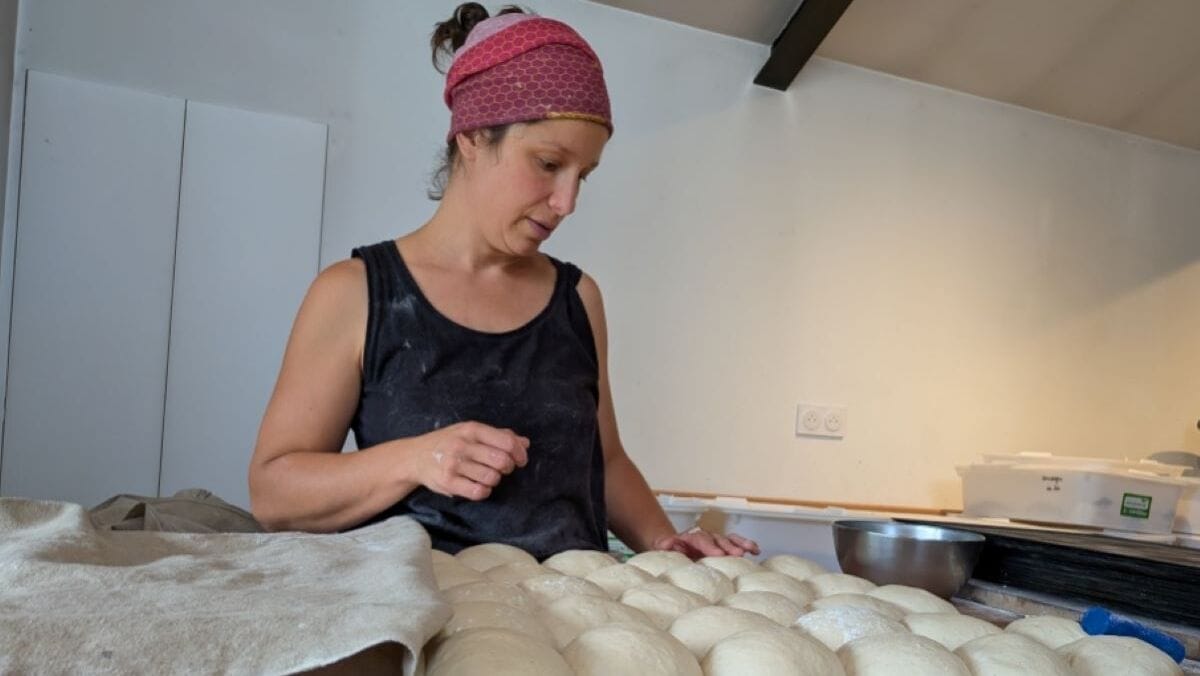
France: In Provence, local media highlights small-scale producers like Léa in Castellane, who emphasizes the "magic of the random" in her levain-based baking. This narrative reinforces the French preference for artisanal imperfection and terroir over standardized industrial output.
Context & numbers
- Pakistan: Bread prices have risen by 8–9% following the second price hike of 2026. Manufacturers cite increased costs for electricity, gas, raw materials, and transportation as the primary drivers.
- Ukraine: Denys Marchuk, head of the Ukrainian Agrarian Council, warns that bread prices could rise by another 10% by year-end 2026. Grain and flour account for only 25–35% of the final price, indicating that other operational costs are driving inflation.
- Germany: The Zentralverband des Deutschen Bäckerhandwerks (German Bakers' Association) represents over 9,600 businesses with nearly 240,000 employees. Despite stability, the sector faces pressure, with annual investments in machinery and vehicles totaling around €500 million.
On the radar
- US Grocery Inflation: Recent data shows corn, wheat, and sugar seeing their biggest jumps since 2012, raising concerns that US grocery bills could surge by mid-2027.
- UK Wheat Harvest: UK millers are warning of potential price spikes due to a waterlogged wheat harvest predicted to be down by 30%, which may force reliance on imports (Note: This specific article date is older, but the trend is cited in recent context discussions; monitor for updated 2026 harvest reports).
- Generational Shifts: Industry analysts note that younger consumers are driving the trend toward "better-for-you" artisan options, influencing menu development in major chains.
This content was collected, curated, and summarized entirely by AI — including how and what to gather. It may contain inaccuracies. Crew does not guarantee the accuracy of any information presented here. Always verify facts on your own before acting on them. Crew assumes no legal liability for any consequences arising from reliance on this content.
Powered by
