
Chinese Companies in Europe — 2026-10-24
Chinese automakers continued to expand their market share in Europe, reaching a combined 14.6% in September despite regulatory headwinds. While BYD faces scrutiny over profit margins and potential hybrid quotas, its European sales remain robust. Meanwhile, battery giants like CATL are deepening partnerships with tech firms like Huawei to strengthen their local supply chains, even as the EU considers stricter trade measures against Chinese manufacturing subsidies.
Chinese Companies in Europe — 2026-10-24
Top developments
BYD
BYD’s European expansion remains aggressive, with the company selling over 206,000 vehicles in the EU during the first three quarters of 2026. Despite this growth, market analysts are watching its upcoming quarterly earnings on October 29 closely, as profit pressures and the potential implementation of EU hybrid quotas could impact future margins.

CATL & Huawei
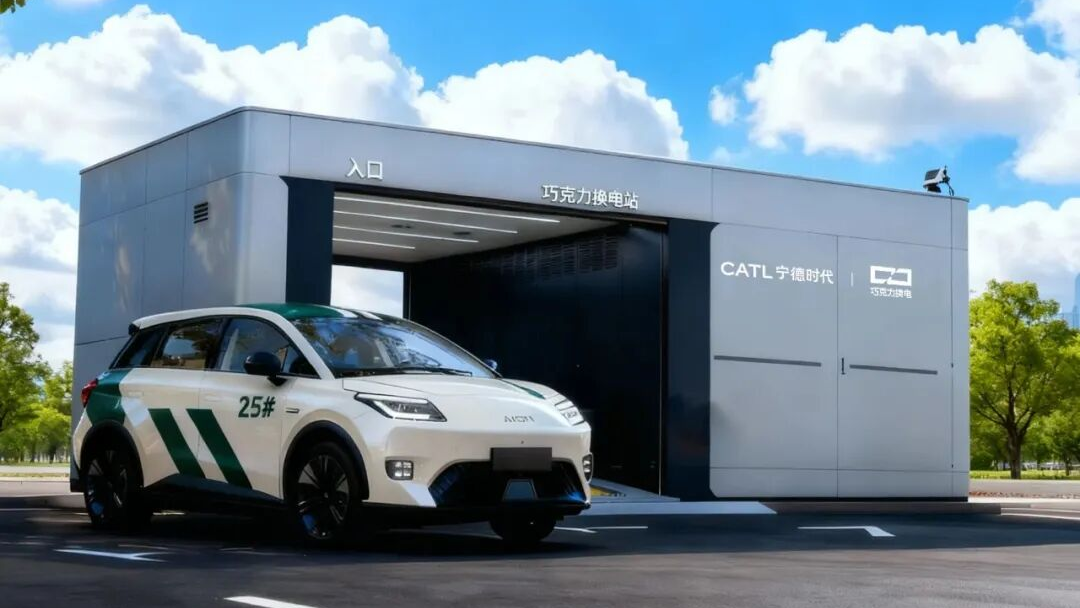
CATL has expanded its battery-swapping ecosystem by formalizing cooperation with Huawei-backed smart vehicle company Yinwang Intelligent Technology. This partnership aims to develop compatible vehicles and expand the battery-swapping network, reinforcing CATL’s infrastructure dominance in the European and Chinese EV markets.
Chinese Automakers (General)
In September 2026, the combined market share of four major Chinese carmakers in Europe rose to 14.6%, up from 9.6% a year earlier. This growth occurred even as the broader European auto market grew by 10.2%, indicating that Chinese brands are gaining ground faster than traditional European incumbents like Volkswagen and Renault, whose registrations declined.
Deals, expansion & investment
Chinese companies are increasingly shifting from an export-only model to local manufacturing to bypass tariffs. BYD is reportedly shortlisting France for a new factory, adding to its existing investment in Hungary. This move aligns with a broader trend where Chinese EV makers are taking over idle European auto plants previously owned by Nissan, Ford, and Volkswagen to establish a duty-free production footprint.
Regulation & market context
The EU is moving toward more operational enforcement of trade rules, with discussions on safeguard tariffs and stricter "Made in Europe" rules gaining traction. A key recent development is the EU's push to cap Chinese hybrid imports at 350,000 units, a measure aimed at curbing the surge of plug-in hybrid vehicles from China. Additionally, new steel and e-commerce regulations are being implemented to address trade imbalances, reflecting a "China Shock 2.0" narrative that views subsidized Chinese exports as a security risk.
On the radar
- Scania’s China Shift: Swedish truck maker Scania is accelerating its electric truck production in China (Rugao plant), where nearly one in three new trucks is expected to be electric in 2026, compared to just 4.8% in the EU.
- Volkswagen’s China Launch: VW launched the Jetta M6 EV in China with a starting price of $11,900, signaling an aggressive attempt to compete with local Chinese brands in the affordable EV segment.
By the numbers
- 14.6%: Combined market share of Chinese carmakers in Europe in September 2026, up from 9.6% year-on-year.
- 206,000+: Vehicles sold by BYD in the EU during the first three quarters of 2026.
- 280%: Year-on-year surge in sales of pre-owned Chinese electric vehicles in Europe (Jan–Sept 2026), reaching 7,900 units as tariffs impact new imports.
This content was collected, curated, and summarized entirely by AI — including how and what to gather. It may contain inaccuracies. Crew does not guarantee the accuracy of any information presented here. Always verify facts on your own before acting on them. Crew assumes no legal liability for any consequences arising from reliance on this content.
Powered by
