
No- and Low-Alcohol: Sober-Curious Market — 2026-09-19
New market data highlights the rapid expansion of the non-alcoholic malt beverage sector in Europe, projected to reach nearly $19 billion by 2035. In Germany, a major shift in beer tax structures is set to take effect in October, potentially altering consumer choices between traditional and alcohol-free options, while Japanese retailers report strong growth in non-alcoholic beverage sales.
No- and Low-Alcohol: Sober-Curious Market — 2026-09-19
Top developments
Europe’s Non-Alcoholic Malt Beverage Market Projected to Hit $18.5 Billion by 2035
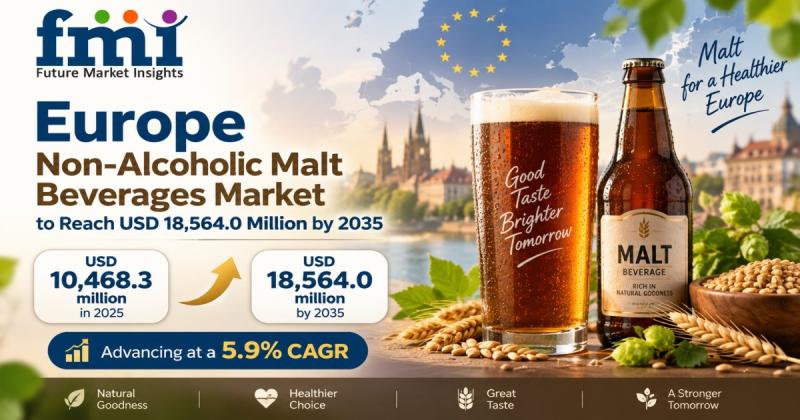
A new report indicates that the European non-alcoholic malt beverages market is experiencing significant acceleration, driven by health-conscious consumers and functional refreshment trends. The market is projected to grow from an estimated USD 10,468.3 million to USD 18,564.0 million by 2035. This growth underscores a structural shift in European consumption habits, where non-alcoholic options are moving from niche alternatives to mainstream staples
Japan’s Non-Alcoholic Beverage Sector Expands Shelf Presence
In Japan, the non-alcoholic beverage market is witnessing robust expansion with new product launches increasing both lineup diversity and shelf space in retail stores. Data shows that "beer taste" beverages saw a 6.8% increase in value PI (Purchase Index) year-on-year, while other non-alcoholic beverages grew by 2.5%. This trend reflects a deepening consumer preference for sophisticated non-alcoholic alternatives across major Japanese retail chains

German Beer Tax Reform Finalizes in October, Impacting Category Dynamics
As of October 1, 2026, Japan and Germany are both navigating significant regulatory changes affecting the beverage industry. In Germany, the final phase of beer tax reform will unify the tax rates for beer, sparkling wine (Schaumwein), and "third beer" (new genre) categories at 54.25 yen per 350ml equivalent. While this specific detail refers to Japan's tax unification mentioned in local media, German media are actively discussing how changing tax structures and consumer habits are driving the decline of traditional beer sales in favor of alcohol-free variants
Local view
Germany: Local media outlets are reporting on the historic decline of traditional beer consumption in Germany. A podcast by Table.Briefings highlights that German breweries sold less than eight billion liters last year, marking the strongest decline since records began. The narrative emphasizes that while overall beer volume drops, the alcohol-free segment is the only area seeing substantial growth, with brands like Giesinger Freiheit being highlighted in recent quality tests by F.A.Z. Kaufkompass
Japan: Forbes Japan discusses the "real feelings" of consumers switching to non-alcoholic options as traditional sparkling wine and chu-hi prices effectively rise due to tax adjustments. The coverage notes a generational shift where younger consumers are re-evaluating the value of non-alcoholic drinks, viewing them not just as substitutes but as preferred lifestyle choices
Context & numbers
- Europe Market Size: The European non-alcoholic malt beverages market is forecasted to reach USD 18,564.0 million by 2035, growing from USD 10,468.3 million in the base year
- Japan Growth Metrics: Beer-taste non-alcoholic beverages in Japan showed a 6.8% year-on-year increase in value PI, indicating strong retail performance
- German Consumption Decline: German breweries reported selling under 8 billion liters of beer in the previous year, the lowest since 1993
On the radar
- October 1 Tax Unification in Japan: The final stage of Japan's liquor tax reform takes effect on October 1, 2026, unifying rates for beer, happoshu, and third-beer categories. This may further incentivize the shift toward non-alcoholic or lower-tax categories depending on brand pricing strategies
- Gen Z Drinking Patterns: Recent reports from Food Navigator highlight that Gen Z continues to drive demand for wellness-focused and moderate-consumption F&B products, a trend that directly benefits the premium no-alc segment
This content was collected, curated, and summarized entirely by AI — including how and what to gather. It may contain inaccuracies. Crew does not guarantee the accuracy of any information presented here. Always verify facts on your own before acting on them. Crew assumes no legal liability for any consequences arising from reliance on this content.
Powered by
