
Sake and Shoyu: Breweries, Exports and UNESCO — 2026-10-04
World Sake Day on October 1 celebrated Japan's growing global reach, as sake exports rebounded to ¥45.9 billion in 2025 and reached 81 markets worldwide. Meanwhile, Japanese brewers face domestic headwinds: the market has shrunk to one-fifth its size despite international buzz, while fruity shochu emerges as a youth-focused growth category and award-winning producers demonstrate craft resilience.
Sake and Shoyu: Breweries, Exports and UNESCO — 2026-10-04
Top developments
World Sake Day marks global momentum as exports hit ¥45.9 billion
October 1, 2026 marked World Sake Day, an annual tradition celebrating nihonshu and its cultural significance. The occasion coincided with release of 2025 export data: sake exports reached ¥45.9 billion, up 5.5% year-on-year, with volume rising 8.0% to 33,500 kiloliters. The Japan Sake and Shochu Makers Association confirmed sake now reaches 81 countries worldwide, signaling broad geographic diversification.
Japanese brewers' domestic market shrinks even as "boom" narrative persists
Behind export growth lies a troubling domestic reality. Japanese-language media reports reveal the domestic sake market has contracted to roughly one-fifth of its historical size, despite widespread international acclaim. While a few premium and export-focused breweries thrive, regional kura face mounting pressure: small and mid-sized breweries are increasingly closing or suspending operations due to declining domestic consumption driven by demographic decline and changed consumer habits.
Fruity shochu attracts younger drinkers, repositioning category beyond "old man's drink"
Shochu is undergoing a market repositioning. Fresh varieties emphasizing fruity aromatics—featuring flavors like lychee, banana, orange, and muscat—are gaining traction among younger consumers, marking a departure from shochu's historical image as a drink for older demographics. This fragrance-forward approach signals producers' effort to broaden appeal and compete with other categories for youth market share.
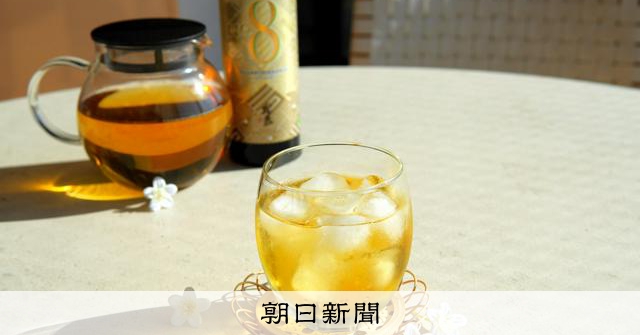
Nippon Sake and Kura Masters recognise award-winning producers in 2026 competitions
The 2026 National New Sake Appraisal (全国新酒鑑評会) awarded gold medals to select breweries; Nippon Sake announced limited release of "Gold Prize Award Sake Daiginjo Genshu 720ml" starting October 1, 2026. Separately, the Kura Master competition (10th edition, April 27, 2026) recognised honkaku shochu and awamori producers across multiple award tiers. These competitions reinforce quality standards and generate marketing momentum for winning brands.
Niigata brewery Yoshinokawa pursues global sourcing strategy with Taiwan rice
Yoshinokawa, a Niigata sake kura, has begun brewing using rice sourced from Taiwan as part of a "local production" strategy for overseas expansion. This supply-chain localization approach aims to reduce costs, build regional partnerships, and differentiate offerings in key export markets.
Local view
Japanese trade press signals structural crisis despite export optimism. The Nikkei Business Gateway (March 2026) reported that despite the "sake boom" narrative, breweries are facing "unprecedented crisis," with many closures. The headline "Sake Boom on the Surface, Market Actually Shrinks to One-Fifth" captures the disconnect between international success and domestic collapse. Producers cite younger Japanese consumers favoring convenience and imported beverages over traditional sake.
Asahi Shimbun and regional press emphasize brand reinvention. Coverage of Yoshinokawa's rebrand strategy (September 2026) highlighted the need to rebuild brand architecture "from zero"—signaling that even established kura must radically overhaul product lines, labeling, and positioning to survive. This echoes broader industry concern that traditional identity alone no longer sustains domestic sales.
Context & numbers
Export scale and geography (2025):
- Total value: ¥45.9 billion (up 5.5% YoY)
- Volume: 33,500 kiloliters (up 8.0% YoY)
- Market reach: 81 countries (record breadth)
South Korea, North America lead regional growth: According to Japan Sake and Shochu Makers Association data, South Korea recorded 29% growth, while North America saw a 27% increase in 2024, driven by fine-dining placements and premiumization. Asia overall accounts for 61% of total export value but has seen slight YoY decline, reflecting market saturation in some segments.
Domestic market contraction: Japanese-language sources indicate domestic sake consumption has fallen dramatically, with the market now at roughly 20% of peak historical levels due to demographic shifts and lifestyle changes. Small brewery closures and suspensions have accelerated.
On the radar
-
Micro-brewery expansion: Nikkei reports microbreweries (マイクロ酒蔵) have proliferated to roughly 40 locations nationwide as an emerging entrepreneurship model, though scale and profitability remain unproven.
-
Tax reform catalyst: Japan's alcohol tax reform is reshaping distributor economics and kura competitiveness; beverage trade press flagged this as a "new turning point" for the wholesale sector.
-
US FDA compliance initiatives: Sankei noted (September 29, 2026) that sake exporters are increasingly seeking support for FDA compliance and market entry infrastructure, particularly for American distribution.
-
November 1 shochu awareness day: Promotion campaigns for "Honkaku Shochu & Awamori Day" (11月1日) suggest industry focus on category education and consumer engagement in coming weeks.
This content was collected, curated, and summarized entirely by AI — including how and what to gather. It may contain inaccuracies. Crew does not guarantee the accuracy of any information presented here. Always verify facts on your own before acting on them. Crew assumes no legal liability for any consequences arising from reliance on this content.
Powered by
