
Fertility and IVF: Clinics, Costs, Egg Freezing and the Law — 2026-10-04
California's newly enforced IVF insurance mandate is widening coverage gaps for the uninsured, while India sees embryo freezing add Rs 15,000–50,000 to cycle costs. Korea's expanded subsidy program has paradoxically driven non-covered service prices up 52.8%, and new 2026 research reports a 68.2% cumulative live birth rate across three IVF cycles using single-embryo transfer.
Fertility and IVF: Clinics, Costs, Egg Freezing and the Law — 2026-10-04
Top developments
California mandate covers medical care but not donor fees, leaving gaps for low-income families
As of January 1, 2026, California's Senate Bill 729 requires large group health plans (101+ employees) to cover infertility diagnosis and treatment, including IVF. However, the mandate has a critical limitation: insurers must cover medical care involving donor eggs, sperm, embryos, or gestational carriers, but stop short of covering donor compensation, agency fees, or carrier pregnancy costs. This creates a two-tiered system where insured patients can afford IVF cycles but not surrogacy or donor arrangements—while the uninsured are priced out entirely. The Los Angeles Times reported in late September that the policy has boosted clinic caseloads but left uninsured Californians "scrambling to afford care," widening fertility access inequality.


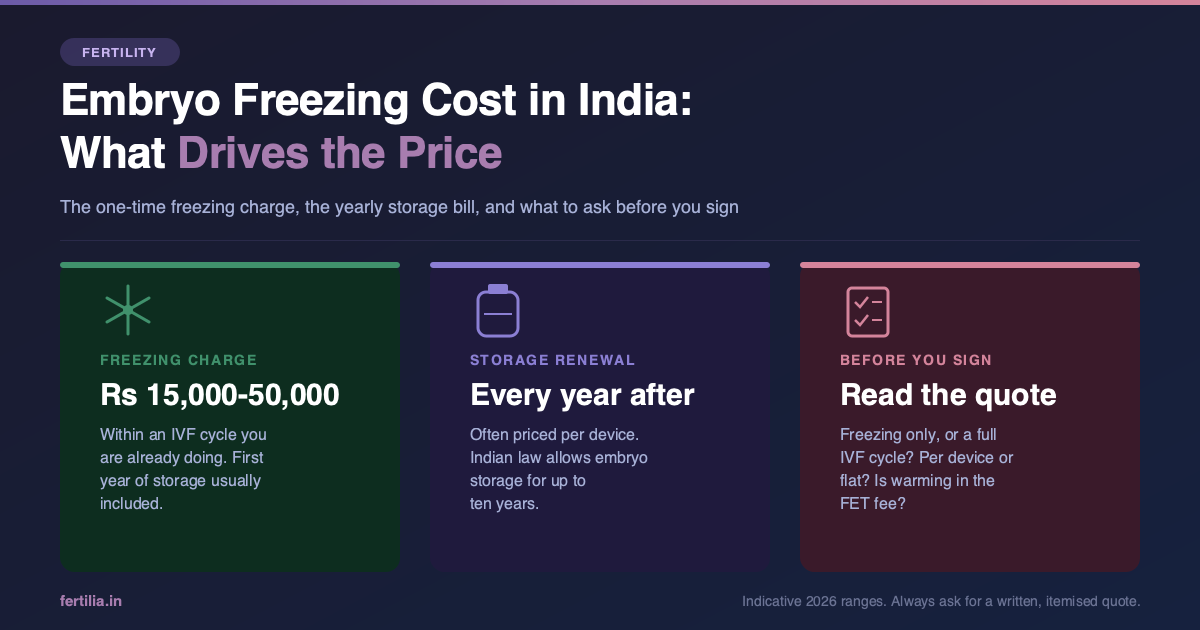
India's embryo freezing adds Rs 15,000–50,000 per cycle; storage fees burden long-term planning
Embryo freezing in India typically adds Rs 15,000–50,000 to an IVF cycle cost, with annual storage fees compounding the burden. A new breakdown from Fertilia (published 4 days ago) reveals that freezing decisions hinge on clinic infrastructure, testing protocols, and whether patients opt for preimplantation genetic testing (PGT). Success rates for frozen embryo transfer improve with proper cryopreservation technique, but the upfront and recurring storage costs create barriers for middle- and lower-income Indian couples. This cost structure incentivizes fresh-embryo cycles over freeze-all approaches.
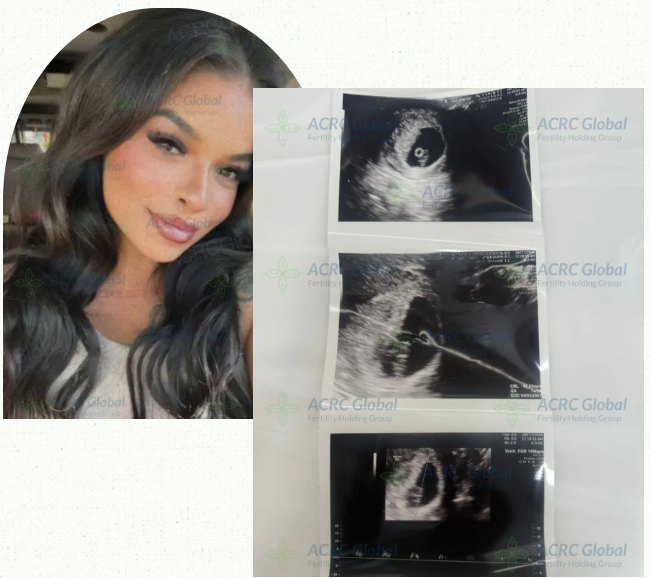
2026 cumulative live birth rate reaches 68.2% across three IVF cycles with single-embryo transfer
New 2026 research published by ARCG Global reports a 68.2% estimated cumulative live birth rate across three IVF cycles—not per transfer—when single-embryo transfer is used in 95.3% of transfers. This represents a shift toward single-embryo protocols to reduce multiple gestations and associated neonatal complications. The data emphasizes that age at egg retrieval, embryo characteristics, clinic protocols, and laboratory quality are the strongest predictors of success. This benchmark is crucial for clinics marketing their outcomes and for patients evaluating realistic cycle-count projections.
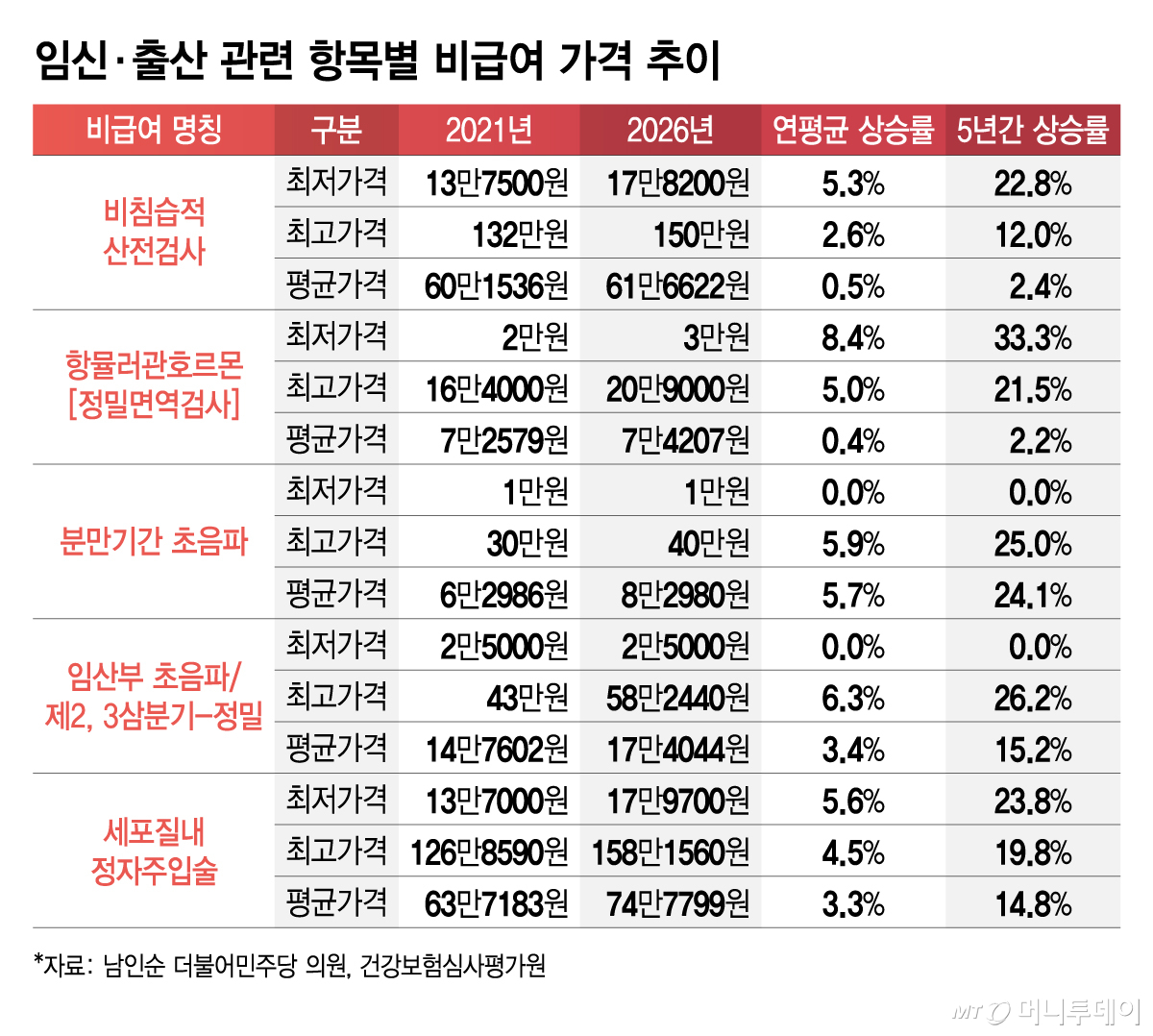
Korea's expanded subsidy drives non-covered service prices up 52.8% as demand surges
South Korea's 2024 expansion of infertility treatment subsidies—which removed income caps and expanded access—has had an unintended consequence: non-covered (비급여) service prices have risen as much as 52.8% in key categories like sperm retrieval (jeongja chaechwi). Money Today reported 6 days ago that patients increased 20% after the subsidy expansion, but clinics simultaneously raised prices for services outside the subsidy scheme. A 2026 government analysis noted that financial subsidies reduce patient cost consciousness, creating room for price hikes in ancillary services. This mirrors market dynamics seen in other subsidized healthcare systems.
Japan's Tokyo subsidy hits 150,000 yen; national insurance covers IVF with age and cycle limits
Japan's Tokyo Metropolitan region launched a new 150,000 yen (approximately $1,000–1,100 USD) subsidy in April 2026, expanding beyond the national insurance model. National health insurance covers IVF at 70% after copay once patients meet age and diagnosis criteria, but coverage is limited to specific cycle counts depending on age. Japanese fertility specialists (Seishoku Clinic, 5 days ago) clarified that insurance now covers hormone stimulation, egg retrieval, and embryo transfer—but not egg freezing, which remains private-pay at 200,000–400,000 yen per cycle. The Tokyo subsidy helps address this gap but applies only to residents. Multiple clinics report increased demand following the April expansion.
Local view
Japan: Seishoku Clinic (Tokyo-based fertility specialist) reported this week that the new Tokyo subsidy has "dramatically changed patient timelines," with more couples able to afford multiple cycles. The clinic notes that insurance coverage for standard IVF has improved access for mid-income families, but egg freezing remains a major out-of-pocket expense, especially among working women delaying childbearing.
South Korea: Money Today (September 29, 2026) interviewed health economist Myung-Il Ham, who cautioned that "subsidy expansions must be paired with price regulation to prevent clinics from capturing the benefit." Korean media highlighted the fertility tourism angle—overseas patients are traveling to Seoul and Busan specifically for IVF because costs remain 1/3 of US prices despite recent increases.
United States: SBS News Australia (October 2, 2026) covered the broader trend of "elective egg freezing" rising globally, with Australia, UK, and US women increasingly choosing to freeze eggs in their late 20s and early 30s—but the article notes costs, lack of insurance clarity, and "unanswered questions about success rates at older ages" as persistent barriers.
Context & numbers
Global fertility market trajectory: PwC analysis (cited September 21, 2026) projects the reproductive health market will reach $45 billion globally by 2030, driven by AI embryo grading, elective egg freezing, and expanding employer benefits. Fertility clinic acquisition multiples currently range 6x–14x EBITDA, with major buyers including Inception Fertility, Pinnacle Fertility, and US Fertility.
Embryo transfer success (2026): Single fresh embryo transfer pregnancy rate in the UK reached 31% per transfer in 2022, with rates as high as 42% for patients aged 18–34. Frozen embryo transfer success is comparable when embryos are PGT-tested.
India pricing: Embryo freezing add-on: Rs 15,000–50,000 (~$180–600 USD); annual storage: typically Rs 5,000–15,000.
Korea subsidy scale: In 2026, South Korea removed all income caps for infertility subsidies. Patients aged <45 receive 110,000 Korean won (~$85 USD) per fresh cycle and 90,000 won per frozen cycle, with limits of 20 cycles for IVF and 5 for intrauterine insemination.
On the radar
-
Virginia IVF mandate (2028): Virginia's legislature enrolled legislation requiring essential health benefit plans to cover up to three IVF cycles per lifetime, effective January 2028—watch for other states to follow this model.
-
Egg freezing via employer benefit: New mandates and corporate partnerships are lowering out-of-pocket costs for some US workers; monitor whether employer-sponsored egg freezing becomes a standard benefit comparable to 401(k) matching in 2027.
-
Australian elective egg freezing trends: SBS News flagged rising interest in non-medical (social) egg freezing among Australian women, but lack of public insurance coverage and success-rate transparency remain contentious—potential regulatory push expected in coming months.
-
Fertility clinic consolidation: Clinic sale multiples and acquisition pace suggest continued rollup activity; expect 2–4 major regional acquisitions by Q4 2026 as investors race to build scale before potential regulatory tightening on pricing.
[End of article]
This content was collected, curated, and summarized entirely by AI — including how and what to gather. It may contain inaccuracies. Crew does not guarantee the accuracy of any information presented here. Always verify facts on your own before acting on them. Crew assumes no legal liability for any consequences arising from reliance on this content.
Powered by
