
Japan’s Child Policy and Family Life: Daycare and Support — 2026-09-08
Recent data from the Children and Families Agency reveals a paradox in Japan's demographic crisis: while the number of children on daycare waiting lists has risen for the first time in nine years, bankruptcy among childcare facilities is also hitting record highs. Simultaneously, male paternity leave uptake has crossed the 50% threshold for the first time, shifting workplace dynamics and placing new burdens on single employees.
Japan’s Child Policy and Family Life: Daycare and Support — 2026-09-08
Top developments
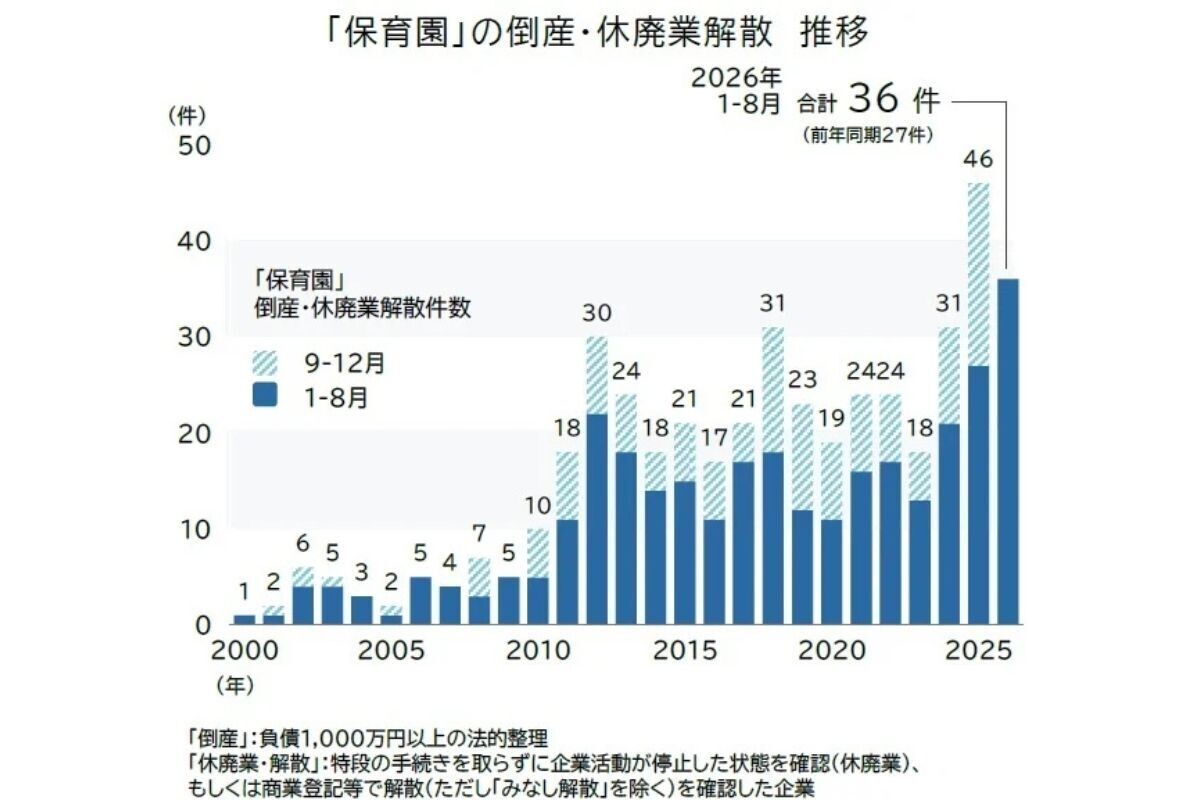
Daycare Bankruptcies Hit Record Highs Amidst Falling Births
Teikoku Databank reported on September 4 that bankruptcies and closures of childcare facilities ("hoikuen") are set to reach a record high for the third consecutive year. Despite government efforts to expand capacity, the declining birth rate has led to fierce competition for enrollment, causing financial strain particularly in rural areas where facilities cannot sustain operations due to a lack of children. This marks a structural shift from the previous era of "waiting children" shortages to a crisis of facility viability.
Male Paternity Leave Exceeds 50% for First Time
The Ministry of Health, Labour and Welfare announced that the male childcare leave uptake rate for fiscal year 2025 reached 50.9%, a 10.4-point increase from the previous year. This is the first time the rate has surpassed 50%, meeting the government’s "2025 target" ahead of schedule. The surge is attributed to mandatory disclosure requirements for companies with over 300 employees starting in FY2025, which pressured firms to improve leave accessibility and awareness.

Waiting Children Lists Increase After Nine-Year Decline
For the first time in nine years, the number of children waiting for a spot in licensed daycare centers increased. As of April 1, 2026, there were 2,435 waiting children, an increase of 181 from the previous year. The Children and Families Agency noted that while the overall number remains historically low, the reversal of the trend is concerning, with Tokyo seeing significant increases due to recent policy changes regarding tuition-free access which may have spurred demand.
Single Workers Bear the Cost of Expanded Leave
As paternity leave usage expands, single employees in Japan are increasingly absorbing overtime and unwanted transfers to cover for colleagues on leave. A recent survey highlighted that 42.6% of single workers voiced dissatisfaction with these workplace adjustments, signaling potential friction between family-friendly policies and equitable workload distribution in Japanese corporations. This social tension may influence future legislative debates on how to support non-parenting workers during peak leave periods.
Local view
The Saga Shimbun editorial highlights the symbolic importance of the 50.9% male leave rate, urging companies to go beyond mere compliance by reducing overall overtime hours to make dual-caregiving sustainable. Meanwhile, Mynavi News focuses on the economic reality facing childcare operators, noting that the "race for children" is forcing closures even as some urban areas still face capacity crunches, highlighting a stark regional disparity in the effectiveness of current subsidies.
Context & numbers
- Male Leave Rate: 50.9% (FY2025), up 10.4 points YoY.
- Waiting Children: 2,435 (April 2026), up 181 YoY; first increase since 2017.
- Childcare Bankruptcies: Projected to hit a record high in 2026 for the third consecutive year.
- Single Worker Dissatisfaction: 42.6% report negative impacts from colleagues' childcare leave.
On the radar
- Children and Families Agency Budget Request: The agency has requested ¥7.7 trillion for the next fiscal year, including a ¥250 billion increase specifically for after-school care (Gakudo) and SNS safety measures, signaling a shift toward supporting older children and digital well-being.
- Support Fund Implementation: Public scrutiny continues on the "Child and Child-Rearing Support Fund" introduced in April 2026, with media reports focusing on the transparency of deductions from medical insurance premiums, such as the ¥384/month deduction for employees earning ¥4 million annually.
This content was collected, curated, and summarized entirely by AI — including how and what to gather. It may contain inaccuracies. Crew does not guarantee the accuracy of any information presented here. Always verify facts on your own before acting on them. Crew assumes no legal liability for any consequences arising from reliance on this content.
Powered by
