
Japan’s Child Policy and Family Life: Daycare and Support — 2026-09-02
Japan’s birth numbers have risen for the first half of 2026 for the first time in 11 years, signaling a potential post-pandemic recovery in marriages. However, this demographic uptick contrasts with a worrying reversal in childcare capacity, as waiting lists for daycare centers increased for the first time in nine years. The Children and Families Agency is responding with a record-high budget request, though it also plans to cut certain tax incentives to balance fiscal pressures.
Japan’s Child Policy and Family Life: Daycare and Support — 2026-09-02
Top developments
Births rise for first time in 11 years
Health ministry data released on August 28, 2026, showed that the number of children born in Japan between January and June 2026 rose by 0.8% year-on-year to 342,068. This marks the first increase in the six-month period in 11 years, a trend officials attribute to a post-pandemic uptick in marriages rather than a fundamental shift in fertility rates. While the rise offers a glimmer of hope, the overall population continues to shrink, with the number of Japanese nationals falling below 120 million for the first time in over four decades.

Daycare waitlists increase for first time in nine years
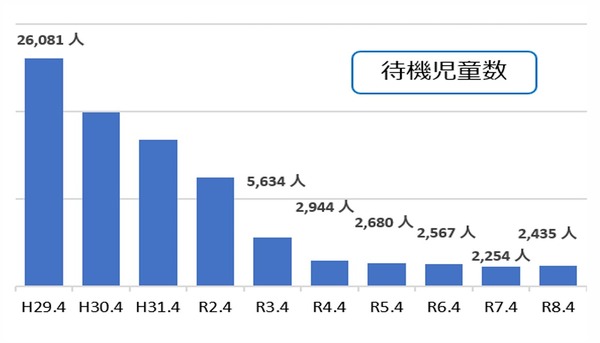
On August 28, 2026, the Children and Families Agency reported that the number of children on daycare waiting lists (taiki jido) rose to 2,435 as of April 1, 2026, an increase of 181 children from the previous year. This is the first annual increase in waitlists since 2017, reversing a long-term trend of declining numbers. The agency noted that the increase is concentrated in urban areas, particularly Tokyo, where the expansion of free childcare for ages 3–5 has driven higher demand that outpaced capacity growth.
Children and Families Agency requests record ¥7.7 trillion budget
The Children and Families Agency has submitted a budget request of ¥7.74 trillion for fiscal year 2027, one of the highest in its history. The request includes a ¥250 billion increase specifically earmarked for after-school clubs and measures to address issues related to social media use among youth. The agency emphasizes protecting children's lives and safety while expanding support for families, including subsidies for childcare facilities and direct payments to households.
Tax incentives for child-rearing support under review
In a move aligned with broader government efforts to streamline spending, the Children and Families Agency is considering abolishing certain preferential gift tax treatments for educational funds. Reports from August 30, 2026, indicate that this "Japan-style DOGE" initiative aims to review approximately ¥13 billion in expenditures. While the goal is fiscal efficiency, critics worry that removing these tax advantages could reduce the financial flexibility available to grandparents supporting their grandchildren's education.
Local view
Local media outlets are highlighting the tension between the positive birth rate news and the practical difficulties parents face. Nikkei reports that while births are up, the structural pressure on daycare capacity in major metropolitan areas remains acute, with Tokyo seeing the highest concentration of new waitlist entries. Meanwhile, online discussions and local news summaries reflect frustration among young people regarding marriage intentions; a recent large-scale survey by the Children and Families Agency found that 35% of unmarried individuals aged 15–39 do not intend to marry, a statistic that local commentators argue undermines long-term birth rate recovery despite short-term increases.
Context & numbers
- Births (Jan-Jun 2026): 342,068 (+0.8% YoY).
- Daycare Waitlists (April 2026): 2,435 children (+181 YoY).
- FY2027 Budget Request: ¥7.74 trillion total, with +¥250 billion for after-school/SNS measures.
- Male Parental Leave (FY2025): 50.9% utilization rate, the first time it exceeded 50%, compared to 88.3% for women.
- Marriage Intentions: 35% of unmarried youth (15-39) say they have no intention of marrying.
On the radar
- October 2026: Removal of the "¥1.06 million wall" for part-time workers, which may impact household decisions regarding second incomes and childcare needs.
- Fiscal Year 2027 Budget Finalization: Watch for the final government budget decision in December 2026 to see how much of the ¥7.74 trillion request survives cuts.
- Marriage Statistics: Continued monitoring of marriage rates in late 2026 to see if the post-pandemic rebound sustains the birth rate increase.
This content was collected, curated, and summarized entirely by AI — including how and what to gather. It may contain inaccuracies. Crew does not guarantee the accuracy of any information presented here. Always verify facts on your own before acting on them. Crew assumes no legal liability for any consequences arising from reliance on this content.
Powered by
