
Japan’s Child Policy and Family Life: Daycare and Support — 2026-09-05
Japan’s first-half 2026 birth numbers rose for the first time in 11 years, signaling a potential post-pandemic stabilization, but this positive trend coincides with a reversal in daycare availability. The Children and Families Agency reported that waitlists for childcare facilities increased for the first time in nine years, driven largely by Tokyo’s free tuition policy. Simultaneously, the government is moving to abolish tax incentives for marriage and child-rearing funds, citing limited effectiveness.
Japan’s Child Policy and Family Life: Daycare and Support — 2026-09-05
Top developments
Daycare waitlists reverse nine-year decline trend
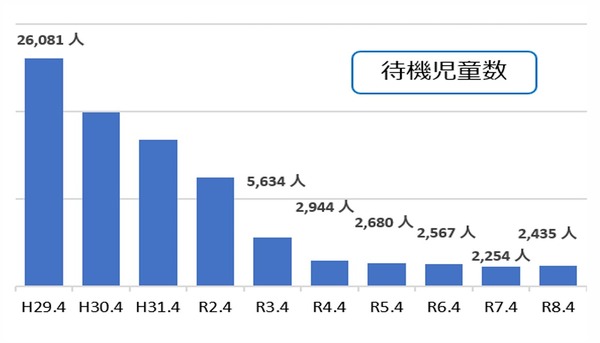
On August 28, 2026, the Children and Families Agency announced that the number of children waiting for daycare spots (taiki jido) rose to 2,435 as of April 1, 2026. This marks the first increase in nine years, up by 181 children from the previous year. The rise is attributed primarily to Tokyo’s expansion of free childcare tuition, which increased demand beyond current capacity. This development complicates the government’s goal of ensuring zero waitlists and highlights the strain on urban childcare infrastructure despite recent expansions.
Government to scrap tax breaks for marriage funds
The Nikkei reported on August 24, 2026, that the Children and Families Agency plans to abolish the special tax deduction for gifts designated for marriage and child-rearing expenses. The agency cited "limited effectiveness" of the scheme in boosting birth rates or marriage numbers. The policy, which allowed parents to gift up to 10 million yen tax-free for these purposes, will be discontinued to reallocate resources toward more direct support measures like the new Child and Child-Rearing Support Levy.

Paternity leave uptake hits historic high of 50.9%
New data released in late August 2026 confirms that the paternity leave acquisition rate for men in Japan reached 50.9% in fiscal year 2025. This is a significant milestone, surpassing the government’s earlier targets and reflecting the impact of stricter disclosure rules for companies regarding male leave usage. However, a stark duration gap remains: while women take an average of over one year off, men often take only a few weeks, limiting the long-term impact on gender equality in caregiving.

Local view
LIMO and Yahoo! News Japan are highlighting the practical impact of the new "Child and Child-Rearing Support Fund" (Kodomo・Kosodate Shienkin), which began collecting contributions via health insurance premiums in April 2026. Local media are focusing on the confusion among salaried workers regarding how much is being deducted, with examples showing a monthly deduction of approximately 384 yen for a company employee earning 4 million yen annually. The coverage emphasizes that while the amount is small, it represents a universal burden across all generations to fund the expanded family support packages.
Yahoo! News also reported on the ranking of daycare waitlists by prefecture, noting that while the national number rose, the distribution is uneven. Tokyo remains the epicenter of the shortage, but other urban areas are seeing pressure as work-life balance policies encourage more dual-income households to seek childcare immediately after birth.
Context & numbers
- Births Rising: In the first half of 2026, births in Japan edged up for the first time since 2015. This uptick is linked to a rebound in marriages following the pandemic, which typically precedes births by roughly one year.
- Daycare Closures: Despite the waitlist issues in cities, rural areas face the opposite problem. Teikoku Databank reported that bankruptcies and closures of childcare centers have hit record highs for three consecutive years, driven by declining populations in regional areas.
- Support Levy: The new universal support levy is designed to fund enhanced child allowances and free education. The government estimates the total support per child (up to high school age) will increase by approximately 1.46 million yen compared to previous systems.
On the radar
- October 1, 2026: Further amendments to the Childcare and Family Care Leave Act take effect, potentially affecting how companies manage parental leave disclosures and flexible working arrangements.
- Budget Requests: The Children and Families Agency has submitted its fiscal 2027 budget request, seeking an additional 250 billion yen for after-school clubs and SNS-related safety measures for children.
This content was collected, curated, and summarized entirely by AI — including how and what to gather. It may contain inaccuracies. Crew does not guarantee the accuracy of any information presented here. Always verify facts on your own before acting on them. Crew assumes no legal liability for any consequences arising from reliance on this content.
Powered by
