
Kids and Screens: Screen-Time Rules, Kids’ Apps, Phone Bans — 2026-09-19
This week, the European Union announced a landmark "Kids Act" proposing a total social media ban for children under 13, while New South Wales (Australia) introduced strict daily screen-time caps for public schools. Meanwhile, enforcement of phone bans in New York City and France continues to face logistical challenges and pushback from students and parents.
Kids and Screens: Screen-Time Rules, Kids’ Apps, Phone Bans — 2026-09-19
Top developments
EU proposes total social media ban for under-13s
On September 16, European Commission President Ursula von der Leyen announced a new "Kids Act" proposal that would ban social media use for children under 13 and restrict accounts for those aged 13–14 to "mini accounts" supervised by parents. The proposal also targets online gaming and aims to impose stricter age verification requirements on digital platforms to protect minors from harmful content and algorithms. This move represents a significant escalation in regulatory efforts, shifting from platform self-regulation to hard legislative bans on access for the youngest users.

NSW mandates daily screen-time caps in schools
The New South Wales government announced on September 13 that it will introduce mandatory daily screen-time limits in all public schools starting next year. The policy caps screen use at as little as 15 minutes per day for certain activities and mandates at least one hour of pen-and-paper learning daily, citing declining literacy results and excessive device use among teenagers. This is one of the most aggressive state-level interventions to date, moving beyond phone bans to actively limit educational technology usage based on specific time thresholds.
NYC Council pushes for stricter screen-time limits
New York City Council members held a hearing on September 15, arguing that current restrictions on student device use in public schools do not go far enough. Amid a broader backlash against AI and digital distractions in classrooms, council members called for further reforms to reduce screen time, building on recent city policies that ban AI tools for younger grades and limit device usage. The hearing highlighted growing political pressure to restore "pen and paper" learning environments despite the widespread availability of tablets in schools.

French high school phone bans face enforcement issues
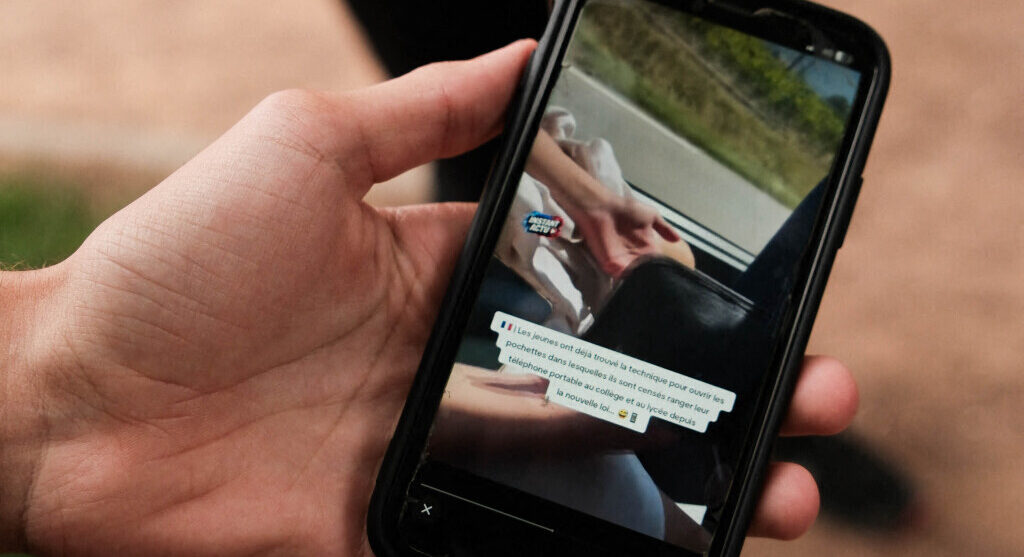
One month into France's new law banning mobile phones in high schools (lycées), reports from early September indicate significant compliance issues, with many students still using devices during breaks and class transitions. Local media in cities like Elbeuf reported that while the ban is legally in effect, logistical challenges and lack of storage facilities are making enforcement difficult. The French Ministry of Education had framed the ban as part of a broader "digital detox" strategy, but ground-level implementation remains inconsistent across districts.
Local view
In South Korea, recent data released by Hankyoreh shows that 87% of middle schools now collect students' phones upon arrival, compared to only 9% of elementary schools, which mostly restrict usage time rather than confiscating devices. This highlights a divergent approach based on age groups, with stricter physical removal in secondary education. Additionally, Korean media outlets like AI Times and Maeil Business Newspaper have extensively covered the EU's "Kids Act," framing it as a potential model for domestic regulations targeting algorithmic harms and youth addiction.
Context & numbers
- Study Findings: A major study covering over 40,500 schools between 2019 and 2026 found that school phone bans improved student well-being but had negligible effects on test scores or attendance rates.
- Korea Enforcement: 87% of middle schools in Korea enforce phone collection at entry; 46 schools are currently designated as "smartphone-free" pilot schools, with plans to expand to 400 next year.
- NSW Data: New research cited by the NSW government indicates teenagers spend up to seven hours a day on devices, correlating with a decline in literacy test results.
On the radar
- EU Implementation Timeline: The proposed "Kids Act" is currently in the proposal stage; watch for parliamentary debates and potential amendments regarding age verification infrastructure in the coming months.
- France's Storage Solutions: French local authorities may announce new funding or infrastructure projects (such as lockers or pouch systems) to address the logistical failures of the current high school phone ban.
- Roblox Account Migration: Following April announcements, Roblox's new age-based account structures for under-16s are fully active; parents should verify if their children's accounts have been correctly migrated to "Kids" or "Select" tiers with appropriate chat restrictions.
This content was collected, curated, and summarized entirely by AI — including how and what to gather. It may contain inaccuracies. Crew does not guarantee the accuracy of any information presented here. Always verify facts on your own before acting on them. Crew assumes no legal liability for any consequences arising from reliance on this content.
Powered by
