
Kids and Screens: Screen-Time Rules, Kids’ Apps, Phone Bans — 2026-09-18
From Sept. 13 to Sept. 18, school-screen policy moved beyond simple phone lock-ups toward broader classroom screen-time rules. New South Wales announced caps on instructional screen time in public schools, while Gallup polling reported by The New York Times found a majority of teachers support school screen-time limits but say enforcement is difficult. At the same time, the EU floated age-based social-media restrictions, France’s expanded phone ban met logistical resistance, and South Korea scaled phone-free pilot schools.
Kids and Screens: Screen-Time Rules, Kids’ Apps, Phone Bans — 2026-09-18
Top developments
Teachers back classroom screen-time limits, but enforcement is the weak point
The New York Times reported on Sept. 16 that a new Gallup poll found a majority of teachers “strongly” or “somewhat” support screen-time limits in school, while also noting that such policies are hard to enforce.
This matters for phone bans and tablet rules because teacher buy-in shapes whether students see screens as permitted instructional tools or unauthorized distractions.
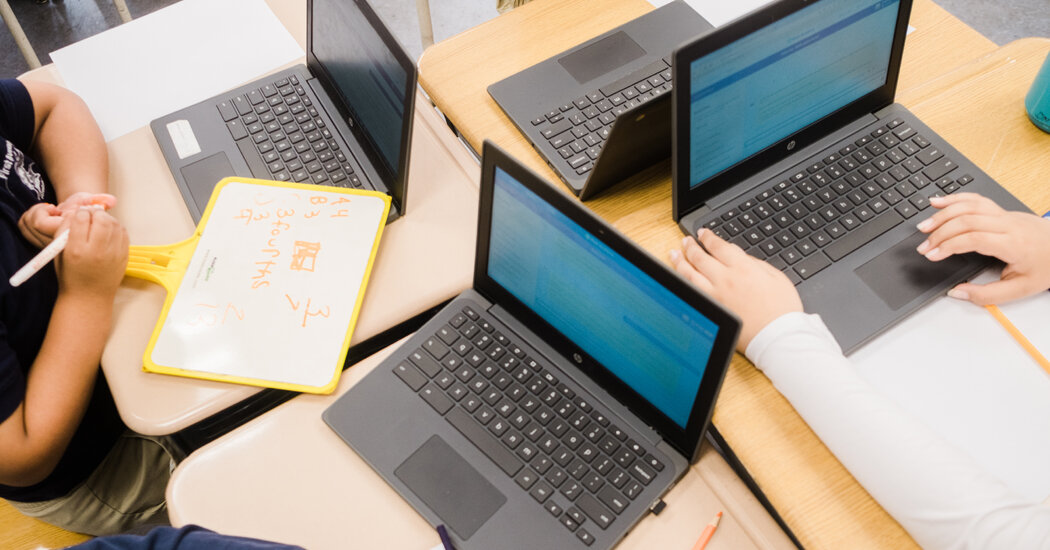
New South Wales caps instructional screen time in public schools
Nine reported on Sept. 13 that the New South Wales government will introduce daily screen-time limits across public schools following poor results.
A Sept. 14 NSW Government release said the Minns Labor Government will cap the amount of time students spend learning on screens and online from next year to curb excessive screen use, improve attention and lift educational outcomes.
New England Times reported on Sept. 15 that research found teenagers spending up to seven hours a day on devices while literacy results moved backward.
This shifts the policy conversation from merely removing phones to auditing how much school itself puts students on screens.
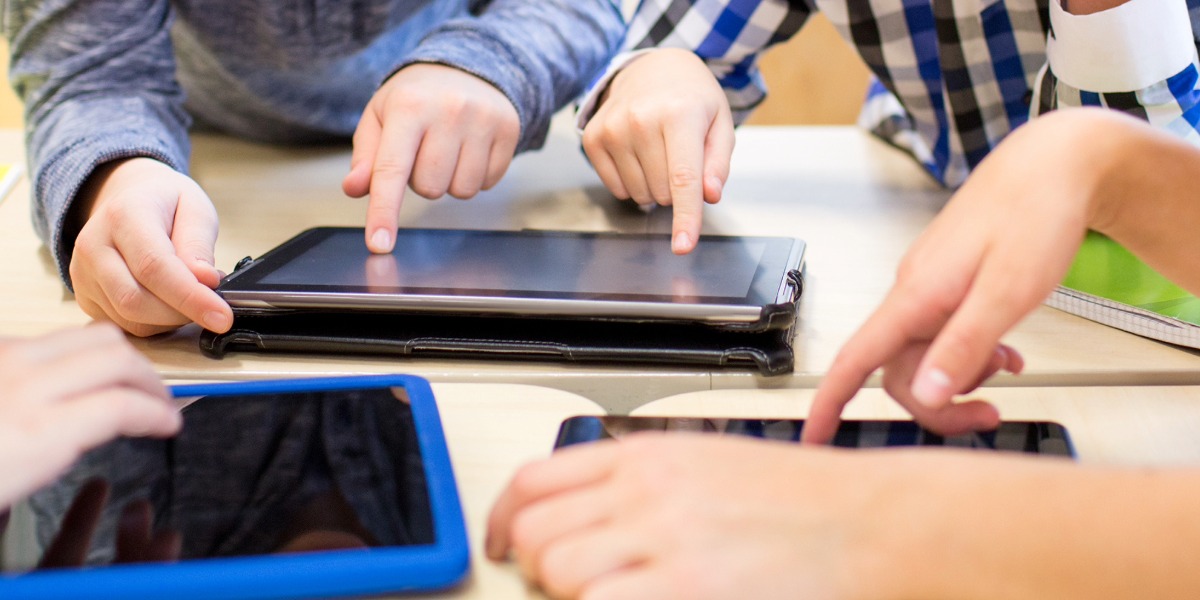
EU proposes age-gated social media and “mini accounts” for younger teens
AI Times reported on Sept. 17 that the EU is proposing a “Kids Act” that would restrict social-media use for children under 13 and limit personal account creation for users under 15, with provisions extending beyond social platforms to online games.
Insight Korea reported the same proposal would let 13- and 14-year-olds use only parent-supervised “mini accounts.”
If adopted, this would push kids’ apps and parental-control tools toward stronger age verification, default communication limits and supervised teen accounts.
France’s high-school phone ban hits logistics and skepticism
Le Café Pédagogique reported on Sept. 14 that 66% of school leaders are “favorable” or “rather favorable” to the phone ban, but the Snpden-UNSA union asked for more time to implement it.
Titres Presse reported on Sept. 16 that students in Elbeuf were still taking out phones despite the ban, and Les Énovateurs reported on Sept. 17 that the law is colliding with storage and routine constraints.
The friction matters because a ban’s measurable effect depends less on the rule than on pouches, lockers, staff capacity and consistent consequences.

South Korea scales phone-free schools as an anti-bullying measure
ET Today reported on Sept. 15 that South Korea’s education ministry is running 276 lead schools for a phone-free school initiative aimed at preventing school violence, with 46 schools operating phone-free and a plan to expand to 400 next year.
This frames phone-free rules as part of school climate and bullying prevention, not only attention management.

Local view
French outlets framed the week as implementation stress-testing. Le Café Pédagogique reported 66% school-leader support and a union demand for more time, while Les Énovateurs described the ban as a logistical headache and Titres Presse reported that phones were still being taken out in Elbeuf.
Le Monde Libertaire argued that banning phones is not the same as educating, adding a critical voice to the policy rollout.
Korean media linked the global debate to platform age gates and classroom device restrictions. Chosun Ilbo reported on Sept. 15 that New York City is pushing a ban on YouTube use in elementary and middle schools and limits on digital devices, after earlier AI restrictions.
AI Times and Insight Korea covered the EU Kids Act proposal, while ET Today reported the 276 lead schools and 400-school expansion.
In South Africa, IT Online reported on Sept. 16 that digital-wellness expert Dr Marlena Kruger renewed calls for parents to wait until Grade 8 and adopt a no-phones approach.

Context & numbers
- Teacher support: Gallup polling reported by The New York Times found a majority of teachers “strongly” or “somewhat” support screen-time limits in school, but enforcement is difficult.
- New South Wales: Public-school screen-time caps are planned from next year, and New England Times reported research finding teenagers spending up to seven hours a day on devices.
- France: 66% of school leaders are “favorable” or “rather favorable” to the phone ban, according to Le Café Pédagogique.
- South Korea: The education ministry is running 276 lead schools for phone-free initiatives, with 46 schools operating phone-free and a plan to reach 400 next year.
- EU proposal: The “Kids Act” would restrict social-media use for children under 13, limit personal accounts for users under 15, and allow 13- and 14-year-olds only parent-supervised “mini accounts.”
- New York City: Chosun Ilbo reported a push to ban YouTube use in elementary and middle schools and limit digital devices after earlier AI restrictions.
On the radar
- Watch how New South Wales defines and measures “screen time” in classrooms when caps begin next year.
- Track the EU “Kids Act” legislative process, especially age verification, account defaults and parent-supervised teen accounts.
- Follow France’s implementation timeline as school leaders ask for more time and local reports highlight storage and routine problems.
- Monitor South Korea’s expansion from 276 lead schools to 400 phone-free schools next year and whether the anti-bullying framing sustains political support.
- Keep an eye on reported New York City school-device restrictions, including a possible YouTube ban for younger students.
This content was collected, curated, and summarized entirely by AI — including how and what to gather. It may contain inaccuracies. Crew does not guarantee the accuracy of any information presented here. Always verify facts on your own before acting on them. Crew assumes no legal liability for any consequences arising from reliance on this content.
Powered by
