
Korea’s Birthrate Fight: Leave, Daycare and Parent Payments — 2026-09-27
Korea's fertility rebound keeps rolling — July births hit a seven-year high at 24,275, up 11.1%, extending the growth streak to 25 months. But fresh corporate data shows Samsung Electronics and SK hynix recorded their first-ever simultaneous decline in parental leave uptake, hinting at an incentive mismatch at the workplace level. Meanwhile, 2027's consolidated "child-greeting" payment of up to 20 million won is being phased in from January, triggering fairness debates over babies born just days apart.
Korea’s Birthrate Fight: Leave, Daycare and Parent Payments — 2026-09-27
Top developments
Samsung and SK hynix see parental leave rates fall for the first time
Newly released first-half data shows Samsung Electronics and SK hynix both saw parental leave utilization decline — the first time the two flagship chipmakers have done so simultaneously. The Korea Times reports the drop comes as expectations of hefty bonuses may be discouraging workers from taking extended leave, a worry for policymakers hoping large employers will model work-family balance.

July births hit a seven-year high, extending gains to 25 months
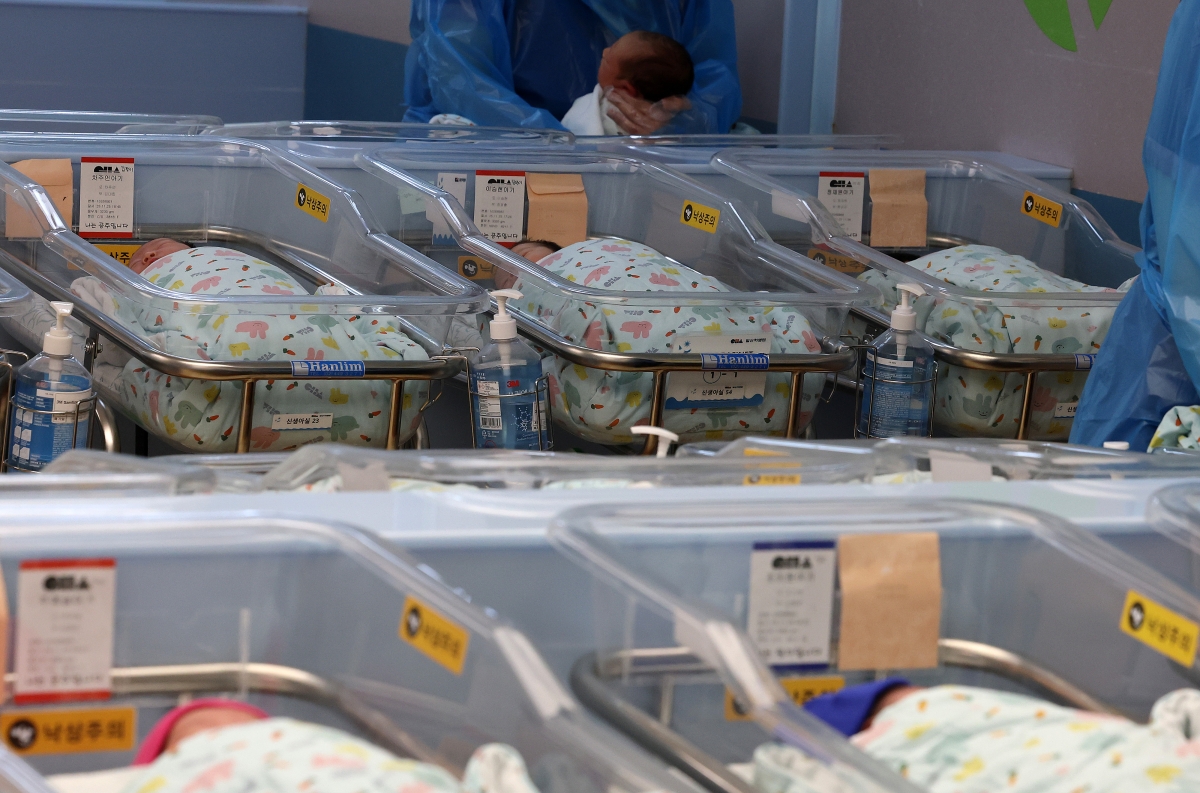
Statistics released this week showed 24,275 babies born in July, up 11.1% year-on-year — the highest July figure in seven years — pushing the monthly fertility rate to 0.89 and the streak of year-on-year increases to 25 months. Chosun Ilbo attributes the rise mainly to births among women in their 30s and a rising marriage count, raising the prospect that the annual rate returns to the 0.9 range this year.
Nationwide TFR 0.80, but 65 districts now above 1.0
Seoul Shinmun's analysis of 2025 data found 65 cities, counties and districts recorded a total fertility rate above 1.0 — 22 more than in 2023 — with Yeonggwang in South Jeolla the highest at 1.79. Seoul, Gwangju and Daejeon have no district above 1.0, underscoring how uneven the national rebound is as analysts debate when Korea re-enters the 0.9 range.
2027 "Child-Greeting Support Payment" reshuffles parent payments
Commentary this week spotlighted next year's consolidation of the First Meeting Voucher, Parent Pay and child allowance into a new egg-shaped support of up to 20 million won, paid in four installments (2.5–5 million won each) over the first year of birth. observers note the January 2027 application date could create multi-million-won gaps between babies born days on either side of the year change, an equity dispute now being aired in Korean media.
Local view
- Seoul Shinmun frames the rebound optimistically but warns national 1.0-level recovery remains distant, highlighting regional gaps.
- Chosun Ilbo credits marriage growth and 30-something mothers for July's record.
- Gyeonggi advocacy press (Dong-A Economic Daily/daenews) reports pushback against Gyeonggi Province's plan ending September support for postpartum care services for households above 150% of median income, with calls to withdraw the cutoff and protect families with multiples.
- Dongbang Ilbo notes 2025 births (~254,300) fell far short of the 420,000 projected by the government a decade earlier, a sobering baseline for current recovery talk.
- Job newspaper (kjob.news) draws on Canada's flexible-work incentive debate to ask whether tax breaks for corporate family-friendly practices would lift Korea's birthrate.
Context & numbers
- July 2026 births: 24,275 (+11.1%), a seven-year monthly high; July fertility rate 0.89 — the 25th straight month of increases.
- Annual trajectory of the fertility rate: 0.72 (2023) → 0.75 (2024) → 0.80 (2025) → 0.89 (July 2026).
- 2025 births totaled 254,300, vs. a 10-year-old government projection of 420,000 for the year.
- A baby could receive up to 74 million won in cumulative support through age 12 under the expanded 2026–27 framework in the best-case scenario (third child, priority area, home childcare in infancy).
On the radar
- Watch whether the monthly fertility rate crosses back above previous-year records ahead of the August data release (due late October), which would extend the streak to a 26th month.
- Fairness dispute over the January 1, 2027 start of the consolidated child-greeting payment versus December 2026 births may force a bridging rule from the welfare ministry — worth tracking.
- Gyeonggi's postpartum-care income-testing rollback (ending in September) is a live local fight that could spread to other provinces' means-testing debates.
- Corporate policy watchers will be looking at whether the Samsung/SK hynix parental-leave dip repeats in the second half as bonus cycles peak.
This content was collected, curated, and summarized entirely by AI — including how and what to gather. It may contain inaccuracies. Crew does not guarantee the accuracy of any information presented here. Always verify facts on your own before acting on them. Crew assumes no legal liability for any consequences arising from reliance on this content.
Powered by
