
Korea's Birthrate Fight: Leave, Daycare and Parent Payments — 2026-10-01
South Korea's birth rate continues its recovery with July 2026 births hitting a 7-year high of 24,275—marking the 25th consecutive month of growth—as companies ramp up aggressive incentives to encourage childbearing. A Gangwon resort is now offering 100 million won ($71,000) for births and up to 300 million won interest-free home loans, exemplifying a corporate shift to address the nation's demographic crisis.
Korea's Birthrate Fight: Leave, Daycare and Parent Payments — 2026-10-01
Top developments
July births reach 7-year high as monthly streak extends to 25 months
South Korea's July 2026 births surged 11.1% year-over-year to 24,275 infants, marking the strongest July total in seven years, according to national data released on September 23. This extends the country's consecutive monthly growth streak to 25 months. The cumulative January–July 2026 birth count reached 170,079 infants, a 14.7% increase from the same period in 2025. Monthly composite fertility rate for July stood at 0.89 children per woman, up from 0.79 in the prior year. The gains reflect rising marriage rates and growth in the 30-year-old population cohort—factors that demographers now cite as key to reaching the 0.9 fertility threshold by year-end. 
Gangwon resort offers 100 million won ($71,000) per birth, 300 million won interest-free home loans
Sunchroze Hotel & Resort in Gangneung announced this week that it will pay new parents 100 million won (approximately $71,000 USD) per birth and extend up to 300 million won ($214,000) in interest-free housing loans for employees who buy homes. The company distributed these bonuses at its employee awards ceremony on September 30. This marks one of Korea's most aggressive corporate birth-incentive schemes, reflecting growing pressure on private firms to offset the state's demographic decline. Corporate birth bonuses underscore how employers are now adopting family-support policies that rival or exceed government programs. 
65 municipalities now exceed 1.0 fertility rate as regional disparities widen
Data released last week show that 65 local jurisdictions in South Korea achieved a composite fertility rate above 1.0 child per woman in 2025—a 22-municipality jump from 2023. Yeongwang County in South Jeolla Province leads the nation at 1.79. However, Seoul, Gwangju, and Daejeon still report zero municipalities above 1.0. The national rate stands at 0.80, though government projections now suggest nationwide re-entry into the 0.9 range is achievable in 2026 and a 1.0 milestone within the next two years if current trends hold. This geographic clustering reflects uneven access to childcare, housing affordability, and employment opportunities outside Seoul. 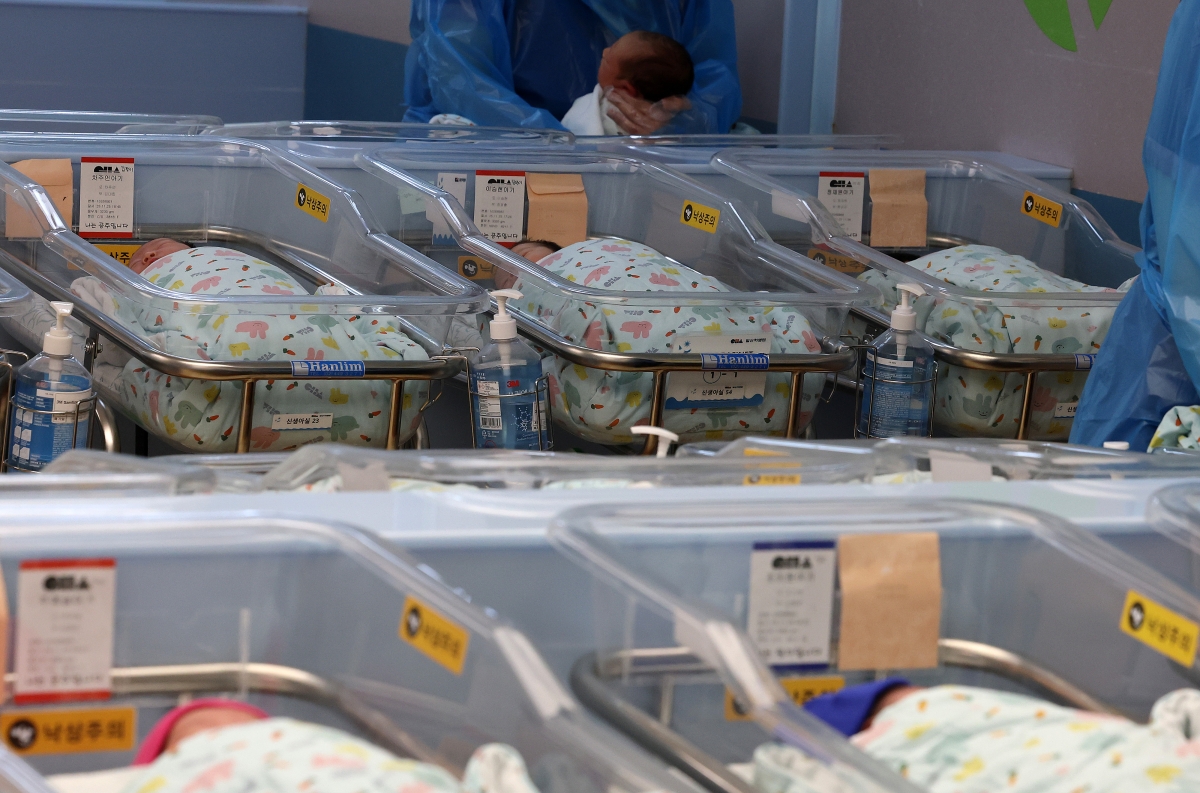
Twin birth bonus hits 100 million won as companies compete for talent
SBS News reported on October 1 that a Kangneung hotel employee received 100 million won for delivering twins—the highest single payout recorded in recent corporate incentive programs. This escalation signals that major employers are now competing to differentiate their family-support packages in an ultra-tight labor market, using childbirth incentives as a recruitment and retention tool. The practice remains concentrated among hospitality and tourism firms facing acute workforce shortages. 
Seoul district launches postpartum health management support for new mothers
Seongbuk Ward (Seoul) announced on September 29 that it is expanding its "Postpartum and Newborn Health Management Support" program to assist families with professional home health-aide services during the critical first weeks after delivery. This localized initiative complements national parent-payment schemes (부모급여) and addresses gaps in postnatal care coverage. The rollout reflects municipal focus on reducing the physical and financial burden of early childcare.
Local view
Chosun Ilbo (September 24) frames the July surge as evidence that Korea's three-year demographic recovery is "broadening beyond echo-boom effects," citing rising marriage registrations among 30-year-old women as the true driver of sustained gains. The outlet calls for accelerating kindergarten-daycare merger plans to reduce parent expenses further.
Seoul Ilbo (September 24) warns that sustained growth requires expanded access to affordable childcare and housing. The piece notes that 65 municipalities now exceed 1.0 fertility, but "Seoul lags dangerously," signaling entrenched regional inequality in both opportunity and family support.
Financial News (September 23) emphasizes that July's 11.1% surge "marks a turning point," with analysts projecting annual cumulative births could exceed 290,000—a 16% year-on-year jump if September–December momentum persists.
Kangwon Ilbo (September 30) highlights Sunchroze's 100-million-won birth bonus and frames corporate family benefits as filling "a vacuum left by regional government inaction in Gangneung."
Context & numbers
- July 2026 births: 24,275 infants (+11.1% YoY)
- Jan–Jul 2026 cumulative births: 170,079 (+14.7% YoY)
- Monthly composite fertility rate (July 2026): 0.89 children/woman (up from 0.79 in July 2025)
- Consecutive monthly birth growth streak: 25 months (since August 2024)
- Municipalities exceeding 1.0 fertility rate: 65 (up from 43 in 2023)
- National composite fertility rate (2025 full year): 0.80
- Sunchroze Hotel birth bonus: 100 million won (~$71,000 USD)
- Sunchroze housing loan (interest-free): up to 300 million won (~$214,000 USD)
- Government parent-payment (부모급여, age 0–1): 100 million won annually (0-year-olds); 50 million won (1-year-olds)
On the radar
- Kindergarten–daycare merger timeline: Municipal governments remain divided on implementation speed; Seoul's Education Office has flagged Q4 2026 as a target for partial pilot rollout.
- Parent-payment eligibility audit: The government's Population Strategy Committee (인구전략위원회) is reviewing income-cap thresholds for 2027 disbursements; changes expected by November 2026.
- Marriage-leave expansion proposal: Taiwan Times editorial (Sept. 29) notes Korea is studying an extension of statutory marriage leave from 8 to 14 days—with employer subsidy for the additional 6 days—a policy shift flagged for 2027 legislative review.
- Twin and multiple-birth incentive escalation: Corporate HR departments are monitoring Sunchroze's 100-million-won precedent; expect additional conglomerate announcements in Q4 2026.
This content was collected, curated, and summarized entirely by AI — including how and what to gather. It may contain inaccuracies. Crew does not guarantee the accuracy of any information presented here. Always verify facts on your own before acting on them. Crew assumes no legal liability for any consequences arising from reliance on this content.
Powered by
