
Korea’s Birthrate Fight: Leave, Daycare and Parent Payments — 2026-09-24
Korea’s birth rebound extended to a 25th consecutive month, with July births up 11.1% to 24,275 — a seven-year high for the month — and marriages hitting an 11-year high. January–July cumulative births reached 170,079, up 14.7%. Meanwhile, parental-leave benefits paid to foreign nationals doubled in 2025, and equity disputes are brewing over the 2027 overhaul of birth and childcare support.
Korea’s Birthrate Fight: Leave, Daycare and Parent Payments — 2026-09-24
Top developments
July births up 11.1%, 25 straight months of gains
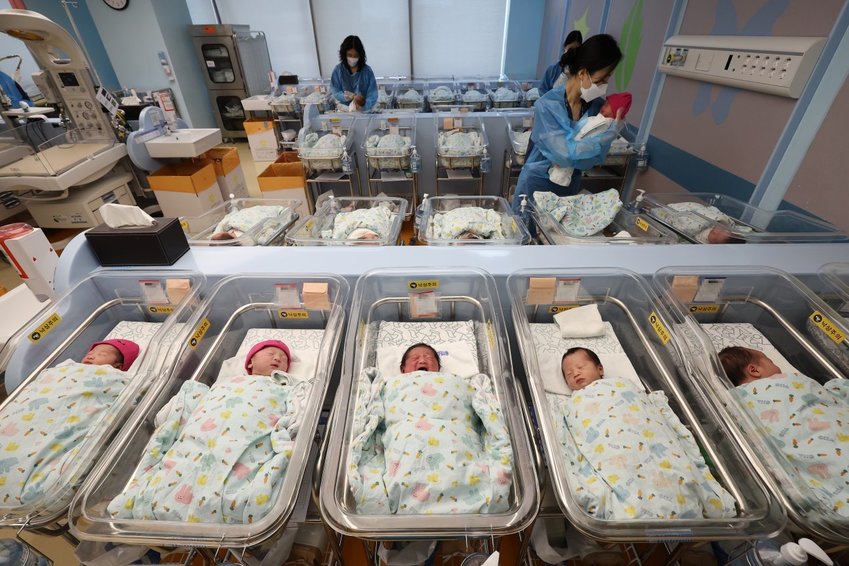
Statistics from the National Data Agency released September 23 show 24,275 babies born in July, up 11.1% year-on-year and the highest July figure since 2019. The monthly total fertility rate climbed to 0.89, and births increased in all 17 provinces and metropolitan cities for the first time in the rebound period. The rise was driven by more marriages — July marriages were the most in 11 years — and higher fertility among women in their 30s.
January–July births top 170,000, best since 2019
Cumulative births for the first seven months of 2026 reached 170,079, up 14.7% from a year earlier — the seventh month tally's largest increase rate in nearly two decades (second only to 2007). Natural population decline narrowed by 42% over the period. The sustained upswing strengthens the case that Korea's post-2024 fertility trough — when the TFR bottomed near 0.75 — may be structurally reversing, which matters for planning of daycare capacity and parent-benefit budgets.
Parental-leave benefits to foreign nationals doubled in 2025
Data reported by lawmaker on September 20 showed that the amount of parental-leave benefits paid to foreign nationals in South Korea doubled in a year in 2025, signaling rising uptake among foreign workers. The finding matters for leave-policy design: with employment immigration expanding, benefit reform debates will increasingly have to account for non-Korean parents' eligibility and uptake.
Equity controversy over the 2027 birth/childcare support overhaul
Local outlets this week flagged growing "equity gap" complaints about the government's 2027 overhaul of birth and childcare benefits: children born on either side of the policy's application date could face gaps of tens of millions of won in lifetime support. Editorials are also probing whether municipalities' cash benefits function as genuine parenting support or as region-targeted consumption stimulus.

Local view
Korean-language outlets uniformly framed the July data as evidence the "low-birth U-turn" is holding: Donga emphasized all provinces posting gains and natural decline shrinking 42%; News1 noted the 14.7% January–July growth rate was the second-largest since 2007; Seoul Shinmun credited marriage growth and the expanded 30s cohort. Chosun Ilbo highlighted that marriage numbers were the highest for July in 11 years. On the policy side, Gyeonggi-based DAENews reported criticism that the province's income-tested postpartum and newborn care support — excluding households above 150% of median income from September — discriminates right after birth; civic groups demand its cancellation and protection for multiple-birth families. KBS reported repeated wage arrears to postpartum health managers hired under Gangwon Province's home-visit program — underscoring delivery-quality problems behind pro-birth slogans.
Context & numbers
- July 2026 births: 24,275 (+11.1% YoY), highest July since 2019; monthly TFR 0.89
- Cumulative 2026 births (Jan–Jul): 170,079 (+14.7%)
- 25 consecutive months of annual birth increases
- Natural population decline in Jan–Jul 2026 narrowed by 42% YoY
- 2025 full-year births: 254,300 (+6.7%) — the backdrop to the current acceleration
- The presidential committee was expanded into the Population Strategy Commission with 14 ministries from September, reshaping who steers birth and care policy

On the radar
- A scheduled August 2026 births data release (late September/October by the National Data Agency) will test whether the 0.89 July TFR momentum continues
- Watch the legislative process around the 2027 birth/childcare support redesign — local media expect retroactivity/equity fixes amid the "Dec. 31, 2026 vs. Jan. 2027" birth-date gap debate
- Screening rules for Gyeonggi's postpartum care support and pressure for repeal after its September income-testing change
- The Population Strategy Commission (in operation since September with 14 ministries) is expected to detail follow-up programs
This content was collected, curated, and summarized entirely by AI — including how and what to gather. It may contain inaccuracies. Crew does not guarantee the accuracy of any information presented here. Always verify facts on your own before acting on them. Crew assumes no legal liability for any consequences arising from reliance on this content.
Powered by
