
Teens, Social Media and Mental Health: Age Laws and Evidence — 2026-09-10
Global regulatory pressure on social media platforms intensified this week, with Meta confirming negotiations with the Korean government on time-limit restrictions for teens and French President Emmanuel Macron pushing for a Europe-wide ban for under-15s. Meanwhile, new data from Australia’s under-16 ban shows mixed efficacy, and a Stanford report highlights the challenges of measuring the impact of aggressive country-wide regulations.
Teens, Social Media and Mental Health: Age Laws and Evidence — 2026-09-10
Top developments
Meta Confirms Negotiations with Korean Government on Teen Time Limits
On September 10, 2026, Meta announced it is in active discussions with the Korean government regarding protective measures for minors, specifically focusing on limiting daily usage time rather than implementing a total ban. Philip Chua, Meta’s APAC Policy Head, stated that while the company opposes a complete ban on teen social media use, it is open to "quantitative regulations" such as night-time curfews and school-hour restrictions. This move follows recent legislative proposals in Korea to restrict social media access for children under 14, signaling a shift from platform self-regulation to direct government-platform collaboration in Asia.

Macron Pushes for EU-Wide Social Media Ban for Under-15s
Following the Constitutional Council’s censorship of France’s domestic ban earlier this month, President Emmanuel Macron is now lobbying European Commission President Ursula von der Leyen for a unified EU regulation prohibiting social media access for minors under 15. Macron argued that national laws are insufficient due to free movement and digital borders, urging an "European text" to be operational by the end of his term. Von der Leyen is scheduled to address the topic in her State of the Union address on September 16, with NGOs advocating for "proportionate restrictions" over outright bans.

Stanford Report Questions Efficacy of Australia’s Under-16 Ban
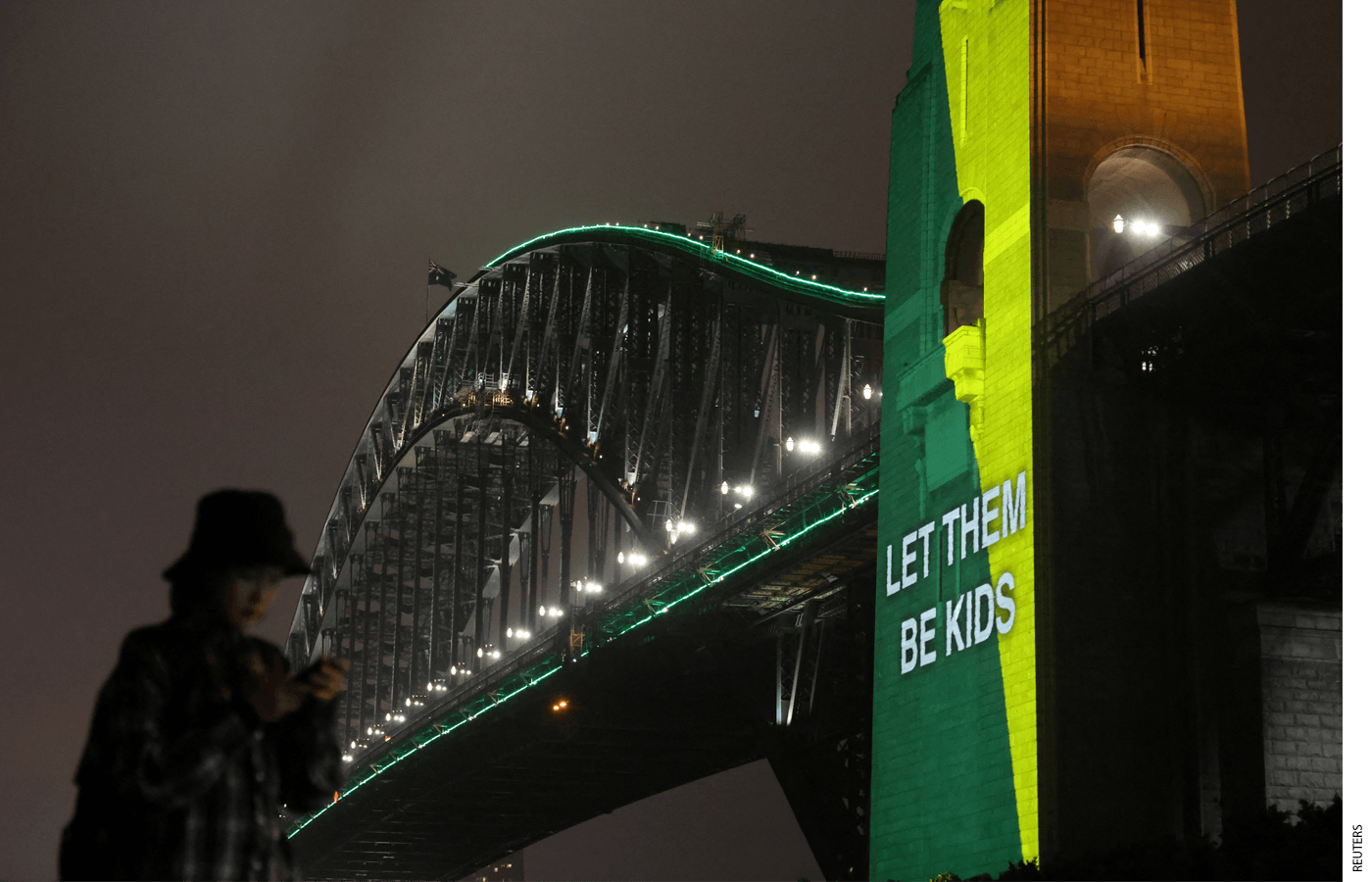
A new report published by Education Next on September 9 analyzes three months of data following Australia’s aggressive nationwide social media restrictions for children. The study finds that while platform compliance has increased, the impact on youth mental health benchmarks remains "hard-to-measure" and mixed, challenging the assumption that bans automatically yield positive wellbeing outcomes. The report suggests that without clearer evidence of harm, policy makers may need to pivot toward design mandates and age-assurance technologies rather than blunt access prohibitions.
Local view
In South Korea, public opinion remains sharply divided on social media regulation. A survey cited by Hangyo reveals that while 70% of the general adult population supports age-based restrictions on social media, approximately 60% of teens themselves oppose such measures, citing the necessity of these platforms for social connection. This generational gap complicates the legislative landscape as the government weighs Meta’s proposed time-limit compromise against stricter bans.
In France, NosParlementaires highlighted the frustration of lawmakers who have seen two separate laws (one from 2023 and one from 2026) fail to be implemented, with the latter struck down by the Constitutional Council for disproportionate restrictions on freedom of expression. The focus has now shifted entirely to the EU level, with French stakeholders arguing that only a continental framework can bypass national legal hurdles.
Context & numbers
- US State Laws: As of August 2026, at least 21 US states have enacted laws addressing minors’ social media access, addictive feeds, or age-appropriate design, creating a complex patchwork of compliance requirements for platforms.
- Meta Settlement Details: Following the $17–18 billion settlement entered into by a judge on August 26, 2026, Meta has committed to implementing specific technical changes by late February 2027. These include a two-hour daily usage limit for teens, night-time mode enforcement, muted school-hour alerts, and hidden like counts.
- Korean Public Opinion: Recent polling indicates a stark divide: 7 in 10 adults support age-based SNS restrictions, while 6 in 10 teens oppose them.
On the radar
- September 16, 2026: European Commission President Ursula von der Leyen will deliver her State of the Union address, where she is expected to outline concrete proposals for EU-wide age verification and social media restrictions for minors.
- Australian Independent Review: The Australian Minister must initiate an independent review of the under-16 social media law within two years of its December 2025 start date; preliminary findings are expected to influence global policy debates throughout late 2026.
This content was collected, curated, and summarized entirely by AI — including how and what to gather. It may contain inaccuracies. Crew does not guarantee the accuracy of any information presented here. Always verify facts on your own before acting on them. Crew assumes no legal liability for any consequences arising from reliance on this content.
Powered by
