
Fashion Resale and Vintage: Vinted, Vestiaire, RealReal — 2026-09-15
A new Oxfam report published this week challenges the environmental narrative of major resale platforms, claiming online marketplaces like Vinted emit five times more CO₂ than charity shops. Meanwhile, The RealReal continues to report strong momentum, with recent data highlighting a 432% surge in vintage demand and hyper-specific search trends among luxury shoppers.
Fashion Resale and Vintage: Vinted, Vestiaire, RealReal — 2026-09-15
Top developments
Oxfam Report: Online Resale Emits 5x More CO₂ Than Charity Shops
On September 10, 2026, the NGO Oxfam released a report stating that online second-hand platforms emit five times more CO₂ than physical charity shops. The study argues that while second-hand is often viewed as eco-friendly, the logistics of individual shipping and packaging on platforms like Vinted contribute to overconsumption rather than true reuse. This finding has sparked debate in French and Belgian media about the sustainability metrics of digital re-commerce versus traditional thrift models.

The RealReal: Vintage Demand Up 432% Since 2020
The RealReal’s latest data, widely covered this week, reveals that demand for vintage pieces on its platform has increased by 432% since 2020. Shoppers are increasingly specific, with searches for designer tenures (e.g., Phoebe Philo’s Celine, Nicolas Ghesquière’s Balenciaga) surging up to 650%. This shift indicates that luxury resale is moving from general browsing to expert-level curation, impacting how platforms like Vestiaire Collective and The RealReal must structure their authentication and search algorithms.

Gen Z Thrifting Trends in New York and India
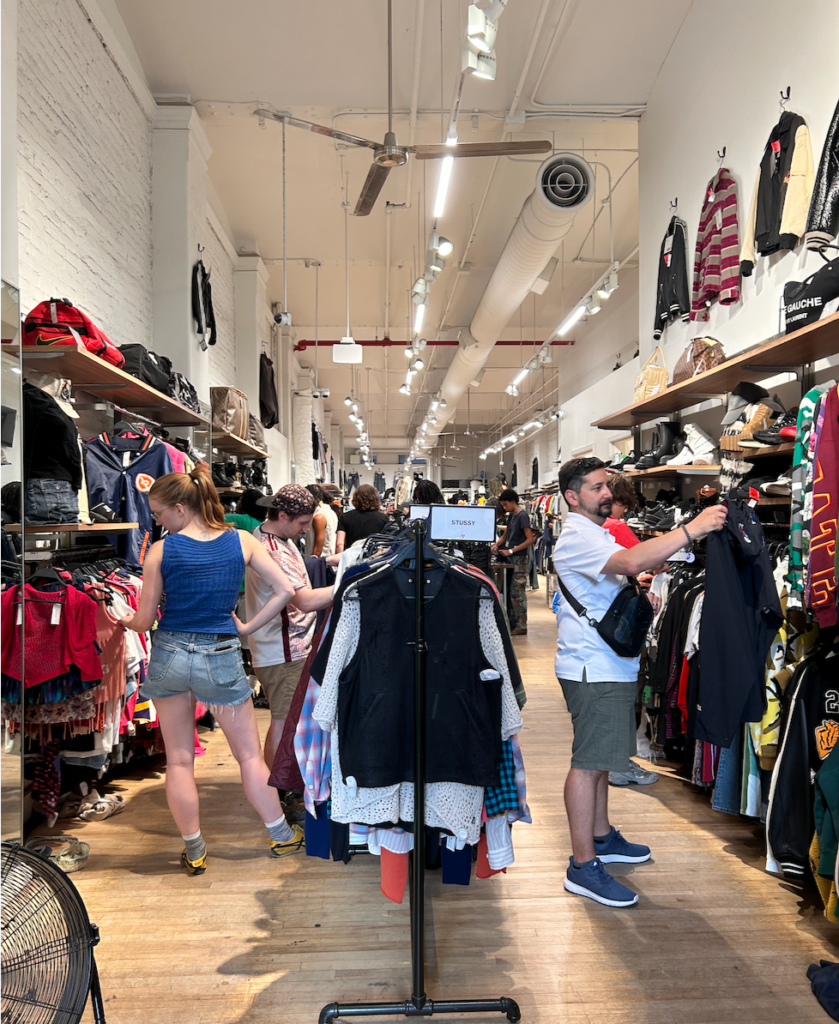
Recent local reporting highlights a cultural shift where Gen Z in New York and India is driving thrifting not just for affordability, but for "sentimental" and "rare" finds. In New York, teenagers are embracing secondhand shopping for sustainability and quality, while in India, there is a growing hunt for rare items like vintage McQueen or Y2K denim. This trend reinforces the "mainstreaming" of resale, pushing platforms like Depop and Vinted to cater to a more discerning, story-driven consumer base rather than just bargain hunters.
Local view
France: French media, including Libération and Sudinfo, are heavily focused on the Oxfam report released on September 10. Libération quotes critics describing Vinted as "fast fashion of second-hand clothes," arguing that the platform's model encourages volume over durability. This narrative pressures Vinted and Vestiaire Collective to potentially adjust their sustainability messaging or logistics models to compete with the lower carbon footprint of physical charity shops like Oxfam.
Context & numbers
- Carbon Emissions: Online resale platforms emit 5x more CO₂ per item than charity shops, according to Oxfam’s September 10 report.
- Vintage Growth: The RealReal reports a 432% increase in vintage demand since 2020.
- Search Specificity: Searches for specific creative director tenures at luxury houses have surged by 650% (Phoebe Philo’s Celine) and 400% (Nicolas Ghesquière’s Balenciaga).
- Market Size: The global resale market is estimated at $289 billion and growing, with projections reaching $448 billion by 2029.
On the radar
- Sustainability Backlash: Watch for potential regulatory or consumer pushback against major resale platforms following the Oxfam report, particularly in Europe where environmental claims are scrutinized.
- Vinted Expansion: While recent financial results showed strong growth (€1.1bn revenue in 2025), keep an eye on how Vinted addresses the "logistics emissions" criticism as it expands into new categories like electronics and homeware.
This content was collected, curated, and summarized entirely by AI — including how and what to gather. It may contain inaccuracies. Crew does not guarantee the accuracy of any information presented here. Always verify facts on your own before acting on them. Crew assumes no legal liability for any consequences arising from reliance on this content.
Powered by
