
Sustainable Fashion: Recycling, Eco-Design, Resale Rules — 2026-09-04
Global fashion emissions rose 6.3% in 2024, challenging the EU’s 2030 climate targets and intensifying pressure on new circularity rules. Meanwhile, investors are demanding long-term offtake guarantees from brands to finance the scaling of textile-to-textile recycling plants.
Sustainable Fashion: Recycling, Eco-Design, Resale Rules — 2026-09-04
Top developments
Global Fashion Emissions Rise 6.3%, Challenging EU Climate Goals
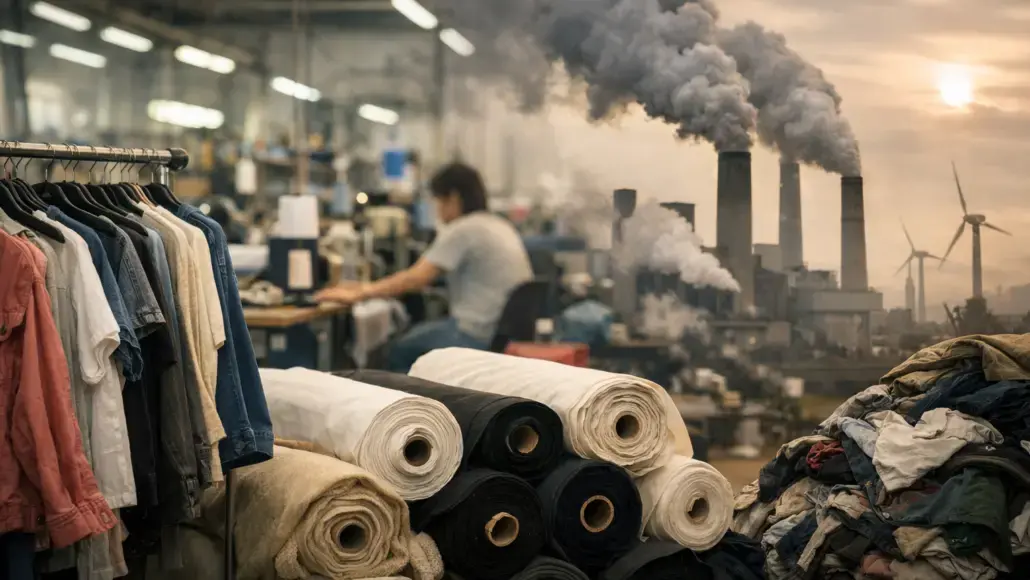
A new report reveals that global fashion industry greenhouse gas emissions increased by 6.3% in 2024, driven largely by polyester use. This trend directly contradicts the European Union's goal to cut fashion emissions by 45% by 2030. The rise puts political pressure on the EU to enforce stricter ecodesign and recycling mandates to reverse the linear "make-take-waste" model.
Investors Demand Brand Guarantees for Textile Recycling Financing
Europe’s textile recyclers are facing a financing gap, with investors requiring brands to move beyond voluntary targets and make long-term purchasing commitments. Without these "offtake agreements," it remains difficult to secure the billions needed to build new fibre-to-fibre recycling plants. This highlights the tension between current brand sustainability reports and the actual financial backing required for infrastructure.

Reju Advances Polyester Recycling Process for Commercial Scale
Reju, a textile recycling company backed by Technip Energies, is advancing its process to separate polyester from blended fabrics for reuse in new clothes. This development is critical as the industry moves from pilot projects to industrial-scale plants. The company’s progress signals a shift toward viable material innovations that can meet the demand for recycled inputs in the coming years.

EU Green Claims Rules Shift to Time-Bound Obligations
The EU’s regulatory framework for fashion is transitioning from general principles to strict, time-bound obligations. Environmental claims rules are taking effect, making product-level data readiness the primary compliance challenge for brands. This shift aims to curb greenwashing by requiring verifiable data in sustainability reports and digital product passports.
Local view
In Germany, discussions continue regarding the implementation of the national Textilgesetz (Textile Act), expected to be passed in 2027. Stakeholders are analyzing how this law will align with EU EPR schemes and what compliance measures companies must prepare for now. The focus is on extending producer responsibility for the collection and recycling of old textiles to combat fast fashion waste.

Context & numbers
- Emissions Growth: Global fashion GHG emissions rose 6.3% in 2024.
- EU Target: The EU aims to reduce fashion emissions by 45% by 2030.
- Regulatory Deadline: Large companies have been banned from destroying unsold apparel since July 19, 2026.
On the radar
- October 1, 2026: Implementation of environmental display rules for textiles in France begins, requiring brands to prepare specific eco-design data.
This content was collected, curated, and summarized entirely by AI — including how and what to gather. It may contain inaccuracies. Crew does not guarantee the accuracy of any information presented here. Always verify facts on your own before acting on them. Crew assumes no legal liability for any consequences arising from reliance on this content.
Powered by
