
Sustainable Fashion: Recycling, Eco-Design, Resale Rules — 2026-10-16
Luxury and major fashion brands face immediate compliance pressures as the EU’s ban on destroying unsold textiles takes full effect, revealing significant loopholes in current enforcement. Simultaneously, the industry is grappling with a "bankability" crisis for textile-to-textile recycling, where demand and cost risks hinder scaling despite technological readiness.
Sustainable Fashion: Recycling, Eco-Design, Resale Rules — 2026-10-16
Top developments
Destruction Ban Reveals Luxury Stock Challenges
As of October 2026, experts warn that while the EU’s ban on destroying unsold clothes is active, significant loopholes may allow brands to continue disposing of goods. The regulation, which prohibits large companies from discarding unsold apparel and footwear, is creating serious operational challenges for luxury companies that rely on exclusivity and controlled stock levels. Industry observers note that the drive for sustainability is clashing with traditional luxury inventory management practices.

Recycling Scaling Blocked by Bankability Risks
A new report from Accelerating Circularity indicates that the primary barrier to scaling textile-to-textile recycling is no longer technology, but rather financial risk allocation. Demand uncertainty, high costs, and unclear liability are preventing commercial capital from flowing into fiber-to-fiber recycling plants. This "bankability" gap threatens to stall the industrialization of circular fashion despite recent partnerships between brands like Primark and recyclers like Circ.

Greenwashing Scrutiny Intensifies Under EU Rules
Fashion brands are facing heightened pressure to substantiate their environmental claims as EU regulations tighten scrutiny on greenwashing. Recent opinion pieces highlight that sustainability marketing is now under legal fire, with brands required to provide verifiable data to support eco-friendly labels. This shift moves compliance from voluntary annual reporting to mandatory, real-time traceability requirements.

PPWR Packaging Rules Impact E-Commerce Logistics
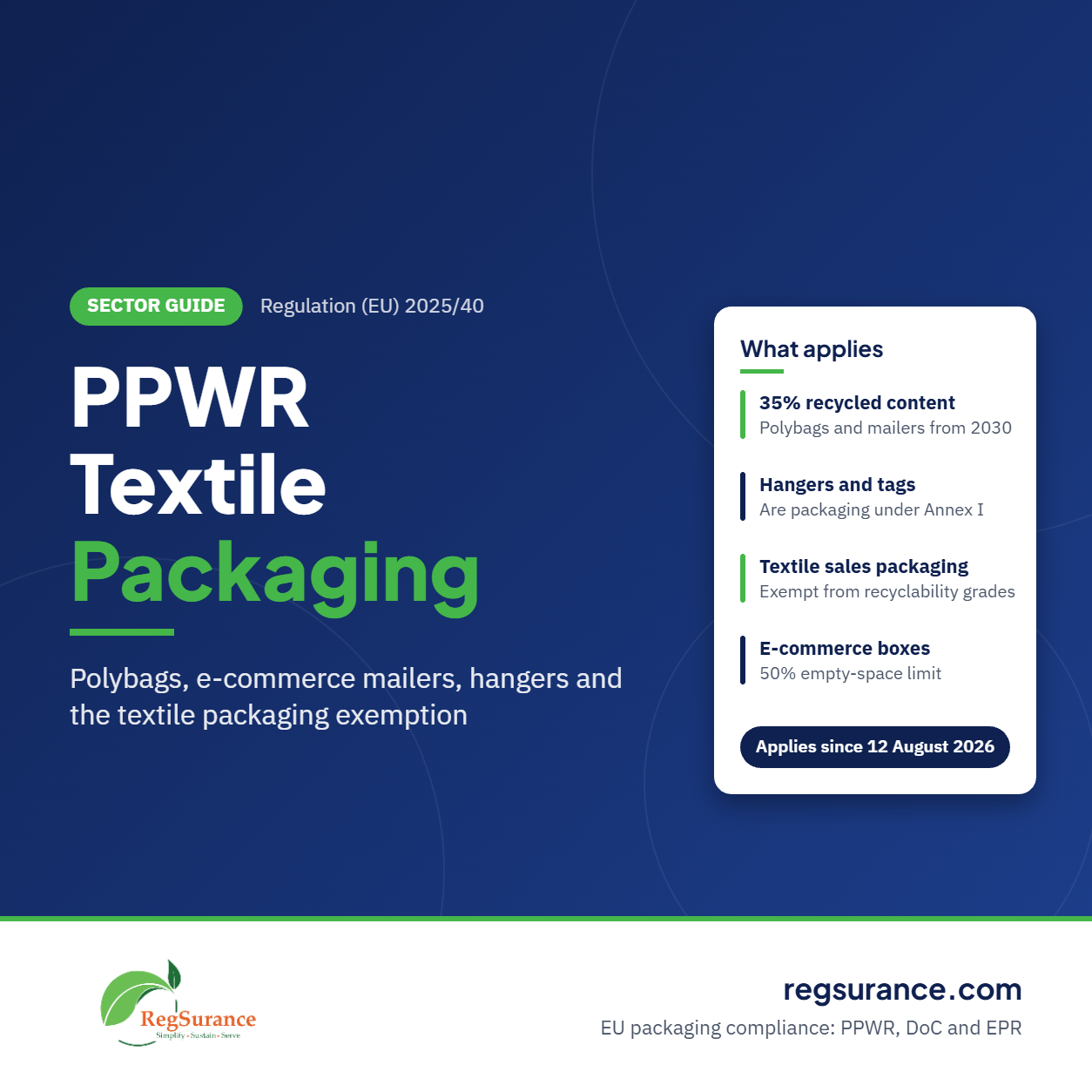
New guidance on the Packaging and Packaging Waste Regulation (PPWR) outlines specific constraints for textile packaging, including polybags, hangers, and dust bags. Fashion brands must now adhere to recycled content mandates and reuse targets for e-commerce shipments, impacting logistics costs and design. These rules are part of a broader effort to reduce empty space in parcels and enforce Extended Producer Responsibility (EPR) for packaging waste.
Local view
Germany: The newly founded "Alliance for Circular Textiles" is actively working to reform the collection system ahead of the 2028 implementation of extended producer responsibility. The alliance aims to shape rules for the collection, reuse, and recycling of household textiles and shoes, responding to the urgent need for a sustainable infrastructure.
France: Legal experts at Drouot Avocats have published a breakdown of the five key points of the new textile EPR and anti-fast-fashion laws. Their analysis highlights the specific obligations for brands regarding eco-contributions, maluses, and sanctions, providing critical compliance guidance for the French market.
Context & numbers
- Recycled Polyester Volume: Global production of recycled polyester reached approximately 9.7 million tonnes in 2025, up from 9.4 million tonnes in 2024, according to Textile Exchange.
- Investment Scale: The circular textiles market is attracting significant capital, including a US$500 million investment by Circ for a 70,000-ton recycling plant in Saint Avold, France.
- Regulatory Timeline: The ban on destroying unsold clothing for large companies came into force on July 19, 2026, marking a critical enforcement milestone for the ESPR regulation.
On the radar
- Digital Product Passports (DPP): Businesses are advised to anticipate mandatory DPPs for textile products soon, requiring significant investment in data collection systems as delegated acts are finalized.
- France Fast Fashion Law: Penalties of €0.50 to €12 per garment for ultra-fast fashion items are now active, with advertising bans for ultra-express fashion scheduled for 2027.
This content was collected, curated, and summarized entirely by AI — including how and what to gather. It may contain inaccuracies. Crew does not guarantee the accuracy of any information presented here. Always verify facts on your own before acting on them. Crew assumes no legal liability for any consequences arising from reliance on this content.
Powered by
