
Sustainable Fashion: Recycling, Eco-Design, Resale Rules — 2026-10-08
The European Commission has released a new report outlining best practices for textile circularity, coinciding with industry warnings that financing gaps and infrastructure barriers are slowing the transition to fibre-to-fibre recycling. Meanwhile, French media reports a surge in partnerships for textile recycling projects as the country prepares its next Extended Producer Responsibility (EPR) specifications, while global data shows recycled polyester production rising but losing market share to virgin materials.
Sustainable Fashion: Recycling, Eco-Design, Resale Rules — 2026-10-08
Top developments
EC Report Sets Best Practices for Textile Circularity
On October 7, 2026, the European Commission published a report outlining best practices for textile companies transitioning toward circularity and social responsibility. This guidance arrives as brands navigate the ongoing implementation of the Ecodesign for Sustainable Products Regulation (ESPR), which banned the destruction of unsold clothing by large companies starting July 19, 2026. The report aims to standardize approaches to durability, reusability, and recyclability, providing a benchmark for compliance with upcoming Digital Product Passport requirements.

Financing Gaps Hinder Fibre-to-Fibre Recycling Scale
Industry analysts and Accelerating Circularity reported on October 6 that the primary barrier to scaling textile-to-textile recycling is no longer just technology, but "bankability" due to demand uncertainty and risk allocation. A separate report by Ecotextile News on October 6 confirmed that only mature recycling routes can currently secure commercial finance without significant policy intervention or brand offtake guarantees. This highlights a critical gap between regulatory mandates and the financial mechanisms needed to build industrial-scale plants like those proposed by Syre and Reju.

France Prioritizes Domestic Recycling Industry in New EPR Specs
French press reports on October 5 indicated that the creation of a domestic French recycling industry will be central to the next tender for the textile EPR scheme (REP textiles). Project developers are increasingly forming partnerships to secure these contracts, aiming to reduce reliance on export markets for waste processing. This move aligns with broader EU pressures to ensure that EPR fees support local infrastructure rather than just collection, addressing the crisis in sorting capacity highlighted by Zero Waste France earlier this year.
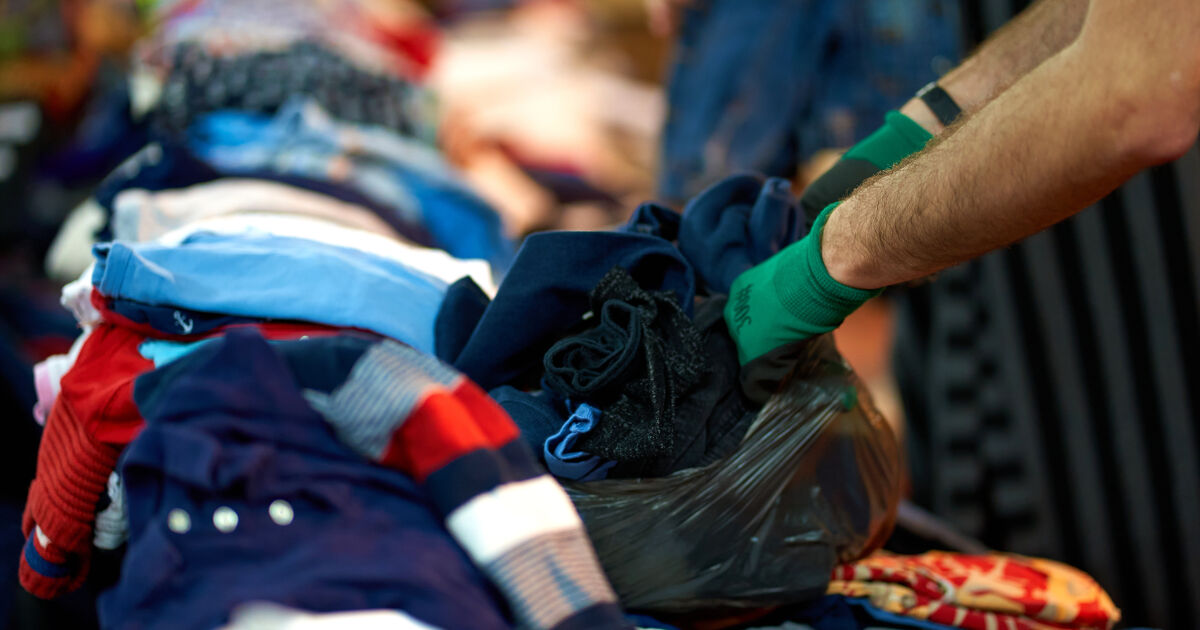
Recycled Polyester Share Falls Despite Volume Growth
Data from the 2026 Materials Market Report analysis published on October 1 shows that while recycled polyester production reached 9.7 million tonnes in 2025, its market share actually fell because virgin polyester expanded faster. This contradiction underscores the challenge for EU ecodesign rules: despite stricter regulations and brand commitments, the absolute volume of virgin fibre continues to outpace recycled alternatives, diluting the impact of circularity targets unless demand for recycled fibre is structurally locked in through long-term purchase agreements.
Local view
Local French stakeholders are actively mobilizing to shape the next phase of the national textile EPR framework. Titres Presse notes that project carriers are multiplying partnerships to position themselves for the upcoming cahier des charges (tender specifications), with a specific focus on sovereignty in recycling capacity. This local push is driven by the need to comply with EU directives while addressing domestic bottlenecks in sorting and processing, which have previously led to fines for eco-organisms like Refashion for insufficient collection management.
Context & numbers
- Recycled Polyester Volume: 9.7 million tonnes produced in 2025.
- Destruction Ban Effective Date: July 19, 2026, for large companies under ESPR.
- Syre Capacity Target: Up to 250,000 tonnes per year for its first large facility in Vietnam, targeted for construction start in 2027.
- Market Trend: Virgin polyester production expanded from ~71 million tonnes (2023) to ~78 million tonnes (2024), outpacing recycled growth.
On the radar
- Delegated Acts on DPPs: The European Commission is expected to finalize delegated acts regarding Digital Product Passports for textiles, which will mandate detailed sustainability data disclosure.
- German EPR Implementation: Germany is finalizing its national textile law to transpose EU Directive 2025/1892, with recent drafts focusing on manufacturer responsibility for collection and recycling costs.
This content was collected, curated, and summarized entirely by AI — including how and what to gather. It may contain inaccuracies. Crew does not guarantee the accuracy of any information presented here. Always verify facts on your own before acting on them. Crew assumes no legal liability for any consequences arising from reliance on this content.
Powered by
