
Sustainable Fashion: Recycling, Eco-Design, Resale Rules — 2026-09-08
The European Union’s ban on the destruction of unsold textiles, effective July 2026, is now under intense scrutiny as brands struggle with implementation and capacity gaps. Recent reports highlight a critical mismatch between new regulatory mandates and the actual recycling infrastructure available in Europe. Meanwhile, France has introduced specific legal frameworks for "ultra-fast fashion," adding another layer of compliance complexity for major retailers.
Sustainable Fashion: Recycling, Eco-Design, Resale Rules — 2026-09-08
Top developments
EU Circularity Rules Outpace Recycling Infrastructure
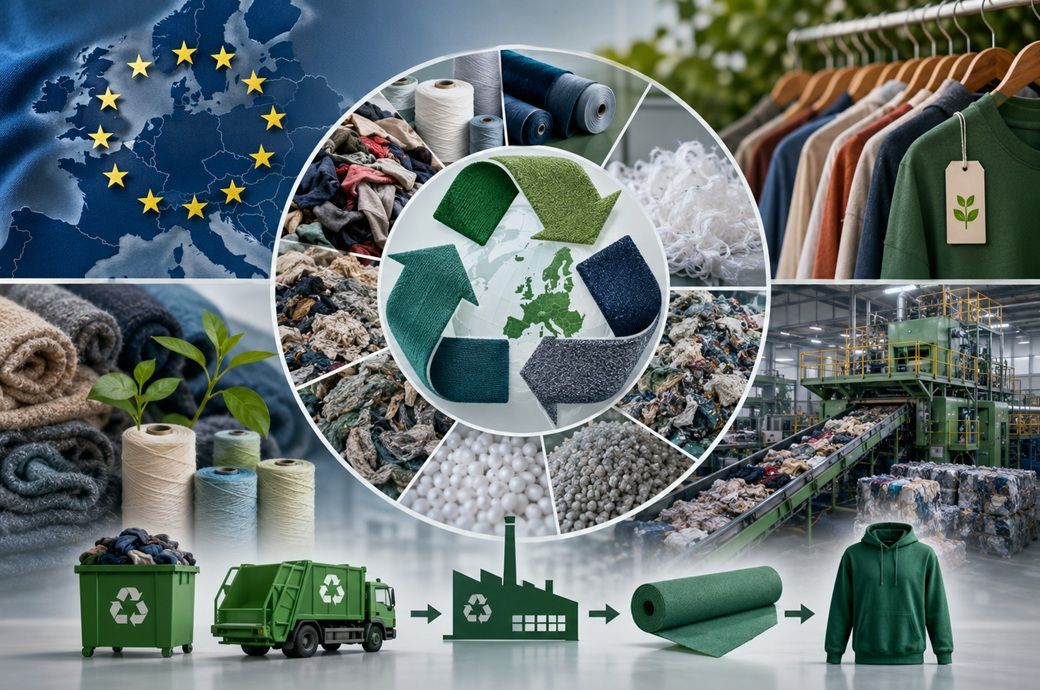
A report published in early September 2026 indicates that Europe’s textile circularity regulations are advancing faster than the region's ability to process waste. While separate textile collection became mandatory across the EU on January 1, 2025, Extended Producer Responsibility (EPR) schemes are not required to be fully operational until April 17, 2028. This timeline creates a compliance vacuum for large companies already subject to the July 19, 2026 ban on destroying unsold apparel, forcing them to seek alternative disposal or reuse channels that may not yet exist at scale
French "Ultra-Fast Fashion" Law Enters Legal Analysis
On September 7, 2026, legal firm De Gaulle Fleurance released an analysis of France’s newly promulgated law (No. 2026-602), which was officially gazetted in July 2026. The legislation creates a distinct legal category for "ultra-express" fashion, imposing stricter environmental impact obligations on brands that exceed certain speed-to-market thresholds. This national regulation complements EU-wide ecodesign rules, requiring brands to adapt their supply chain disclosures and sustainability reporting to meet both local and continental standards
Green Claims Deadline Looms for Fashion Compliance
As of early September 2026, the EU’s 2026 deadline for substantiating green claims is reshaping fashion compliance strategies. Product-level data readiness has emerged as the primary challenge for brands, moving beyond abstract principles to time-bound obligations. Companies must now provide verifiable data to support sustainability marketing, with significant risks for non-compliance regarding environmental claims under the EU’s updated consumer protection framework
Local view
Germany: Globalmagazin highlights the tension between circular economy goals and high return rates in online fashion retail. Published on September 4, 2026, the article notes that since mid-July, large enterprises have been prohibited from destroying unsold clothing. However, the high volume of returns in e-commerce complicates this rule, as returned items often require refurbishment or resale rather than simple restocking, straining logistics networks

Context & numbers
The European Commission estimates that approximately 600,000 tonnes of unsold fashion products are destroyed annually in Europe. The ban on destruction, which entered into application on July 19, 2026, requires businesses to prioritize keeping products in use through sale, donation, or recycling. Medium-sized companies are expected to follow the same restrictions by 2030
On the radar
- EPR Scheme Operationalization: EU member states must have operational textile EPR schemes by April 17, 2028. Monitoring progress in key markets like France, Germany, and Italy will be critical for brand compliance planning in late 2026 and 2027.
- Digital Product Passports (DPP): While specific delegated acts for textile DPPs are not yet adopted, brands are advised to begin investing in data collection systems now to prepare for future mandatory disclosure requirements.
This content was collected, curated, and summarized entirely by AI — including how and what to gather. It may contain inaccuracies. Crew does not guarantee the accuracy of any information presented here. Always verify facts on your own before acting on them. Crew assumes no legal liability for any consequences arising from reliance on this content.
Powered by
