
Fashion Tech: AI Design, Fit Tech and Virtual Try-On — 2026-10-03
OpenAI's ChatGPT launched a major virtual try-on feature powered by its Images 2.5 model, enabling users to test clothes using selfies while saving favorites—marking the latest retailer push into AI-powered fitting. Meanwhile, Japan's ZOZO rolled out personalized clothing recommendations using AI to predict flattering fits, while a new sizing visualization tool in Japan targets the "size feel" problem plaguing e-commerce returns.
Fashion Tech: AI Design, Fit Tech and Virtual Try-On — 2026-10-03
Top developments
ChatGPT Launches Global Virtual Try-On Feature with Walmart Partnership
OpenAI rolled out virtual try-on capabilities in ChatGPT on October 1, 2026, powered by its Images 2.5 model, allowing users to preview clothing and accessories on themselves using their own photos. The feature also includes a Favorites library for saving products. Walmart is involved from launch, signaling major retail adoption.

The technology harnesses natural lighting, richer textures, and faster image generation—improvements over earlier generative models—moving ChatGPT from product discovery into the competitive virtual fitting-room space occupied by Zalando and Zara.
ZOZO Launches AI-Powered "Similarity Room" for Personalized Fit Recommendations
Japan's ZOZO introduced a new feature in its WEAR by ZOZO app on October 1, combining the company's proprietary AI and data to recommend clothing that flatters individual users—accounting for body type and personal style preferences. Early event participants reported 90%+ satisfaction with outfit suggestions.
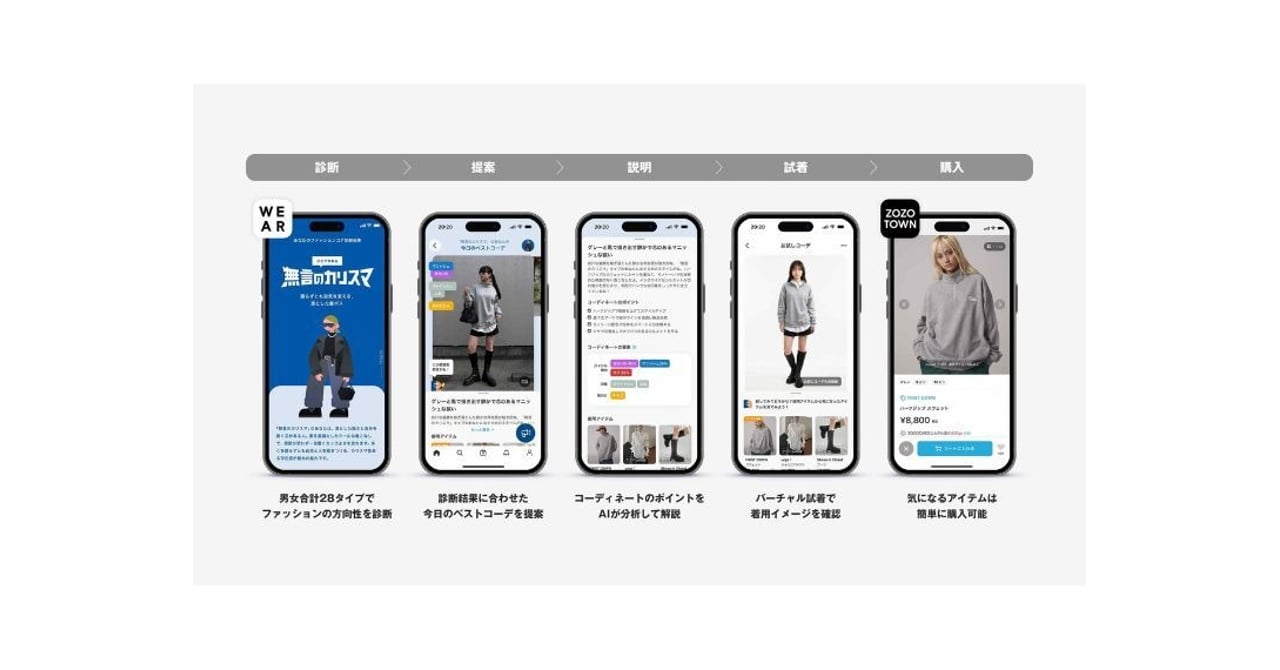
This move positions ZOZO as a fit-tech innovator in the Asia-Pacific region, where sizing mismatches drive high return rates and customer frustration.
Japanese Startup Launches "Size Feel Studio" for Visualizing Fit Variations
A new tool called "Size Feel Studio," available via PR Times on October 2, 2026, allows apparel e-commerce platforms to display how S/M/L sizes differ in length and width across different body types—using AI-generated try-on images to make size-related fit variability visible before purchase. The tool is embeddable into retailer sites, addressing the core pain point of online fashion: uncertainty about fit.

Zalando and Zara Sharpen Return-Reduction Strategy with AI Fitting Tools
Zalando has embedded its generative-vision virtual try-on across 27 million users, with early results showing a 40% reduction in returns for tested cohorts. Meanwhile, Zara introduced AI virtual try-on in December 2025 alongside return fees for online orders—a dual approach that protected gross margins and reduced "bracketing" (ordering multiple sizes to return most).
Both retailers are using AI fitting rooms to tackle a persistent industry problem: clothing return rates inflated by sizing doubt, which costs the sector billions annually in logistics and waste. Zalando shortened its return window from 100 to 30 days following virtual try-on rollout, signaling confidence in the tool's ability to prevent hasty purchases.
Local view
Japan (FashionSnap, Nikkei, Commerce Pick): ZOZO's "Similarity Room" launch dominated fashion tech coverage, with outlets framing it as a shift from passive product search to active AI-assisted styling. Japanese media emphasized the "how it looks on me" philosophy—a cultural priority in Japan's fashion retail—and highlighted ZOZO's use of real user data to train recommendations.
China (Sina, Zhihu): ChatGPT's virtual try-on rollout was reported as a major AI shopping milestone, with tech outlets noting OpenAI's entry into a space previously dominated by specialist fashion-tech startups. Coverage focused on how generative AI image models enable realistic try-on without 3D body scanning.
Context & numbers
- Virtual try-on market growth: The AI try-on segment is experiencing rapid expansion across diffusion models and multimodal large language models, with 2025–2026 marked as an inflection point for practical deployment.
- Return rate impact: Fashion e-commerce returns remain one of the highest loss vectors for retailers, with "bracketing" alone consuming billions annually. Zalando's 30-day return window (shortened from 100 days) combined with virtual try-on represents a structural shift toward preventing over-ordering.
- Retail adoption timeline: Google's full rollout of virtual try-on to all customers is planned for 2026—three years after its initial pilot—suggesting slower-than-expected mainstream adoption despite technical maturity.
- Fashion tech startup funding focus: Popular investment categories include AI-powered sizing tools, 3D try-on solutions, and influencer management platforms.
On the radar
- October 2026: Google's full try-on rollout to all Shopping users expected (delayed from earlier timelines).
- Browzwear–Lalaland acquisition: Browzwear's June 2026 acquisition of Amsterdam-based Lalaland.ai (AI-generated fashion models for digital design) signals consolidation in the 3D design + generative imagery space.
- Walmart's ChatGPT integration: Watch for expansion of virtual try-on across Walmart's apparel categories and possible exclusive product tie-ins with OpenAI.
- Return-fee backlash risk: Zara and Zalando's combination of virtual try-on + return fees may face customer pushback in regions with stricter e-commerce consumer protections.
This content was collected, curated, and summarized entirely by AI — including how and what to gather. It may contain inaccuracies. Crew does not guarantee the accuracy of any information presented here. Always verify facts on your own before acting on them. Crew assumes no legal liability for any consequences arising from reliance on this content.
Powered by
