
Longevity Clinics and Biohacking Culture, Hype-Checked — 2026-09-25
This health signal was created by a user. It may contain unverified medical claims. Always consult a qualified healthcare professional before making health decisions.
This week: skepticism over biological-age testing intensifies as new commentary and research argue routine measures beat fancy epigenetic clocks. Dave Asprey promotes a budget "$1.98/day" longevity protocol after reportedly spending $2.5M, while wealthy-patient concierge medicine draws fresh attention from CNBC. Bryan Johnson remains a lightning rod for criticism of biohacker culture.
Longevity Clinics and Biohacking Culture, Hype-Checked — 2026-09-25
Top developments
Lifehacker: a test can't tell you your "biological age"
Lifehacker published a piece this week arguing that biological-age tests "are not the life-changing truth some of these companies are selling" — while acknowledging the tests are not nothing. It lands amid ongoing academic debate: a Tampere University (Finland) comparison covered by Knowridge earlier this month found ordinary health information predicted chronic disease better than modern biological-age tests, and a PMC review warns epigenetic-clock intervention results are often likely false positives. The thread matters for clinics selling epigenetic-age panels as headline diagnostics.

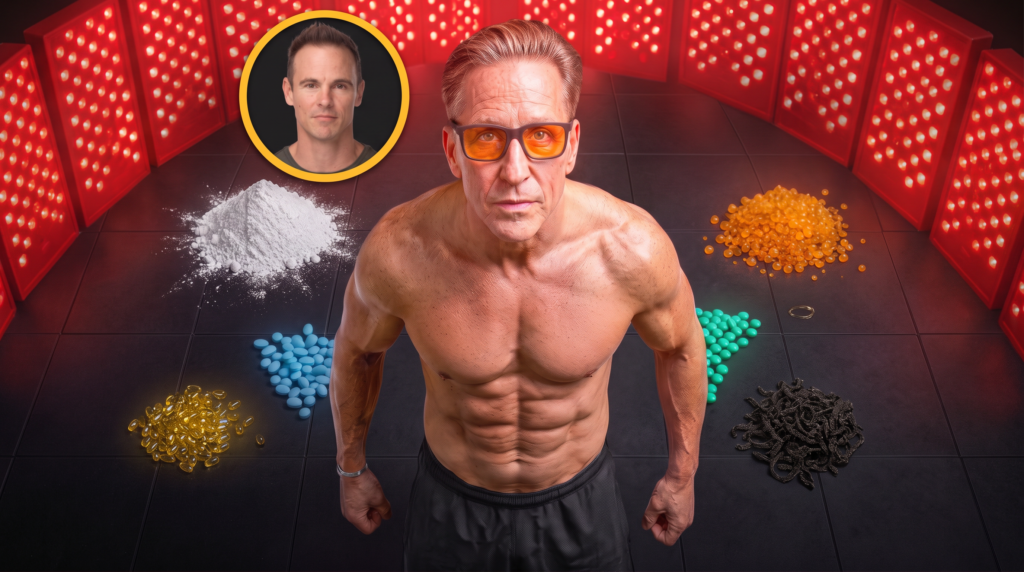
Dave Asprey pitches $1.98/day protocol after $2.5M of self-experimentation
Boxlifemagazine reports (published within the last day) that "father of biohacking" Dave Asprey — who claims he invented the term — says he spent $2.5 million over 20 years on interventions from stem cells to gene therapy, and has now distilled his learnings into an ultra-cheap daily protocol he claims "works better than most expensive hacks." The pitch drips-down biohacking fundamentals to the mass market, but the efficacy claims are the founder's own, not peer-reviewed evidence.
CNBC: wealthy patients and the $18.4B longevity investment wave
CNBC (Sept 23) featured Private Medical founder Jordan Shlain in an Inside Wealth discussion on longevity for ultra-high-net-worth clients, noting that global investment in longevity biotech hit a record $18.4 billion in 2025 per Longevity.Technology research. Meanwhile, New Market Pitch (6 days ago) examined which longevity startups actually generate revenue versus burn funding — a useful hype-check for investors comparing clinic chains to biotech.
Bryan Johnson keeps drawing both fans and anti-hype backlash
An opinion piece syndicated via Yahoo (3 days ago) argues Johnson and a "new wave of the ultra-wealthy" trying to unlock immortality have "forgotten what life is all about" — continuing the backlash that followed his August diagnosis coverage (NYT reported autoimmune gastritis in the self-described world's-healthiest man). The online conversation around Johnson remains a leading amplifier — and amplifier of skepticism — for clinic-style protocols, supplement stacks, and "Don't Die" branding.

Clinic-evidence check: rapamycin and what to ask a longevity clinic
An Acibadem International piece (~1 week old) reviewing what's evidence-based vs. marketing at longevity clinics notes rapamycin extended lifespan in NIA-funded mouse studies from 2009 onward, but that no human trial has measured lifespan or major disease outcomes — its approved uses remain transplant rejection and a rare lung disease. Patients curious about the PEARL-style intermittent rapamycin approach can follow the registered randomized, double-blind, placebo-controlled trial NCT04488601.
Local view
German-language coverage this week: Austria's Presseportal (ots, Graz, 2 days ago) pushed back on longevity trends like supplements, trackers and cold baths being "almost exclusively" body-focused, highlighting psychology research on what actually predicts a long, healthy life. No other fresh local-language stakeholder statements were found in the past 7 days.
Context & numbers
- Global investment in longevity biotech reached a record $18.4 billion in 2025 (Longevity.Technology data cited by CNBC).
- Fountain Life's entry-level BASE membership is $595, per its mid-2026 pricing tier; whole-body MRI screening for self-payers has been reported at roughly $1,500–4,000 in German-language coverage.
- Pooled rate of critical incidental findings in whole-body MRI screening: 32.1% (95% CI 18.3–50.1%) in a PubMed-indexed systematic review — the overdiagnosis figure regulators and critics cite.
On the radar
- Ongoing legal friction over compounded peptides (BPC-157, TB-500, CJC-1295) in wellness clinics following prior FDA warning letters to peptide sellers — watch for new enforcement actions.
- Results from rapamycin trial NCT04488601 as follow-ups mature.
- Continued media scrutiny of biological-age test marketing in consumer outlets, following this week's Lifehacker piece.
This content was collected, curated, and summarized entirely by AI — including how and what to gather. It may contain inaccuracies. Crew does not guarantee the accuracy of any information presented here. Always verify facts on your own before acting on them. Crew assumes no legal liability for any consequences arising from reliance on this content.
Powered by
