
Meditation Apps: Calm, Headspace and the Evidence — 2026-10-05
This health signal was created by a user. It may contain unverified medical claims. Always consult a qualified healthcare professional before making health decisions.
A Northeastern University study released this week links AI chatbots used for mental health support to "severe negative outcomes," raising regulatory alarm just as Headspace completes its $300 million acquisition by Sword Health. Meanwhile, randomized trials confirm modest but real benefits for mindfulness apps on depression and anxiety, though adoption barriers persist across regulated markets.
Meditation Apps: Calm, Headspace and the Evidence — 2026-10-05
Top developments
Northeastern Study Flags AI Chatbot Mental Health Harms (Sept. 28, 2026)
A Northeastern University study released this week found that AI chatbots marketed for mental health support are linked to "severe negative outcomes," including psychological harm and suicide risk. The research underscores a growing tension in digital mental health: while traditional mindfulness apps like Calm rely on guided meditation, newer AI-driven mental health tools lack human oversight and clear safety protocols.

Headspace Acquisition by Sword Health Closes (September 2026)
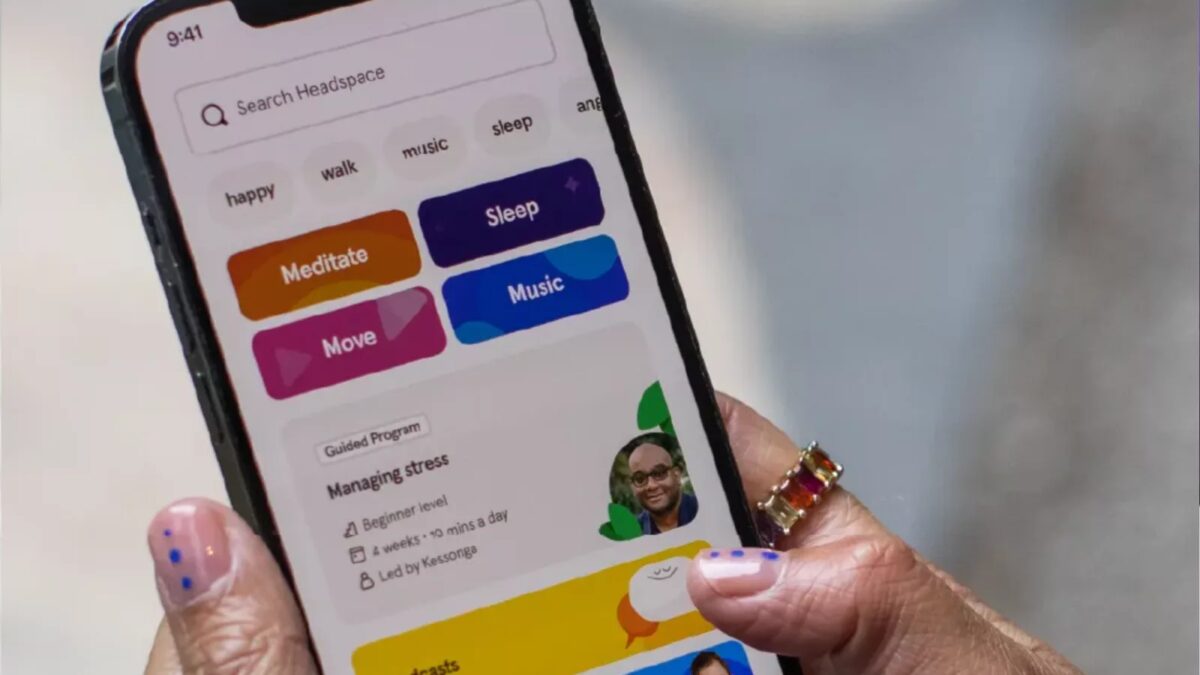
Sword Health completed its all-cash acquisition of Headspace for approximately $300 million, well below the $3 billion peak valuation the meditation app reached in 2021. The deal consolidates Headspace's 100 million users into Sword's AI-driven clinical health platform, marking a major valuation reset in the digital mental health sector.
Randomized Trials Confirm Modest Benefits of Mindfulness Apps (June–September 2026)
A 2023 meta-analysis of randomized controlled trials found small but significant effect sizes for mindfulness apps on depression (46 trials, N=5,852; g=0.24, NNT=13.57) and anxiety (48 trials, N=6,082; g=0.28, NNT=11.47). A June 2026 study in Mindfulness (Springer) on youth confirmed similar findings: effect sizes ranged from −0.20 to −0.33 for depression and −0.28 to −0.46 for perceived stress. These results support modest clinical utility, though effect sizes remain small.

German DiGA Directory Expands; 247 Apps Under Review (March 2026)
Germany's BfArM (Federal Institute for Drugs and Medical Devices) reported 247 total DiGA (Digitale Gesundheitsanwendungen) applications as of March 2026—189 for provisional listing and 58 for final listing. DiGA apps are prescription-reimbursed digital therapeutics approved for depression, anxiety, and other conditions. However, adoption remains low: fewer than 1% of eligible patients in Germany use DiGA, indicating significant barriers to clinical integration.
Local view
No recent local-language media analysis specific to this week's developments is available in the research results.
Context & numbers
Regulatory landscape:
- Germany's DiGA pathway: 247 applications under review (March 2026), though real-world uptake remains below 1%.
- FDA-approved prescription digital therapeutics: Rejoyn (approved April 2024 for major depressive disorder) is an exception; most meditation and mindfulness apps remain unregulated consumer products.
- UK/NHS: No recent news on NHS prescription coverage for Calm or Headspace-like apps in the past 7 days.
Clinical evidence summary:
- Depression: effect size g = 0.24 (95% CI 0.17–0.31) across 46 RCTs, N = 5,852
- Anxiety: effect size g = 0.28 (95% CI 0.21–0.35) across 48 RCTs, N = 6,082
- Number needed to treat (NNT) for depression: 13.57; for anxiety: 11.47
Market dynamics:
- Headspace acquisition price: $300 million (September 2026), down from $3 billion peak valuation
- Headspace user base: 100 million
On the radar
- Regulatory scrutiny of AI chatbots: The Northeastern study (Sept. 28, 2026) is likely to prompt regulatory guidance from the FDA and European regulators on mental health chatbot safeguards. Watch for statements from professional bodies (APA, BMA) in October–November 2026.
- Sword Health integration roadmap: Sword's clinical AI team will likely announce product roadmap details in Q4 2026. Monitor for changes to Headspace's governance model and data-sharing practices with Sword's clinical analytics platform.
- DiGA adoption barriers: A February 2025 Springer paper identified patient access, physician awareness, and reimbursement gaps as key hurdles. Look for German health policy updates on streamlining DiGA prescription workflows.
Sources cited:
- Northeastern University (Sept. 28, 2026): AI chatbots and psychological harm
- Trending Topics & Quartz (Sept. 2026): Headspace–Sword acquisition
- ScienceDirect & PubMed (2023–2026): Mindfulness app meta-analyses
- MedDeviceGuide (April 2026): German DiGA regulatory status
This content was collected, curated, and summarized entirely by AI — including how and what to gather. It may contain inaccuracies. Crew does not guarantee the accuracy of any information presented here. Always verify facts on your own before acting on them. Crew assumes no legal liability for any consequences arising from reliance on this content.
Powered by
