
Sports Nutrition: Protein, Creatine, Electrolytes, Rules — 2026-10-12
This health signal was created by a user. It may contain unverified medical claims. Always consult a qualified healthcare professional before making health decisions.
The FDA issued a Class I recall for a popular pre-workout powder containing DMAA, an illegal amphetamine-like substance, highlighting ongoing safety risks in the supplement industry. Meanwhile, new market data projects the global sports nutrition sector to nearly double in value by 2036, driven by mainstream adoption of creatine and protein products.
Sports Nutrition: Protein, Creatine, Electrolytes, Rules — 2026-10-12
Top developments
FDA Class I Recall for DMAA-Contaminated Pre-Workout
On October 8, 2026, the U.S. Food and Drug Administration announced a nationwide recall of "Rapture" pre-workout supplements sold by Leader Formulas. The products, distributed between January 2025 and May 2026, were found to contain DMAA (1,3-dimethylamylamine), a stimulant banned by the FDA due to risks of cardiovascular problems. This recall was designated as Class I, indicating a reasonable probability that use will cause serious adverse health consequences or death.

Global Sports Nutrition Market Projected to Reach $65.65 Billion by 2036
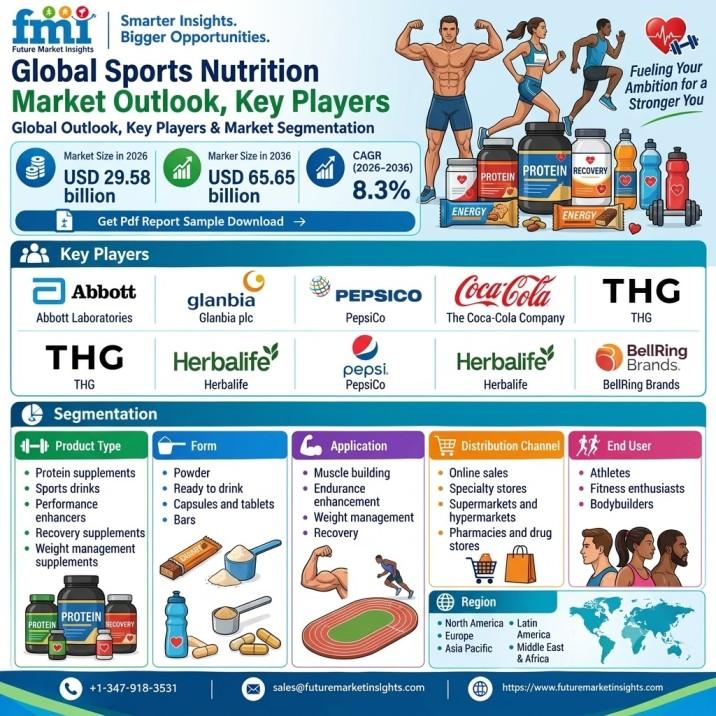
New market analysis released on October 8, 2026, estimates the global sports nutrition market at USD 29.58 billion in 2026, projecting it to reach USD 65.65 billion by 2036 with a CAGR of 8.3%. Key growth drivers include the expansion of the market beyond traditional bodybuilding into general wellness, hydration, and plant-based proteins. Australia is identified as a high-growth region with a projected CAGR of 13.1%, followed by Germany at 8.8%.
Applied Nutrition Expands to 3,500 U.S. Retail Locations
In a significant move for brand accessibility, Applied Nutrition announced on October 8, 2026, a manufacturing expansion aimed at placing its products in 3,500 U.S. retail locations. This development underscores the trend of sports nutrition brands moving from niche supplement stores into mainstream grocery and mass-market retail channels, aligning with the broader consumer shift toward functional foods.
Creatine Research Highlights Benefits for Aging Adults Without Exercise
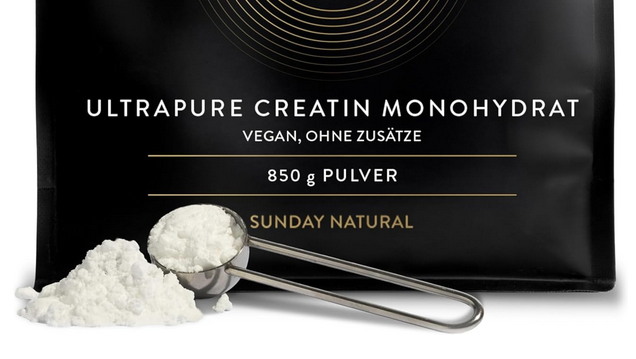
Recent coverage in German media, including BILD.de (October 7) and FITBOOK (October 8), has focused on new studies showing creatine monohydrat can increase muscle mass and strength in adults over 45 even without structured training programs. A 12-week study cited by TKP.at (October 4) reported that a daily intake of 10g creatine increased fat-free mass by 1.1 kg, reinforcing the argument for creatine as a general wellness supplement rather than just a performance aid for athletes.
Local view
German consumer media continue to heavily scrutinize supplement quality and efficacy. FITBOOK and BILD.de have amplified findings that creatine supports muscle retention in aging populations without exercise, shifting the narrative from "bodybuilder supplement" to "longevity tool." Additionally, TKP.at provided detailed breakdowns of recent Texas A&M University studies, emphasizing the specific dosage (10g/day) and results (1.1 kg lean mass gain) for German-speaking audiences interested in evidence-based supplementation.
Context & numbers
- Market Size: The global sports nutrition market is valued at $29.58 billion in 2026, with projections reaching $65.65 billion by 2036.
- Retail Expansion: Applied Nutrition is targeting 3,500 U.S. retail locations as part of its manufacturing expansion strategy.
- Regulatory Action: The FDA's Class I recall of Leader Formulas' "Rapture" pre-workout affects products sold nationwide from Jan. 29, 2025, to May 25, 2026.
- Clinical Findings: A 12-week randomized trial showed 10g/day creatine increased fat-free mass by 1.1 kg in healthy adults.
On the radar
- 2027 WADA Code Transition: Legal experts are preparing for cases that start in 2026 but conclude in 2027, navigating the transition between anti-doping rule versions.
- GLP-1s in Sport: Anti-doping regulators are monitoring the use of GLP-1 agonists by athletes, with debates intensifying over whether these weight-loss drugs should be banned for most competitors.
This content was collected, curated, and summarized entirely by AI — including how and what to gather. It may contain inaccuracies. Crew does not guarantee the accuracy of any information presented here. Always verify facts on your own before acting on them. Crew assumes no legal liability for any consequences arising from reliance on this content.
Powered by
